If you’ve ever been deep in a project—whether it’s a lab experiment that needs to hold up to harsh chemicals, a food production line that demands strict safety, or even a home brewing setup that needs consistent, leak-proof connections—you’ve probably run across tubing that’s supposed to work hard for you. But have you ever wondered what makes some tubing stand up to way more stress than the rest? That’s where thick wall silicone tubing comes in, and as someone who’s been selling this stuff for years, I see how many people gloss over the “thick wall” part like it’s just a tiny detail. Spoiler: it’s not. Let’s break this down, no jargon, just real talk about why this tubing matters, what it actually is, and when it’s the only thing that’ll get the job done right. Silicon Tubing
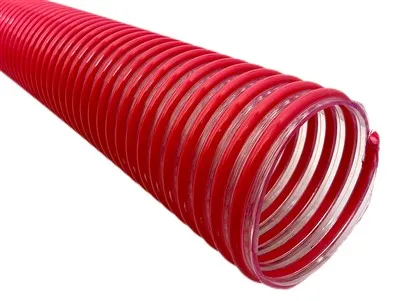
First off, let’s get the basics straight (and keep this simple, I promise). Silicone tubing is made from polydimethylsiloxane—if you’ve ever heard the term “silicone elastomer,” that’s the same stuff. It’s way different from rubber or plastic tubing because it’s flexible, resistant to extreme temps (think -100°F to 500°F, which is wild), and non-toxic enough to be in contact with food, meds, even baby stuff. Now, “thick wall” isn’t just a marketing term. Most regular thin wall silicone tubing has a wall thickness of like 0.02 inches or less—great for low-pressure, simple stuff like siphoning water from a fish tank or running basic air lines. Thick wall? We’re talking wall thickness of 0.06 inches up to 0.25 inches, sometimes even more for industrial use. That extra silicone isn’t just added for show. It changes every single property of the tubing.
Let’s talk pressure first, because this is the biggest reason people reach for thick wall. If you’ve ever worked with a system that pumps fluid or air under pressure—like a hydraulic line for a small machine, a CO2 line in a brewery, or a lab vacuum pump—thin wall tubing will blow out or collapse faster than a cheap party balloon in a hot car. I’ve had customers come to me with horror stories: a brewery where thin wall line burst mid-fermentation, wasting 50 gallons of craft beer; a lab tech whose thin wall tubing collapsed when they were running a critical assay, ruining weeks of samples. Thick wall silicone tubing handles pressure way better because that extra wall gives it tensile strength and puncture resistance. A thin wall line might hold 50 PSI max before failing, but thick wall can easily handle 150 PSI or more—depending on the exact specs. And it’s not just internal pressure. If you’re pulling a vacuum, thick wall doesn’t crumple in on itself either, which is non-negotiable for vacuum systems.
Temperature is another big one. Thin wall silicone might soften or get stiff if you’re working at the edges of its temp range. But that extra wall thickness acts like insulation. I had a customer in the food industry who uses thick wall tubing to carry hot cooking oil in a conveyor line—they told me it works fine at 450°F, while the thin wall line they tried before started melting and leaching into the oil, which is a huge safety no-no. It’s also great for cold environments, like cold storage applications, because the thick wall doesn’t get brittle and crack when it’s freezing outside. Thin wall would snap if you tried to bend it after being in a walk-in freezer overnight, but thick wall stays flexible.
Flexibility is another thing people don’t expect. Wait, extra silicone—does that mean it’s stiff? No, actually, as long as the durometer (the hardness rating, usually 30A to 80A) is matched correctly, thick wall is just as bendable as thin wall, but it doesn’t kink or stay bent. A lot of thin wall tubing kinks so bad you can’t get fluid through it, but thick wall’s structure keeps its shape even when you’re routing it through tight, sharp corners. I had a mechanic use it for a custom line under a car—they needed it to bend around a narrow frame, and thick wall worked way better than any rubber line they’d tried before because it didn’t kink and leak.
Now, let’s get real about who uses this stuff, because it’s not just one industry. Let’s start with labs and biotech—this is probably the most common use. Lab settings need tubing that’s non-toxic, chemical resistant, and can handle consistent pressure/vacuum. Thick wall silicone is the go-to for peristaltic pumps, which squeeze tubing to move fluid (no moving parts touching the fluid, which keeps samples clean). Thin wall would wear out super fast from the constant squeezing, but thick wall stands up to thousands of cycles without cracking. I’ve got a customer who runs a blood plasma lab—their thick wall tubing has lasted 2 years, while the thin wall stuff they swapped in only lasted 3 months. That’s a huge cost saving, right?
Next up, food and beverage. FDA and USDA regulations are strict here—tubing can’t leach chemicals, can’t hold bacteria, and has to handle hot/cold temps. Thick wall is perfect for this because it’s smooth on the inside (we use precision extruders to get a uniform inner diameter, no rough spots where gunk builds up) and easy to clean. Breweries, wineries, soft drink makers all use it for transfer lines, CO2 lines, even filler lines. I had a craft brewery owner tell me that after switching to our thick wall silicone tubing, they stopped having to throw out batches because of tubing contamination. The thin wall stuff had tiny air pockets that grew mold, but the thick wall’s uniform surface doesn’t do that.
Industrial manufacturing is another big sector. Things like automotive parts, HVAC systems, wastewater treatment—all need tubing that can handle heavy use, chemicals, and temp swings. Thick wall silicone is used for hydraulic lines, air ducts, chemical transfer lines. One of our clients is a small automotive parts maker who uses it for a brake line prototype—they tested it and it held up way better than rubber line under heavy pressure and vibration. No leaks, no failures, which is a game-changer for safety.
Even hobbyists use it a lot now—home brewers, RC car guys (for fuel lines), people who make custom fish tank setups. A lot of home brewers I talk to didn’t know thick wall tubing was an option until they had a batch ruined, and now they swear by it. It’s not just for big businesses.
Wait, let’s clear up a common misconception: thick wall silicone isn’t just “overbuilt” tubing for no reason. The key is that it’s engineered for specific uses, so you have to get the right wall thickness and durometer for your job. If you use a 0.25-inch wall thick line for a low-pressure siphon, that’s overkill and more expensive, obviously. But if you use a thin wall line for a high-pressure pump, that’s a disaster waiting to happen. As a supplier, I always ask customers a few questions first: what’s the pressure? What temps will it see? What chemicals is it touching? Is it for food/lab/industrial? That way I can recommend the exact wall thickness that’s right for them, not just push the thickest stuff I have.
Another thing that’s worth mentioning: quality matters. Not all thick wall silicone tubing is the same. Some cheap brands use recycled silicone that’s full of impurities, so it leaches chemicals, cracks easily, or isn’t uniform. We use medical-grade or food-grade silicone (depending on the application) and extrude it to exact specs—our wall thickness is consistent within 0.005 inches, so no weak spots that’ll blow out. I’ve had customers come to me after buying cheap thick wall tubing online, and it turned out to be full of bubbles, so it leaked under pressure. That’s why it’s important to buy from a reputable supplier, not just the cheapest option.
Let’s talk about durability, too. Because of the extra silicone, thick wall silicone tubing lasts way longer than thin wall. I mentioned the brewery example earlier, but another client uses thick wall tubing in a solar thermal system—they said it’s been there for 5 years, no leaks, no replacement needed, while their old thin wall line needed changing every year. Over time, that adds up. You might pay a bit more upfront for thick wall, but you save money on replacements, downtime, and wasted product. That’s a no-brainer, right?
What about downsides? No product is perfect. Thick wall is less flexible than thin wall if it’s the same durometer—so if you need to route it through super tight, small spaces, you might want a slightly thinner wall or a softer durometer. Also, it’s a bit heavier, but that’s usually not a big deal unless you’re moving a lot of it. And again, using the wrong wall thickness for your application is a problem—don’t use thick wall for a low-pressure, simple job just because it’s “tougher.”
At the end of the day, thick wall silicone tubing is all about reliability. It’s for when you don’t have room for failure. When a batch of beer depends on it, when a lab sample is critical, when a manufacturing line can’t shut down because of a leak. I’ve been supplying silicone tubing for over 10 years, and the number one complaint I hear from customers who switch to thick wall is “why didn’t I do this sooner?” They’re tired of downtime, wasted product, and fixing leaks that shouldn’t happen.
If you’re in the market for tubing—whether you’re a lab tech, a brewer, an industrial manager, or a hobbyist—take a minute to think about what your tubing has to do. If it’s under pressure, exposed to extreme temps, needs to be durable, or touch food/medical stuff, thick wall silicone is almost always the right call. Don’t cut corners here. The small extra cost is nothing compared to the headache of a failure.
If you’re ready to find the right thick wall silicone tubing for your project, or you have questions about specs, durability, or applications, reach out to our team to chat through your needs. We’ll help you pick the perfect fit, no pressure, no confusing jargon.
Flexible PVC Hose References:
- “Silicone Elastomers: Properties and Applications,” Dow Chemical Company, 2022.
- “FDA Compliance for Flexible Tubing in Food and Beverage Processing,” U.S. Food and Drug Administration, 2021.
- “Peristaltic Pump Tubing Selection Guide,” Masterflex, 2023.
- “Temperature Resistance of Silicone Tubing,” Santoprene Technical Data, 2022.
- “Pressure Ratings for Extruded Silicone Tubing,” International Association of Plastics Manufacturers, 2021.
Weifang Xinzhiyuan Plastic Co., Ltd.
As one of the most experienced silicon tubing manufacturers and suppliers in China, we offer a wide range of products with superior quality. Please feel free to wholesale premium silicon tubing made in China here from our factory. We also accept customized orders.
Address: No. 700, Tongle Street, Economic Development Zone, Changle County, Weifang City, Shandong Province
E-mail: hua@xzypvchose.com
WebSite: https://www.pvchose-xzy.com/
