If you’ve ever stood on an oil and gas rig or dug a water well, you might not have noticed the thick, steel pipes that stretch hundreds or thousands of feet underground, holding everything together and keeping wells running safely. As someone who’s spent the last 12 years as a casing and tubing supplier—working closely with drilling teams, well engineers, and maintenance crews—I’ve lost count of how many times I’ve been asked: “What’s the real difference between casing and tubing? They look like the same big steel pipes!” Casing Tube

It’s a fair question. To the untrained eye, both are made of carbon steel (or sometimes alloy steel for harsher environments), threaded at the ends, and designed to withstand extreme pressure underground. But mix them up, and you’re looking at costly delays, safety risks, and even well failures that can run into millions of dollars to fix. Let me break this down the way I explain it to new drilling crews and small well operators who might not have a full engineering team on speed dial.
First, let’s start with casing, because that’s the pipe that goes down first, before any drilling happens. Literally, you don’t drill a well and then put casing in—you drill a section, lower the casing into that open hole, and then cement it in place. The goal of casing isn’t to carry fluids; it’s to line the wellbore and keep the hole from collapsing. Think of it like the walls of a deep, narrow tunnel. If you didn’t have casing, the surrounding rock, sand, or even soft shale would cave in, fill the hole, and leave you starting over. Casing also isolates different underground zones. For example, if you’re drilling a well that passes through a layer of salty water or toxic gas, the casing seals those zones off so they don’t contaminate the fresh groundwater you’re trying to access, or so high-pressure gas doesn’t shoot up the wellbore unexpectedly. That’s a big safety point—back in the early days of oil drilling, blowouts from un-isolated gas zones were way more common, and casing is the first line of defense against that.
Casing comes in different sizes, too. Surface casing—the outermost layer, sometimes 18 to 20 inches in diameter—goes down just a few hundred feet, usually to protect shallow groundwater. Intermediate casing, which might be 10 to 13 ⅜ inches, goes deeper, separating layers of rock that have different pressure levels. And production casing, the deepest layer, is often 4 ½ to 9 ⅝ inches, lining the part of the well that reaches the oil or gas reservoir. Each layer overlaps the one above it, so you end up with a series of nested steel pipes, each cemented firmly to the rock around it. The specs for casing are non-negotiable, too. We supply casing with specific weight per foot, grade of steel, and thread types, all engineered to handle the pressure of the surrounding rock, the weight of the pipe itself hanging thousands of feet underground, and the pressure of fluids that will later flow through. Too thin, and it bends or collapses under the rock load; too weak a steel grade, and it cracks under pressure.
Now, tubing is the pipe that goes inside the casing, once the casing is in place and the well is ready to produce fluids. Unlike casing, tubing’s whole job is to carry stuff—oil, gas, water, whatever you’re pulling out of the reservoir up to the surface. It’s smaller in diameter than the casing it sits inside, which is why there’s space between the two pipes. That gap between casing and tubing is called the annulus, and it’s used for things like pumping chemicals to improve production, monitoring pressure, or even injecting water or gas back into the reservoir for enhanced oil recovery. Tubing is designed to be run in and pulled out relatively easily, too—sometimes as a whole string, sometimes section by section—so if it gets damaged or corroded, you can replace it without pulling all the casing out. That’s a huge cost saver. If you had to pull out production casing every time tubing wore out, you’d be shutting down a well for weeks, not days.
What’s surprising to a lot of people is that tubing has to handle different pressure demands than casing. Casing is under external pressure from the rock and groundwater, while tubing is under internal pressure from the fluids flowing through it. That means tubing is built to withstand high internal pressure, and it’s often made to be more flexible than casing, though still strong enough not to rupture. We supply tubing in sizes like 2 ⅜ inches, 2 ⅞ inches, or 3 ½ inches, depending on how much fluid you need to move and the well’s pressure. For example, a small domestic water well might use 2 ⅜-inch tubing, while a large commercial oil well might use 4 ½-inch tubing to move thousands of barrels of oil a day.
Let’s talk about a real example to make this concrete. Last year, a small oil operator in West Texas called me panicking. They’d hired a new drilling crew that mixed up casing and tubing specs for a new well. They’d run 2 ⅞-inch production tubing as the outer casing, and the 9 ⅝-inch casing they needed never made it down. Within a week, the well started collapsing, and they were looking at a $1.2 million fix. We didn’t supply the wrong pipe, but I ended up working with their engineer to help them source the correct casing once they pulled the bad string. That incident stuck with me, because it’s such a simple mistake that has huge consequences.
Another key difference: when they’re installed. Casing is run immediately after drilling each section of the well, and cemented in place before drilling continues deeper. You never drill past production casing—once that’s set, you stop drilling the open hole and move to running tubing. Tubing is installed only after all casing is cemented and tested for integrity. That sequence is non-negotiable for well safety, per industry standards.
Material specs differ, too. While both are steel, casing is often made to be more resistant to external compression, with thicker walls in some applications, whereas tubing is built for higher internal pressure and sometimes has more corrosion resistance for the fluids flowing through it. For wells in high-sour gas environments, where the gas has high hydrogen sulfide (which makes steel brittle), we supply special alloy steel for both casing and tubing, but the grade is different for each, tailored to their specific loads.
I should also mention that there are exceptions, because nothing in well drilling is one-size-fits-all. For shallow water wells, sometimes a single pipe that acts as both casing and tubing is used, but that’s only for small, low-pressure wells—never for oil or high-pressure gas wells. And in some modern well designs, especially horizontal wells, casing and tubing are still used, but their placement and size might be adjusted to account for the curve of the wellbore. Even then, their core roles don’t change: casing supports the well and isolates zones, tubing carries produced fluids.
As a supplier, the biggest part of my job isn’t just delivering pipes—it’s making sure our customers understand exactly which product they need for their application. I tell new customers to bring me their well plans, their pressure ratings, their intended use, and I’ll walk them through casing vs. tubing specs, making sure they don’t make that same mistake the West Texas operator did. We’ve built our business on that trust—customers call us not just for steel pipe, but for advice, because they know we’ve been in the field, not just in an office.
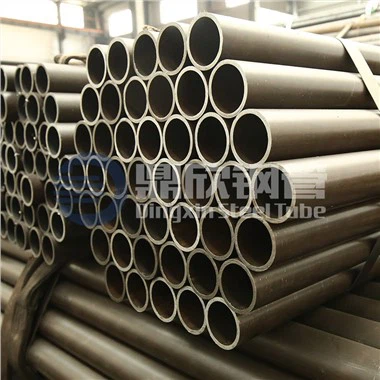
If you’re drilling a new well, replacing old casing or tubing, or just need to clarify specs for an upcoming project, don’t leave it to guesswork. Casing and tubing are critical parts of well infrastructure, and getting the right one for your job saves time, money, and keeps operations safe. Reach out to our team to chat through your requirements, ask questions, and get the right products tailored to your well’s needs. We’re here to help you get the job done right, the first time.
Tube for Drill Rod References
- Guyant, G. (2019). Well Construction: Casing and Tubing Design. PennWell Books.
- Society of Petroleum Engineers. (2021). Recommended Practice for Casing, Tubing, and Wellhead Equipment (RP 5C1).
- U.S. Environmental Protection Agency. (2006). Underground Injection Control Program: Well Construction Standards.
Zhejiang Dingxin Steel Tube Manufacturing Co., Ltd.
Zhejiang Dingxin Steel Tube Manufacturing Co., Ltd. is one of the most professional casing tube manufacturers and suppliers in China. We have world-leading production equipment and strong manufacturing capabilities. Please feel free to wholesale high quality casing tube at competitive price from our factory.
Address: Liuli Industrial Zone, Haiyan, Zhejiang Province, China
E-mail: sales@dingxintube.cn
WebSite: https://www.dingxinsteeltube.com/
