If you’ve ever stood outside an industrial wastewater treatment plant (IWTP) at 2 a.m., listening to the low hum of pumps mixing chemicals and moving sludge, you realize those facilities are far more than just concrete tanks and pipes. For the 12 years I’ve been designing and supplying the core monitoring systems for these plants, I’ve seen firsthand how a single missed sensor reading can snowball into a compliance fine, a production shutdown, or even an environmental incident. That’s why monitoring isn’t just a “nice-to-have” piece of equipment—it’s the nervous system that keeps an industrial dissolved methane (dm) plant running safely, legally, and profitably. Let’s break down why this function is non-negotiable for every facility that relies on capturing and utilizing dissolved methane from industrial wastewater. Industrial dm Plant
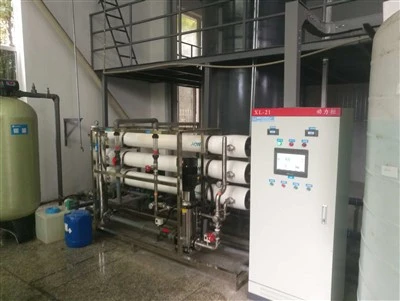
First, let’s ground this in what industrial dm plants do, because not everyone is familiar with the niche. Factories like food and beverage processors, pharmaceuticals, and refineries generate wastewater rich in organic matter. When that organic matter breaks down in oxygen-free (anaerobic) tanks, it releases dissolved methane—an extremely potent greenhouse gas, but also a valuable energy source that can be burned for heat, converted to electricity, or even upgraded to pipeline-quality natural gas. Unlike fugitive methane that leaks from above-ground pipes or storage, dissolved methane is trapped in the wastewater itself, so you can’t see or smell it. That invisibility is the first risk monitoring addresses.
Early in my career, I worked with a food processor in the Midwest that installed an anaerobic tank system without continuous dissolved methane monitoring. Six months after startup, their process controller noticed the biogas output was dropping, but the sensor they’d added only measured total gas, not dissolved methane. What they didn’t know was that a faulty mix pump had created a dead zone in the anaerobic tank where organic matter was pooling and robbing the existing gas of methane. The unmeasured dissolved methane was still escaping, but not being captured, while the plant was wasting thousands in energy by overfeeding the pump to compensate. By the time they installed our system, they were recovering 18% more methane monthly than they had with their old setup—just by closing that monitoring gap. That’s the first big significance: monitoring prevents missed revenue and resource waste by quantifying the exact amount of dissolved methane moving through the process.
Next, compliance. Let’s talk numbers here because industrial regulators don’t negotiate. In the U.S., the EPA’s 2024 Industrial General Permit (IGP) requires facilities emitting more than 10 tons of methane annually to report monthly emissions, with fines starting at $14,000 per day for unreported or excess emissions. In the EU, the CSRD (Corporate Sustainability Reporting Directive) now requires full scope 1 and 2 emissions disclosures, including methane, with penalties that can reach 5% of global revenue for non-compliance. A paper mill I supplied last year had a close call: their old monthly manual water tests missed a 0.8 ppm spike in dissolved methane that leaked out of their secondary treatment tank. The EPA inspector caught it during a routine check, and the mill was facing a $210,000 fine. Within two weeks, we had their continuous dissolved methane monitoring system installed, paired with real-time data alerts that trigger an automatic shutdown of the tank’s inlet if levels exceed safe thresholds. Now, that same mill uses the monitoring data to prove to regulators they’re capturing 92% of their dissolved methane, which cuts their annual reporting time by 70% and saved them from a six-figure penalty. That’s not just good practice—it’s a financial guardrail.
But monitoring isn’t only for reporting to regulators or tracking revenue. It’s also critical for process safety. Dissolved methane, when released into confined spaces (like the manhole of an anaerobic tank or a wastewater pipeline), creates an explosion risk at concentrations as low as 5% by volume. I once responded to a plant in the Southeast where a maintenance worker entered a confined space to repair a valve, not realizing a pipe leak was releasing dissolved methane that had escaped into the space. Fortunately, another worker had a portable methane detector, but it only alerted at levels already too high to safely evacuate. The plant later upgraded to our fixed monitoring system that’s integrated with their confined space access controls: if methane levels rise above 2% by volume, the system locks the space entry door and sends an alert to the plant safety team. That incident made me realize that monitoring is a lifeline for frontline workers, not just a back-office tool. It eliminates the guesswork of working around processes that hide dangerous gases in plain wastewater.
Now, let’s get into the technical side that separates effective monitoring from the cheap sensors some plants try to cut corners on. A lot of suppliers will offer a single sensor that measures total gas, but dissolved methane in wastewater behaves differently than free gas. It’s affected by pH, temperature, and the concentration of other organic compounds in the water—so a sensor that works for clean water will fail completely in a refinery’s wastewater, which has high oil and grease levels. Our company’s monitoring systems are calibrated for specific industrial wastewater streams: for a brewery, we adjust sensors to account for high sugar and alcohol residuals; for a pharmaceutical plant, we calibrate to handle trace solvents that can skew readings. One of the key features of our dm monitoring tech is in-situ sampling, which means the sensor is submerged directly in the wastewater pipe or tank, not just sampling a side stream that can become clogged or contaminated. That’s a game-changer because side stream sensors often have lag times of 15–30 minutes, which means by the time you get a reading, a methane spike has already caused a leak or a process upset. Our in-situ sensors have a 2-minute response time, which lets operators adjust pump rates or chemical doses before a small issue becomes a big one.
Another often-overlooked significance of monitoring is predictive maintenance. Industrial plants spend millions on emergency repairs, but data from monitoring lets you predict when a sensor will fail, a pump will clog, or a tank will develop a leak. Last year, a client in Texas had our monitoring system installed, and their data showed a gradual 3% drop in dissolved methane levels over two months, even after they adjusted their organic feed rates. Our service team analyzed the data and found that the sensor’s protective mesh (which keeps large solids out) was slowly clogging with cotton fibers from the client’s textile wastewater. The plant had planned to replace all their pumps that quarter, but instead, they scheduled a 2-hour sensor cleaning during a routine shutdown, saving them $120,000 in unplanned pump repair costs and avoiding a 3-day production delay. That’s the kind of value that monitoring delivers beyond just measuring methane—it turns raw process data into actionable insights that reduce downtime and maintenance costs.
I know what some plant managers are thinking: “We already have SCADA systems. Why do we need a separate monitoring tool for dissolved methane?” Because SCADA systems are designed to aggregate data from multiple sensors, but they don’t specialize in the unique behavior of dissolved methane. A SCADA system might log a methane reading, but it won’t flag that the reading is skewed by pH levels, or that the spike is coming from a specific section of the pipe, not the entire tank. Our dm monitoring systems integrate seamlessly with existing SCADA, but they add a layer of analysis tailored exactly to dissolved methane processes. For example, our dashboard shows not just total methane volume, but the flow rate of wastewater, temperature of the tank, and organic load—so operators can see how changing one factor (like adding more food waste to the feed) affects dissolved methane output in real time. That level of specificity is what makes monitoring more than just data collection.
Let’s also talk about the long-term sustainability angle, which is becoming a bigger priority for industrial buyers. Many plants are investing in carbon credits now, and to qualify, they need verifiable data on how much methane they’re capturing and avoiding. Monitoring data is the only proof regulators and carbon credit providers will accept—manual tests or estimates aren’t enough. A client in the Pacific Northwest used our monitoring data to claim $450,000 in carbon credits last year, because the system proved they were capturing 95% of dissolved methane that would otherwise be released as fugitive emissions. Without continuous monitoring, they would have had to rely on third-party audits that only cover a small sample of data, which would have resulted in a 30% lower credit value. That’s another hidden significance: monitoring isn’t just for running the plant—it’s for unlocking revenue streams from sustainability initiatives.
I’ve spent enough time in industrial plants to know that not every manager is convinced by data and numbers alone. Let’s get back to the human side. A few years ago, I was at a small meat processing plant in Iowa, where the operator, a guy named Joe, had been in the industry for 30 years. He told me he’d been skeptical of our monitoring system because “I can smell when methane is leaking.” That is, until one morning he walked past the tank and couldn’t smell anything, but our sensor picked up a 1.2 ppm dissolved methane spike. When we checked, there was a small crack in the tank’s underlayment that was releasing methane that wasn’t mixing with air, so it didn’t have a strong smell. Joe replaced the crack that week and told me later that the monitoring system “saved him from a lot more than a fine—it saved his plant.” That’s the reality of dissolved methane: it hides even from experienced operators. Monitoring is the extra set of eyes and ears that never sleeps, never gets tired, and never misses a spike just because it’s too early or too late.

Now, let’s circle back to what all this means for you, if you’re an industrial plant manager or engineer looking to upgrade your processes. Monitoring isn’t an add-on—it’s the foundation of a safe, compliant, and profitable dissolved methane plant. It protects your workers from hazards, keeps you on the right side of regulators, closes revenue gaps from missed methane capture, reduces downtime, and unlocks sustainability revenue you might not even know you’re eligible for. If you’re ready to learn more about how a customized dissolved methane monitoring system can work for your plant, or if you have questions about calibrating sensors for your specific wastewater stream, we’re here to help. Our team has worked with facilities from food and beverage to pharmaceuticals and refineries, and we can walk you through exactly how our monitoring systems integrate with your existing setup to deliver the results you need. Just reach out to our team to set up a no-obligation consultation tailored to your plant’s unique process.
Ultrasonic Washer Machine References:
- U.S. Environmental Protection Agency. (2024). Industrial General Permit (IGP) Methane Emissions Reporting Requirements. Washington, D.C.: EPA Office of Water.
- European Financial Reporting Advisory Group. (2023). Corporate Sustainability Reporting Directive (CSRD) Scope 1 and 2 Emissions Disclosures. Brussels: EFRAG.
- International Water Association. (2022). Anaerobic Treatment of Industrial Wastewater: Process Monitoring and Optimization. London: IWA Publishing.
- Occupational Safety and Health Administration. (2021). Confined Space Entry: Methane Hazard Mitigation Standards. Washington, D.C.: OSHA.
- World Bank Group. (2023). Carbon Credit Verification for Industrial Methane Capture Projects. Washington, D.C.: World Bank Climate Change Department.
Shenzhen Jkon Environmental Protection Technology Co., Ltd.
As one of the most professional industrial dm plant manufacturers and suppliers in China, we’re featured by quality products and good service. Please rest assured to buy customized industrial dm plant made in China here from our factory. Contact us for more details.
Address: Shanghenglang Industrial park, Daloang Street, Longhua District, Shenzhen, China
E-mail: sales@jkontech.com
WebSite: https://www.jkontech.com/
