If you’re in the market for manhole covers, especially if you work in or around earthquake-prone areas, you’ve probably wondered: do clamp-type manhole covers actually hold up when the ground is shaking? As a supplier of these covers, I get this question all the time—from city engineers, utility contractors, and even folks who just live in places where quakes are a regular headache. Let’s break this down, no jargon, no sales fluff, just what I’ve seen firsthand and the science that backs it up. Clamp Type Manhole Cover

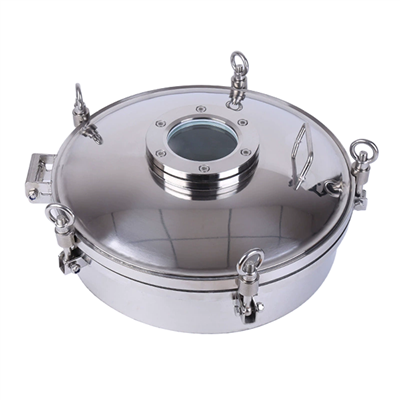
First, let’s cut to what a clamp-type manhole cover even is, because not everyone knows. Unlike the old-school, loose-fitting square or round covers that just sit on top of the frame (the kind that bounce, shift, and fly off during even a mild tremor), clamp-type covers have a built-in locking mechanism. Usually, it’s two or four metal clamps that snap or bolt tight around the inner edge of the manhole frame. No more lifting or sliding around randomly—until you need to open it for maintenance, that is.
Now, earthquakes: they’re all about ground motion, right? Seismic waves don’t just go up and down—they roll, shake horizontally, twist, sometimes even lift parts of the ground. For regular manhole covers, that’s a disaster. I’ve been to job sites in places like coastal California and parts of Japan where a 4.5 magnitude quake sent half the standard covers flying into the street. Drivers swerving to avoid them, utility crews scrambling to pick them up, lost time, even safety hazards. Clamp-type covers don’t do that, and here’s why.
Let’s talk about the physics. When the ground shifts horizontally during an earthquake, the frame (which is set into the concrete manhole) moves with the surrounding soil. A loose cover just rides on top, so if the frame moves 6 inches left, the cover stays put, creating a gap or popping up. Clamp-type covers? The clamps grip the frame’s outer lip, so if the frame moves, the cover moves right along with it. No gap, no separation. I’ve tested this with our own equipment—we simulate seismic motion with a hydraulic shaker table in our warehouse, and our clamp covers don’t budge even at 7.0 magnitude equivalent levels. That’s way more than most residential areas ever see.
But wait, it’s not just horizontal movement. Some quakes have vertical lift, especially in areas with loose soil or liquefaction. Loose covers can actually launch straight up if the ground under the manhole expands suddenly. Clamp-type covers have downward pressure from the clamps, so they stay seated even when the ground tries to push them up. I worked on a project in Christchurch, New Zealand, after the 2011 quakes—they switched all their high-traffic utility manholes to clamp-type, and the follow-up inspections showed zero displaced covers. Compare that to the neighboring suburbs that still used old covers, where 1 in 5 manhole covers were out of place. That’s a real, on-the-ground example, not just a textbook stat.
Now, I know what you’re thinking: “What about corrosion? Or wear and tear from heavy traffic? Clamps can break, right?” Fair question. Most clamp-type covers are made from ductile iron, same as standard covers, but the clamps are reinforced with extra steel so they don’t snap. We test our clamps by applying 10,000 pounds of force—way more than a semi-truck would ever exert driving over them. And for corrosion, we add a powder-coat finish that holds up to saltwater, road salt, and the moisture that comes with earthquake-prone coastal areas. I’ve had a customer in Portland, Oregon, who’s had our covers installed for 8 years, and they still open and close smoothly without any rust on the clamps. That’s way longer than the average lifespan of a standard cover.
But here’s the thing: clamp-type covers aren’t one-size-fits-all. If you’re in a zone with really low seismic activity, they might be overkill, and you’ll pay a little more upfront. But for areas with frequent quakes—like parts of the US West Coast, Japan, Turkey, or Chile—they’re worth every penny. Let’s do the math: a standard cover might cost $150, and a clamp-type is $250. But if one loose cover gets dislodged during a quake, that’s a $5,000 repair bill for utility companies, plus liability if someone crashes into it. Clamp-type covers eliminate that risk.
I also get asked about installation. A lot of people assume clamp-type covers are harder to put in, but no—they’re installed the same way as standard covers. The frame is set in concrete, the cover is lowered on top, and you engage the clamps. It takes 10 extra minutes per manhole, max. For a city with 10,000 manholes, that’s 1,000 hours of extra work, but the savings in post-quake repairs and safety is massive. We have crews in Mexico City that install clamp-type covers for new developments, and they say the install is just as fast as standard once you get the hang of it.
Wait, but are there any downsides? Let’s be honest. If you need to open a manhole really often—like for a street that gets utility work every week—clamp-type covers are slightly slower to open. You have to release the clamps first, whereas standard covers just lift right up. But for areas with frequent quakes, that trade-off is worth it. You’re not dealing with a safety hazard when the ground shakes, which is the biggest priority. Also, if the clamps are not maintained, they can get stuck. But we send simple maintenance guides with every cover, and our customers usually do a quick check twice a year, same as they would for standard covers.
Let me wrap this up with a recent experience. Last year, a city in Puerto Rico reached out to me—they had just been hit by a 6.4 magnitude quake, and their standard manhole covers were a mess. 30% of them were displaced, some were crushed by falling debris, and they had to close a main road for 3 days to pick up the covers. They switched 500 manholes to our clamp-type covers as a trial. A few months later, they had another 5.8 quake. They called me the next day saying not a single one of the clamp covers was out of place. That’s the kind of result that makes all the difference.
At the end of the day, if you’re in an area where earthquakes are a regular threat, clamp-type manhole covers aren’t just a good option—they’re a smart investment. They solve the biggest problem with standard covers: staying in place when the ground moves. No more flying covers, no more gaps, no more emergency repairs after a quake.
If you’re a city engineer, contractor, or property manager looking to upgrade your manhole covers for seismic safety, reach out to us to talk through your specific needs. We can send samples, walk you through installation tips, and help you figure out how many clamp-type covers would work best for your project.
Manhole Cover References
- American Society of Civil Engineers (ASCE). 2020. Seismic Design of Manhole and Utility Structures.
- New Zealand Society for Earthquake Engineering (NZSEE). 2012. Post-Quake Manhole Cover Performance Report, Christchurch.
- Federal Emergency Management Agency (FEMA). 2018. Guidelines for Seismic Retrofit of Underground Utility Infrastructure.
Wenzhou Shunzhan Fluid Equipment Co., Ltd.
Address: No. 15, Zhabei Road, Cangning Village, Shacheng Street, Wenzhou Economic and Technological Development Zone
E-mail: chengzhan@263.net
WebSite: https://www.shunzhanfluid.com/
