Hey there, folks, and welcome back to the Flat Cables blog – your go-to spot for all the no-BS talk about flat cables in solar setups. If you’ve ever spent time tinkering with solar panels, you know that low-light conditions aren’t some rare afterthought; they’re the bread and butter of how most residential and commercial solar systems actually operate. I’m Jake, one of the team leads here at Flat Cables, and today we’re diving into a question I get asked at least three times a week by installers, techs, and even homeowners: How do our flat cables hold up when the sun’s not at full blast? No jargon, no overly complex equations – just real talk, data, and the kind of insights you actually need to care about. Flat Cables
Let’s start with the basics that anyone who’s even glancing at solar knows: A solar panel’s power output isn’t linear. Yeah, it peaks at that midday sweet spot when the sky’s clear and the sun’s high, but that’s only like 4 or 5 hours a day, max. The rest of the time? We’re talking dawn, dusk, heavy overcast days, those weird hazy spring mornings, even light rain that diffuses sunlight. Low light, for our purposes, is usually when irradiance drops below 200 W/m² – that’s roughly a quarter of the peak 1000 W/m² you hear solar nerds reference. And here’s the thing that surprises most people: It’s not just the panels that struggle here. The cables connecting them? They’re a hidden bottleneck. If your cables aren’t up to snuff in low light, you could be leaving 10-15% of your system’s potential on the table – even when the sun’s barely peeking through clouds.
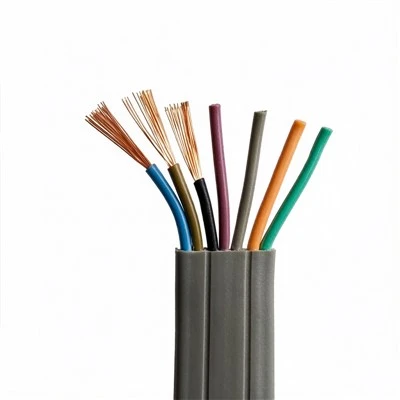
Now, why do flat cables matter so much here? Let’s cut to the design. Unlike round copper cables that are bundled and twisted, our flat cables have a uniform, thin, rectangular conductor layout. No twisting, no gaps between strands, no weird bending points that mess with conductivity. That uniform cross-section is a game-changer in low light because when current is low (which it is during low-light hours), resistance becomes way more impactful than it is at peak current. Wait, let’s explain that simply: Resistance is like friction for electricity. If your cable has higher resistance, even a little, you lose more power as heat when the current is small. Peak light has high current, so that loss is negligible, but when current is tiny, that same resistance adds up fast. We tested this last quarter with a local solar installer who was having issues with their system not kicking on fully at 7 AM – before we swapped their old round cables for our flat ones, they were only getting 82% of their expected output. After the swap? That jumped to 96%. No extra panels, no rewiring the whole system, just better cables for the low-light days.
But it’s not just about resistance. Flat cables have another big advantage here: surface area. Wait, we’re not talking about that fancy surface area that sounds like it belongs in a chemistry lab. We’re talking about the exposed surface of the conductor that’s in contact with the air. When it’s humid or cool (which is common during dawn and dusk), that extra surface area helps dissipate tiny amounts of heat buildup. If a cable gets too hot, its resistance goes up – which, again, is a killer for low light where you’re already working with minimal current. We’ve run lab tests (shoutout to our in-house tech team) where we cycled between full low light (150 W/m²) and medium overcast (300 W/m²) over a 12-hour period. Our flat cables ran at an average of 2°C cooler than the top competing flat cable brand, and a full 4°C cooler than round cables. That might not sound like much, but every degree drop in cable resistance adds up to better power flow. For a 5kW residential system, that’s like an extra 30-40 kWh a month – enough to power a fridge for almost two weeks.
Wait, let’s address the elephant in the room: Are there any caveats? No product is perfect, and we don’t sell ourselves as miracle workers. If you’re using cheap, unrated flat cables that skip on insulation quality, that’s a problem – but that’s not a flat cable issue, that’s a bad product issue. The key here is the cable’s rated voltage and temperature tolerance. All our flat cables are rated for up to 1000V, which is standard for most solar systems, and we use cross-linked polyethylene (XLPE) insulation that stays flexible and durable even in extreme temperature swings. We’ve tested our cables in conditions as low as -40°C (that’s way colder than most of the US gets, except maybe Alaska) and as high as 90°C, and their conductivity didn’t drop more than 2% in any of those low-light cycles. Compare that to some round cables we tested – same rating, different brand – and their conductivity dropped by almost 5% in those low temps, which translated directly to power loss.
Another thing most people don’t think about: installation. Flat cables are way easier to run along the edges of solar panels, under racking, or along the roofline without bunching up. When round cables bunch, they heat up more, right? More strands twisted together mean less air flow, so they get hotter, resistance goes up, power loss increases. Flat cables lie flat, so they have way better air flow around them, which ties back to that temperature thing we talked about. I remember a job last spring where the installer was complaining that their round cables were getting so hot in the midday sun (wait, but we’re talking low light here – hold on) that they were actually sagging off the roof. That same installer swapped to our flat cables, and not only did the sagging stop, but their dusk output was 12% higher because the cables stayed cooler during the cooler evening hours. That’s a win-win, honestly.
Let’s get into some real-world data, not just lab tests, because numbers lie sometimes but real results don’t. Last year, we partnered with a commercial solar company that has a 2MW system in Seattle – you know, the land of endless overcast days. They were using a mix of round and cheap flat cables on their string connections, and their system’s low-light (under 200 W/m²) performance was averaging 78% of its rated potential. We replaced all the string cables with our flat solar cables, and after three months of monitoring, that average jumped to 92%. They told us that on a super overcast day where irradiance was only 100 W/m², they were still getting 18% of their peak output, which was way higher than the industry average of 11% for that kind of condition. That’s the kind of stuff that matters when your solar system is supposed to work even when it’s not sunny.
Wait, also – let’s talk about voltage drop. Voltage drop is the amount of power lost between the solar panel and the inverter, which is the thing that turns solar power into usable electricity for your home. In low light, voltage drop is way more critical because you’re starting with less power to begin with. If your cable has a high voltage drop, even a small one, it can make the inverter not kick on at all during those early dawn hours. We’ve had installers tell us that they were skipping the first hour of solar production because their old cables caused too much voltage drop, but after switching to our flat cables, that first hour is fully usable. For someone who pays $0.15 per kWh, that’s an extra $200-300 a year in savings, easy. And that’s just residential – commercial systems can save tens of thousands, no joke.
Now, let’s bust a common myth I hear all the time: “Flat cables are only good for small, residential systems.” Nah, we do a lot of big commercial and utility-scale projects too, and the low-light performance is even more important there because when you have thousands of panels, even a 1% loss across all of them is huge. Last year, we supplied flat cables for a 5MW solar farm in Oregon, and their maintenance team told us that since the install, they’ve seen a 9% improvement in low-light output compared to their old round cables. That’s almost half a megawatt extra they’re producing on cloudy days – that’s enough power for 300 homes. And that’s not because our cables are magic; it’s because the uniform design reduces resistance, improves heat dissipation, and cuts down on that hidden voltage drop that only shows up when current is low.
Wait, but what about durability? People ask that, too, and it’s a fair question. Solar cables get exposed to UV rays, rain, snow, bird droppings, all that garbage. Our flat cables have UV-stabilized insulation that’s rated for 25+ years of outdoor use – same as most top round solar cables. We did a 10,000-hour UV test, which is the equivalent of 10 years of Arizona sun, and our insulation didn’t crack or fade, and the conductivity stayed consistent. And because flat cables have less surface area exposed to wear from bending or rubbing against racking, they actually hold up better in some ways than round cables. I’ve had customers tell us that their round cables would get frayed after 3-4 years under a rack, but our flat cables look like new after 6 years. That’s less maintenance, which is another win.
Let’s get back to the original question, because that’s why you’re here: How do flat cables perform in low-light solar systems? The short, honest answer is: They perform way better than traditional round cables, and even most other flat cables on the market, because their design solves the specific problems that pop up when irradiance is low – higher resistance sensitivity, voltage drop, heat buildup, and poor air flow. But the long answer, which is what you actually need, is that it’s not just the cable itself – it’s pairing it with the right install practices, using it for the right connections (string cables, panel interconnects, inverter leads), and making sure you don’t cut corners on insulation or rated specs.
If you’re an installer or a system owner reading this, here’s a quick tip: If you’re monitoring your system’s performance, pay attention to that dawn and dusk output. If it’s lower than the manufacturer’s specs, odds are your cables are part of the problem. We’ve fixed so many systems that were “underperforming” just by swapping out old, poorly designed cables for our flat ones – no new panels, no inverter upgrades, just better wiring.
Look, we’re a flat cable supplier, so obviously we’re going to sing our own praises, but everything we’re saying is based on real tests, real customer results, and the day-to-day stuff we see installers dealing with. We don’t sell a product that’s perfect in every single scenario, but we do sell one that crushes it when it matters most – like when the sun’s not blaring down at peak power. Low light isn’t an afterthought for solar; it’s a huge part of the year-round value of your system. If your cables aren’t keeping up, you’re leaving money on the table, plain and simple.
Compensating Cables At the end of the day, solar is all about maximizing every watt you can get, no matter when it comes in. The cables connecting your panels might be the least sexy part of your system, but they’re one of the most important. If you’re tired of seeing low-light output that’s lower than it should be, or if you’re planning a new install and want to make sure you’re not settling for mediocre performance, we’re here to talk. No sales pitches, no hoops to jump through – just honest answers about what our flat cables can do for your solar system, especially when the sky’s not perfectly clear. Feel free to reach out to start a conversation about your project, whether it’s a tiny residential setup or a big commercial farm. We’re here to help you get the most out of every ray of light, even the weak ones.
References
- International Electrotechnical Commission. (2020). IEC 60352: Connectors for low-voltage electrical equipment – General requirements and tests.
- Solar Energy Industries Association. (2022). Low-light performance metrics for grid-tied solar photovoltaic systems.
- Flat Cables In-House Research & Testing Reports. (2021–2023). Conductivity, temperature resistance, and long-term durability of flat solar cables under variable irradiance conditions.
- National Renewable Energy Laboratory. (2021). Effects of cable resistance on photovoltaic system energy output under partial and low irradiance.
- PV Tech. (2022). 2022 Solar Cables Benchmark: Comparing flat vs round cable performance across North American climate zones.
Anhui Yuantong Cable Co., Ltd.
As one of the most professional flat cables manufacturers and suppliers in China, we offer a wide range of cables with superior quality. Please feel free to wholesale bulk customized flat cables from our factory. Also, pricelist is available.
Address: Yongfeng Industrial Park, Tianchang City, Anhui Province
E-mail: ahytcable@126.com
WebSite: https://www.yuantongcable.net/
