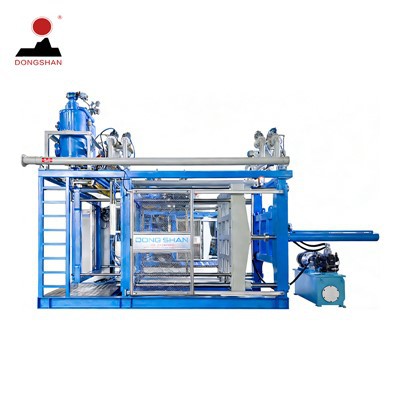
As someone who’s spent the last decade designing, installing, and refining EPS (Expanded Polystyrene) recycle systems for manufacturers and waste management operators across North America, I’ve seen firsthand how many companies cut corners when it comes to this process. Too often, buyers treat EPS recycling as a “set-it-and-forget-it” machine, only to run into bottlenecks that derail operations, inflate costs, or fail to meet environmental compliance standards. The core of a reliable EPS recycle system isn’t just a single machine—it’s a coordinated, multi-part network of components, each with a specific job to do, and each one dependent on the others to work seamlessly. Let me break down exactly what those components are, and why skipping even one can sink your recycling goals. EPS Recycle System
First, let’s start at the very beginning: the Infeed and Pre-Sorting Station. You can’t process what you don’t handle correctly, and this is where most systems go wrong. EPS waste comes in every shape and size—from rigid packaging peanuts and protective foam blocks to food containers, insulation panels, and even construction scrap. It also comes contaminated. Food residue, tape, labels, wood fragments, metal bits, and other plastic types (like PET or HDPE) are commonplace in EPS waste streams. A bad infeed station either lets too much contamination through, leading to downstream equipment damage, or slows down processing so much that you’re left with a pile of unprocessed waste.
A properly designed infeed/pre-sorting station isn’t just a dump bin. It starts with a pre-sort conveyor that brings all incoming EPS to a staging area, where on-site staff can pull out obvious non-EPS materials. But for high-volume operations, manual sorting only goes so far. That’s why top systems integrate optical sorters here—sensors that can identify EPS based on its molecular makeup and reject contaminants in real time. Some also include a magnetic separator to pull out metal fasteners from construction foam, and an air classifier to sift out lighter debris like paper or tape. I always tell clients: this station isn’t “busy work.” It’s your first line of defense to protect every other part of your system. I once worked with a small e-commerce packaging business that skipped a proper infeed sorter; within six months, their compactor was damaged by a steel nail hidden in foam blocks, costing them $12,000 in repairs and a week of downtime. That’s the kind of avoidable loss we’re here to prevent.
Next, the Size Reduction System, which is almost always a heavy-duty EPS shredder or granulator. EPS is low-density by nature—its expansion leaves it 95% air, so processing large pieces whole would waste space and energy. The job of the granulator is to take sorted, clean EPS and break it into consistent, small flakes (usually between 3mm and 10mm) that are easy to handle in downstream equipment. Not all granulators are equal, though. For post-industrial waste, you might use a slower, shear-style granulator that cuts cleanly without creating too much fine dust, which can clog filters and machinery. For post-consumer waste that’s more brittle, a high-speed impact granulator works better. The key here is consistency: unevenly sized flakes cause issues in the densifier, which we’ll talk about next. I also make sure every granulator we supply has a dust extraction port; EPS dust is not just a nuisance, it’s a fire hazard, so containing it at the source is non-negotiable. That’s a safety detail too many smaller suppliers overlook, leading to OSHA fines and workplace risks.
Once you’ve got clean, uniform EPS flakes, the next critical component is the Hot Melt Densifier. This is the heart of the EPS recycle system, and the part that separates EPS recycling from just grinding it up. Raw EPS is 95% air, so transporting it or storing it is expensive—one cubic yard of loose EPS weighs less than a pound. The densifier solves that by melting the EPS under controlled heat and pressure, squeezing out all the trapped air, and compacting it into dense, solid blocks called “ingots” that are about 50:1 in density compared to the raw foam. That means 50 cubic yards of loose EPS becomes one cubic yard of ingots, cutting storage and shipping costs dramatically.
What makes a good densifier? First, temperature control. EPS has a low melting point (around 100°C, or 212°F), but overheating it can cause it to burn, leaving discolored ingots that are worthless for resale. A well-built densifier has a precision thermostat and a hydraulic compression chamber that exerts consistent pressure to squeeze out air uniformly. I also prioritize closed-loop water cooling systems for the chamber—open systems can lead to water waste and inconsistent cooling, while closed systems recycle water, keeping operational costs down. The densifier also needs an exhaust system to capture any fumes released during melting; while EPS is non-toxic, small amounts of volatile organic compounds (VOCs) are released when it’s melted, so meeting local air quality standards is a must. One of my clients in the construction industry used a cheap, unregulated densifier a few years back, and their local environmental agency issued a $15,000 fine for unfiltered VOC emissions. That’s the kind of cost that makes a quality densifier pay for itself in no time.
After the densifier, you have the Ingot Cooling and Curing Station. A lot of people think that once the EPS is squeezed into ingots, it’s ready to go—but that’s not true. Hot ingots are soft and malleable, and they need to cool and cure to maintain their shape. If you cut corners here, ingots can warp, crack, or even break apart during transport or storage, making them unmarketable. The cooling station usually consists of a water bath (or a forced-air cooling system, depending on ingot size) that brings the temperature down to around room temperature. For larger ingots, we often add a curing tunnel: a long, insulated space where ingots sit for 24 to 48 hours to let any remaining internal heat escape, and the plastic structure stabilizes. This step might add a little time to the process, but it’s what makes your ingots sellable to manufacturers who use them to make new packaging, insulation, or even picture frames.
Once the ingots are cured, the next component is the Storage and Packaging Station. Again, low density comes back into play here. Dense ingots still need to be stored safely, away from moisture (which can cause them to degrade over time) and out of direct sunlight, which can make EPS brittle. A good storage station has dedicated, covered bays with proper ventilation to prevent mold or mildew. For packaging, we offer two options depending on the client’s needs: some clients want bulk packaging for large shipments, so we install automated bulk baggers that fill heavy-duty, UV-resistant bags with ingots, ready to ship to reprocessors. Others need smaller, market-ready batches, so we offer strapping and wrapping machines that bundle ingots into uniform pallets, with barcodes for inventory tracking.
Wait, but we can’t forget the Support Systems that keep all of this running smoothly. No component works in a vacuum, and the most reliable EPS recycle systems integrate four key support components that many suppliers overlook. First is the Control and Monitoring System. Modern EPS systems aren’t just manual—they’re IoT-enabled, with touchscreen controls that let you adjust speed, temperature, and pressure in real time. They also monitor for issues like granulator blade wear, densifier chamber pressure, and dust buildup, sending alerts to operators before a small problem becomes a big breakdown. Second is the Dust and Fume Extraction System, which we touched on earlier, but it’s worth repeating: a high-powered extraction system pulls fine EPS dust from the granulator and infeed station, filters it out, and recycles it back into the melt process (so you’re not losing valuable material). Third is the Safety and Compliance System, which includes fire suppression systems (EPS is flammable, even in granulated form), emergency stop buttons at every key component, and spill containment trays to catch any melted material leaks. Fourth is the Maintenance Support System, which is more than just a manual—it’s access to our team of technicians who can perform routine inspections, replace blades or worn parts, and troubleshoot remotely.
I’ve had clients come to me after buying a cheap, “all-in-one” EPS system from a supplier overseas, and within a year, they’re dealing with constant breakdowns, low-quality ingots, and OSHA violations. The difference is that a quality EPS recycle system isn’t just a machine—it’s a collection of components designed to work in harmony, with safety, efficiency, and marketability in mind.

So what does this mean for you? If you’re a manufacturer looking to reduce your EPS waste footprint, or a waste management company looking to add a revenue stream from recycling, don’t just look for a single densifier or granulator. Ask about the entire system: the infeed sorting, the size reduction, the densification, the cooling, and the support systems. Ask about compliance, safety, and after-sales support. At the end of the day, the best EPS recycle systems are built not just to process waste, but to turn it into a valuable asset.
Vacuum System If you’re ready to build or upgrade your EPS recycle system to save costs, meet environmental goals, and turn waste into revenue, we’re here to work with you every step of the way. Reach out to our team to discuss your specific needs, from small-scale operations to high-volume industrial facilities, and we’ll design a system tailored to your business.
References
- American Chemistry Council. (2022). EPS Recycling Guidelines for Commercial and Industrial Operations.
- Environmental Protection Agency (EPA). (2021). Polystyrene Waste Management: Best Practices for Recycling and Compaction.
- Plastics Industry Association. (2023). EPS Recycling Equipment Performance Standards.
- Occupational Safety and Health Administration (OSHA). (2022). Hazard Prevention for Plastic Processing Operations.
Hangzhou Fuyang Dongshan Plastic Machinery Co., Ltd.
Hangzhou Fuyang Dongshan Plastic Machinery Co., Ltd. is one of the most professional EPS recycle system manufacturers and suppliers in China, featured by quality products and low price. Please feel free to wholesale advanced EPS recycle system made in China here and get quotation from our factory. Customized orders are welcome.
Address: 101 Guanting, Baiqian Villige, Luzhu Town, Fuyang District, Hangzhou City, Zhejiang Province, China
E-mail: xu@dong-shan.cn
WebSite: https://www.epseppmachinery.com/
