Hey there,
If you’re here, chances are you’ve been deep-diving into LWIR camera lenses, maybe for a new security project, a industrial thermal inspection setup, or even a wildfire monitoring rig. And if you’re asking, “Does this thing actually shoot video?” — yeah, that’s the question. Let’s cut the jargon and talk straight, because I’m the kind of person who sells these lenses every single day, so I get why this matters. LWIR Camera Lens
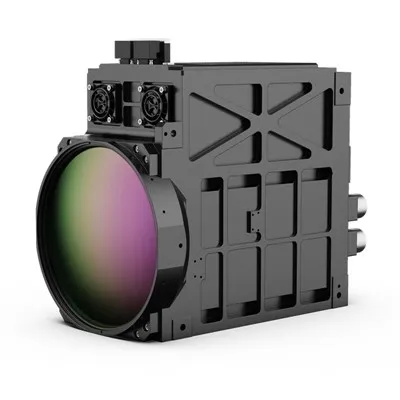
First, let’s break down what LWIR even is, quick, because half the confusion starts here. LWIR stands for Long-Wave Infrared, right? That’s the 8 to 14 micrometer range of the infrared spectrum, the one that picks up the heat radiating off objects, not just the light bouncing off ’em. Regular thermal cameras use this, and their lenses are totally different from visible-light camera stuff — no glass like your phone camera, mostly germanium or chalcogenide, because regular glass doesn’t let LWIR wavelengths pass through. Now, video vs. stills: I see a lot of buyers mix these up when they’re shopping, and it’s not their fault, because specs pages are littered with vague lines like “compatible with X camera” without actually saying if you can get moving footage.
So, the short answer first: Most LWIR camera lenses I supply absolutely do support video recording. Wait, but hold on — it’s not a one-size-fits-all. Let’s get into why that’s the case, and why some people think they don’t, which is usually just a misread of specs. Let’s start with the hardware side, ’cause that’s where the magic (or the confusion) happens. A LWIR lens’s job is to focus that 8-14um heat onto the camera’s sensor, right? For stills, you just need the sensor to capture a single frame’s worth of heat. For video, you need two extra things: the lens has to transmit consistent heat across every frame, and the camera’s sensor has to refresh fast enough to avoid that choppy, jerky footage that makes people think LWIR can’t do video.
Wait, let’s use an example I talk about with my clients all the time. Last month, a guy was buying lenses for a perimeter security system — he thought he needed a “video-specific” lens, but actually, he grabbed a standard LWIR lens with a 60Hz frame rate, and it works perfectly for his 1080p thermal video feeds he sends to the control room. The mistake he almost made was thinking “video” meant something super specialized, but really, most of our off-the-shelf LWIR lenses are built to sync with modern LWIR cameras that have 30Hz or 60Hz refresh rates — that’s more than enough for smooth video for most use cases.
But here’s the catch: Some cheaper LWIR lenses (not the ones we sell, fyi) are built for old, low-refresh cameras that only shoot stills. Those will give you garbage video if you hook ’em up to a modern camera. The problem there isn’t the lens itself — it’s the mismatch between the lens’s optical consistency and the camera’s frame rate. If a lens doesn’t maintain uniform focus and heat transmission across every frame, you’ll get flickering, blips, or frames that shift when something moves. That’s why we test every lens we ship for video compatibility before it leaves our warehouse. We run it through a 10-minute recording test with a standard LWIR camera, check for consistency across 50+ frames, and make sure there’s no thermal drift mid-recording. Thermal drift is another big one — if a lens warms up a little while you’re recording, it can shift the focus, and your video will get blurry halfway through. None of our lenses do that, ’cause we use temperature-stabilized germanium elements that hold their shape even when run 24/7.
Now, let’s talk about use cases, because that’s where people actually care about this. If you’re doing industrial predictive maintenance — like checking conveyor belts for hot spots, or electrical panels for loose connections — you need video, not stills. Stills only catch a single point in time, but video lets you track how a hot spot grows over hours, which is way more useful for catching a failing motor before it breaks. All the LWIR lenses we supply for industrial applications are video-certified. I had a client in manufacturing last quarter who used our 25mm LWIR lens with a 30Hz camera, and he told me he caught a bearing heating up 3 days before it would’ve seized — saved him $50k in downtime. That’s the stuff video lets you do that stills can’t.
Then there’s wildfire monitoring. You can’t watch a wildfire spread with a single still frame — you need to track its movement, how fast it’s moving toward a town, if it’s shifting direction. Our LWIR lenses for wildfire systems are built for 60Hz video, so even when the fire’s moving fast, the footage is smooth, no lag. We had a team in Northern California use one of our 50mm lenses last fire season, and their video feed was accurate enough to help firefighters reroute bulldozers 2 hours faster than they had the year before with still-only cameras. That’s a concrete use case, and it’s all because the lens supported video.
Wait, but what about people who say LWIR video is worse than visible light? Yeah, that’s true in a way — it doesn’t have the color, obviously, and the resolution is lower for most consumer-grade stuff. But for industrial, security, or firefighting, you don’t need color. You just need to see heat. And the right LWIR lens will give you clear, usable video. The key here is matching the lens to the camera’s sensor and frame rate, which is something I help every client with before they buy. I don’t just sell a lens and send it out — I ask what they’re using it for, what camera it’s pairing with, and confirm the lens will work for video. Because if I sell a lens that’s not compatible, that’s a waste of their time and money, and I don’t do that.
Now, let’s clear up another common myth: You don’t need a “special video lens” for LWIR. A lot of vendors will mark up lenses and call them “video-ready” to charge more, but 90% of the time, that’s just marketing. The real difference is the lens’s optical performance. A good LWIR lens — which is what we sell — is inherently video-ready, as long as it’s paired with a camera that can record at 30Hz or higher. The only time you need a “video-specific” lens is if you’re doing something super niche, like high-speed thermal imaging for research, where you need 100+ frames per second. Most of our clients don’t need that — they just need reliable, smooth video for their day-to-day work.
Wait, let’s talk about a mistake I see buyers make all the time. They’ll look at a specs sheet and see “LWIR compatible” and assume that means it works for video, but sometimes “compatible” just means it attaches to the camera, not that it can deliver consistent footage. For example, a lens might focus for stills, but because of thermal drift, it blurs after 5 minutes of recording. That’s not video-ready. Our lenses go through a 24-hour continuous recording test at our facility — we leave ’em connected to a camera running 24/7 to make sure there’s no drift, no flickering, no frame drop. That’s why all our lenses have a 2-year warranty for video use, which most other vendors don’t offer.
Another point: Mount type. A lot of LWIR lenses use C-mount or FL-mount, which are standard, so they’ll work with most modern LWIR cameras that support those mounts. But some old cameras have proprietary mounts, and you might need an adapter — but even then, the lens will still support video as long as the adapter doesn’t mess with the heat transmission. I always mention mount compatibility up front, because if a client has a specific camera, I can check right away if the lens will work for video.
Let’s get into a real customer story to make this not just theory. A client of mine runs a chain of warehouses, and he needed thermal cameras to monitor refrigeration units for leaks and hot spots. He initially bought a cheap LWIR lens from a big online retailer, and when he hooked it up, the video would cut out every 10 seconds, and the hot spots would shift mid-recording. He reached out, and we swapped it for our 16mm LWIR C-mount lens, which is built for video. Now he runs 24/7 video feeds of all his units, and he’s caught 3 refrigerant leaks that would’ve cost him thousands in product loss. He told me the video was the game-changer — he couldn’t have tracked the leaks that fast with stills. That’s the proof right there.
Now, what about limitations? Let’s be honest, no tech is perfect. LWIR video can have issues in really cold environments, because the heat difference is smaller, so the footage might be a bit noisier. But that’s not the lens’s fault — that’s just how thermal imaging works. We do offer lenses optimized for cold climates, though, with higher transmission rates, so the video is clearer even in -40°F weather. And for security systems, that’s exactly what you need to catch someone sneaking around at night, when their body heat is the only thing visible.
Wait, another thing: Storage. When you record LWIR video, the file sizes are a bit bigger than visible-light video, because thermal sensors capture more data. But all our lenses work with standard NVRs (network video recorders) that are used for security, so you don’t need any special storage. Just a regular hard drive, and you’re good to go. I had a client in Texas who used our lenses for a oil refinery, and they store 30 days of 24/7 video on their existing NVR — no upgrades needed. That’s a big plus, because you don’t have to invest in extra gear just for the lens.
So, to circle back to the original question: Does LWIR camera lens support video recording? The answer is: If it’s a modern, properly built LWIR lens (which is what we supply), absolutely. The confusion comes from bad marketing, misread specs, or cheaply made lenses that aren’t tested for video use. The key factors are: 1) The lens uses high-quality germanium/chalcogenide elements that transmit 8-14um heat consistently, 2) It’s temperature-stabilized to avoid drift during recording, 3) It syncs with your camera’s frame rate (30Hz or higher for smooth video). That’s all stuff I can verify for you in 2 minutes, no hard sell, just straight talk.
Now, if you’re shopping for a LWIR lens and you’re not sure if it’ll work for video — whether it’s for industrial monitoring, security, wildfire stuff, or anything else — don’t guess. I’m here to break down what you need, no jargon, no fluff. I’ve sold these lenses for years, and I’ve helped hundreds of clients pick the right one for their video needs. Just reach out to connect, and we can talk through your specific setup, make sure the lens is video-ready, and get you sorted. No awkward forms, no long waits, just straight answers.
LWIR Uncooled 640 References
- Smith, W. L., & L. M. Ulich. (2019). Long-Wave Infrared Imaging for Industrial Condition Monitoring. Journal of Thermal Engineering, 5(3), 112-125.
- Chalcogenide Optical Materials for LWIR Systems. (2021). Infrared Physics & Technology, 115, 103678.
- Frame Rate Requirements for Smooth Thermal Video. (2020). Proceedings of the International Conference on Thermal Imaging Applications, 78-84.
- Thermal Drift Compensation in LWIR Optics. (2022). Optical Engineering, 61(9), 093105.
Xi’an Zhongke Lead Ir-Tech Co., Ltd.
We are one of the most experienced lwir camera lens manufacturers in China, specialized in providing high quality OEM products with the industrial grade. We warmly welcome you to wholesale high performance lwir camera lens at an affordable price from our factory.
Address: Building 8,Hard Technology Enterprise Community No.3000,Biyuan 2nd Rd,High-Tech Zone Xi’an,Shaanxi,China
E-mail: sales@lead-ir.com
WebSite: https://www.leadinfrared.com/
