If you’ve ever installed a server rack, connected a high-performance compute cluster, or set up a data center’s backbone, odds are you’ve wondered how far, and how reliably, your signal will stretch without corruption. As someone who’s spent the last 12 years building active optical cable (AOC) modules for network and telecom customers, I hear this question every single week: What is the scalability of an Active Optical Cable Module? It’s not a one-sentence answer, not when scalability means something different to a startup scaling its on-prem network and a Fortune 500 client adding 10,000 square feet of data center space. Let’s break this down, from the technical nuts and bolts to how we design our modules to keep your growth plans on track. Active Optical Cable Module

First, let’s define what we actually mean by scalability for an AOC module. Unlike copper cables, which rely on electrical signals that attenuate, distort, and emit interference over distance, AOCs convert electrical signals to light at one end, transmit them through thin glass fiber, and convert them back at the other. But scalability here isn’t just “how long can the cable be?” It’s three interconnected layers: port scalability (how many devices you can daisy-chain or connect end-to-end), distance scalability (how far signals stay clean enough for your network gear to process), and bandwidth scalability (how much data you can push through that connection without slowing things down). Every one of these layers ties back to the module’s core components: the laser diodes, photodiodes, fiber grade, and signal conditioning chips we spec during design.
Let’s start with distance scalability, because that’s the most tangible example. When I first got into this industry back in 2011, most 10G AOCs topped out at 10 meters. That worked well for small server racks, where all devices sat within a few feet of each other, but once data centers started spreading switches across separate cages, that wasn’t enough. Today, our standard AOC lines go from 1 meter (for short, high-density server-to-switch connections) all the way up to 10,000 meters (10 kilometers) for long-distance inter-switch or data center campus links. The difference? We don’t cut corners on the fiber or laser drivers. For shorter cables (1 to 100 meters), we use multi-mode fiber (MMF) with 850nm vertical-cavity surface-emitting lasers (VCSELs) that are low-power, low-cost, and perfect for high-speed, short-reach connections. For distances over 100 meters, we switch to single-mode fiber (SMF) paired with 1310nm or 1550nm distributed feedback (DFB) lasers, which have narrower line widths and can carry light much farther without signal loss.
What a lot of network architects don’t realize is that distance scalability isn’t a hard cap we set arbitrarily. We test every module we build to ensure it meets the industry’s most stringent IEEE and SFF standards, which means a 5-meter 100G AOC from our line will perform exactly like a 500-meter or 2,000-meter version, as long as you pick the right one for your needs. Last year, a client from a mid-sized bank came to us after their old copper cables started dropping packets when they moved their backup storage from the main data center to a secondary site 7 kilometers away. They’d tried a generic AOC from a bulk supplier, but it only worked for 3 kilometers before signal degradation caused frequent disconnects. We worked with their team to spec a 7-kilometer 100G SMF AOC, and after installation, they haven’t had a single packet loss in 18 months. That’s the kind of scalability we deliver: matching the module’s performance to your actual network growth, not just selling a one-size-fits-all product.
Next is bandwidth scalability, which is often the first thing people ask about when their AOC starts feeling slow. Ten years ago, bandwidth needs were modest: most networks ran at 1G, then 10G, then 40G. Today, 100G is standard for data center backbones, and 400G, 800G, and even 1.6T modules are already in mass production for next-gen systems. Scalability here means an AOC module that can keep up with that pace, without forcing you to replace your entire cable plant every time you upgrade your switches. Our modules are designed with backward compatibility built in, but also with forward scalability for future bandwidth jumps. For example, our 100G AOC family includes variants that can run at 10G, 25G, 40G, and 100G, all on the same physical cable length. That means if you install a 100-meter AOC today, and next year you upgrade your switch from 100G to 400G, you don’t have to rip out and replace the entire cable. You just swap out the transceivers on the switch end (as long as they’re compatible with our module’s digital diagnostics monitoring, or DDM, feature) and you’re good to go.
DDM is a key part of bandwidth scalability that many people overlook. Every one of our AOC modules has built-in DDM functionality, which means you can monitor real-time performance metrics: laser output power, received signal power, temperature, and voltage. That’s not just for troubleshooting—it’s for scaling your network proactively. If your DDM alerts you that signal power is starting to drop slightly as you approach the upper distance limit of a given module, you can adjust signal levels or plan to upgrade to a longer-reach module before you experience downtime. For a growing business, that means you don’t have to overbuy modules today to accommodate growth in two years; you can scale incrementally, with full visibility into when you need to adjust your setup.
The third layer of scalability is port scalability, which is all about how many devices you can connect and how flexible your network topology is. AOC modules aren’t just point-to-point cables—they can be used in daisy-chain configurations, split across multiple switches, and integrated with existing network infrastructure without requiring rewiring. For example, in a data center, you can connect a top-of-rack (ToR) switch to a spine switch with a single 10-kilometer AOC, then daisy-chain three more ToR switches off that spine without losing performance. Unlike copper, which can suffer from crosstalk when multiple cables run parallel to each other, AOCs use light, so they don’t emit electromagnetic interference (EMI) or suffer from it. That means you can run 100 AOCs side-by-side in a dense rack environment, and each one will perform exactly the same as it would alone. That’s a huge benefit for scaling dense server deployments, where every inch of rack space matters, and EMI from copper cables can cause signal corruption even at short distances.
I want to be clear: there are limits to AOC scalability, and we never oversell our products. For example, if you need a point-to-point connection over 10 kilometers, we can do that, but it requires SMF and DFB lasers, which are more expensive than the 1-meter MMF AOCs we use for server-to-switch links. We also don’t recommend daisy-chaining more than four AOCs end-to-end for long-distance connections, because each conversion (electrical to light, back to electrical) adds a tiny amount of latency, and too many conversions can add up over very long distances. The key to scalability with AOCs is matching the module’s specs to your specific use case, not chasing the longest distance or highest bandwidth number just for the sake of it.
Over the years, I’ve seen so many businesses underestimate the hidden costs of inflexible network cables. A few years ago, a startup specializing in AI model training installed a cheap 10G copper cable plant, thinking they’d only need it for their initial 10-server deployment. Six months later, they expanded to 100 servers and needed to upgrade to 100G, but their copper cables couldn’t handle that bandwidth, and the cost to replace the entire cable plant, plus the downtime for installation, ended up being three times what it would have cost to install scalable AOC modules in the first place. That’s why we design every module with long-term scalability in mind: we test our components for 10+ years of operational life, use standardized form factors (like QSFP-DD, SFP56, and OSFP) that work with all major switch manufacturers, and offer variant lines that can grow with your network.
Another factor that ties into scalability is environmental performance, which is often overlooked. When you’re scaling your network, you might move it to a new data center, install it in extreme temperatures, or run it in high-humidity environments. Our AOC modules are tested to operate from -40°C to 85°C, and they meet IP67 rating for ruggedness, so they can be deployed in outdoor data centers, edge computing sites, and other non-controlled environments without losing performance. That means if your business expands to new locations, you don’t have to buy new cables just because the environment changed.
So when someone asks me, “What is the scalability of an Active Optical Cable Module?” my answer isn’t a single number—it’s a tailored solution that aligns with your growth plans. If you’re a small business scaling from 10 servers to 100 in the next two years, we can spec a line of short-reach AOCs that support incremental bandwidth upgrades without replacing your cables. If you’re a large enterprise building a new data center campus, we can design a long-reach, high-bandwidth AOC plant that can support up to 1.6T per port as your switch technology advances. If you’re an edge computing provider deploying nodes across a wide geographic area, we have rugged, long-distance modules that can operate in extreme conditions.
At the end of the day, the goal of a scalable AOC module is to let you focus on growing your business, not on replacing your network infrastructure every time your needs change. We’ve spent years refining our designs, testing every component, and working with clients across every industry to make sure our modules deliver the scalability they need, whether that’s for a small startup or a global telecom provider.
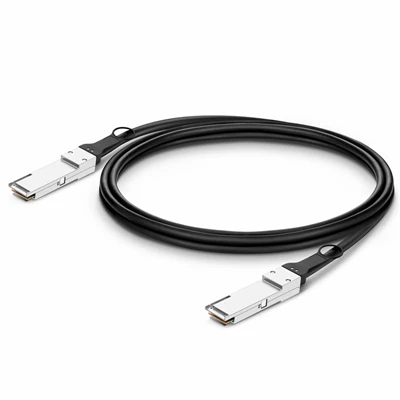
If you’re planning to scale your network, whether that’s upgrading bandwidth, expanding your data center, or deploying new edge sites, we’re here to help you pick the right AOC modules for your needs. We don’t believe in one-size-fits-all solutions, and we can work with your team to design a cable plant that grows with you for years to come. Reach out to our team to discuss your project, and let’s build a scalable network that fits your goals.
Infrared LED Emitters References:
IEEE Std 802.3-2022: Standard for Ethernet
SFF-8431: SFP+ Active Optical Cable Specification
SFF-8665: QSFP+ Active Optical Cable Specification
International Electrotechnical Commission (IEC) 60793-2-50: Optical fibers – Product specifications – Part 2-50: Single-mode fibres
Telecommunications Industry Association (TIA) TIA-568-C.2: Commercial Building Telecommunications Cabling Standard
Zhejiang Chengmei Technology Co., Ltd.
As one of the most professional active optical cable module manufacturers and suppliers in China, we’re featured by quality products and good price. Please rest assured to wholesale bulk premium active optical cable module made in China here from our factory. Also, quotation is available.
Address: No. 383, Jinhe Road, Qinshan Street Industrial Park, Haiyan County, Jiaxing City, Zhejiang Province
E-mail: shiwei@cm-semi.com
WebSite: https://www.cmfiber.com/
