When I first started working as a level sensor supplier, I thought ultrasonic tech was just for measuring how much gas was in a tank. Over the past decade, I’ve learned it’s one of the most versatile tools in industrial operations—way more than I ever imagined. Last month, I worked with a food processing plant that couldn’t figure out why their liquid ingredient tanks kept triggering false overfill alerts, and an ultrasonic level sensor was exactly what fixed the problem. That’s the kind of story that makes every day in this business worth it, because we’re not just selling parts; we’re solving real headaches for teams that rely on accurate, reliable measurements to keep their lines running. Level Sensor
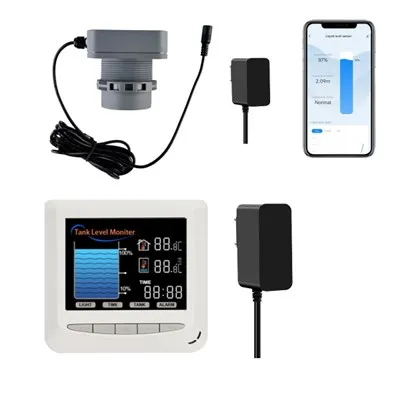
Let’s break down what makes ultrasonic level sensors different from older tech, because that’s where their power comes from. Unlike pressure sensors that sit at the bottom of a tank, or float level sensors that get stuck on debris or thick liquids, ultrasonic units use sound waves to measure distance. They send a high-frequency signal (too high for humans to hear) from a transducer mounted at the top of a tank, which bounces off the surface of whatever’s inside, then calculates distance based on the time it takes for the echo to come back. The big win here? No parts touch the material being measured. That cuts down on wear and tear, eliminates cross-contamination risks, and works on almost any non-corrosive liquid or solid—so long as the surface can bounce a sound wave. No wonder they’re popping up in industries I never would’ve guessed 10 years ago.
One of the most common uses I see is in water and wastewater treatment facilities, and that’s where their versatility really shines. Let’s start with the raw water intake tanks at a municipal treatment plant. These are open-air, large-capacity tanks that hold water before it’s treated. Ultrasonic sensors work perfectly here because they can measure levels in open channels too, not just enclosed tanks. I supplied a team in Ohio a few years back that uses them to track flow in the primary clarifier channels—they mount the sensor above the channel, send a signal across the flowing water, and the unit’s software calculates both level and flow rate in real time. Before that, they were using weirs and manual measurements, which meant updating flow logs once a day and missing spikes that caused overflow. Now they get alerts the second levels get too high, so they can adjust pump rates before any water backs up into local storm drains. We also supply these sensors for secondary clarifiers, aeration tanks, and even sludge holding tanks at the treatment plant. Sludge is thick, semi-solid stuff that would clog a float sensor or mess up pressure readings at the bottom, but ultrasonic waves bounce right off the surface, so they get an accurate level without touching the gunk. That cuts down on maintenance time for their team, which is huge when plant workers are already stretched thin regulating water quality for 50,000 local residents.
Moving to food and beverage manufacturing, this is an area where ultrasonic level sensors are non-negotiable, thanks to strict food safety regulations. I worked with a craft brewery in Colorado last year that was having issues with their fermentation tanks. These tanks hold wort—unfermented beer, which is sugary and foamy—and traditional float sensors would get covered in foam, leading to incorrect level readings. A stainless steel ultrasonic sensor, mounted above the tank, doesn’t touch the wort or the foam, so it measures the true level of the liquid without interference. That means they can control the flow of wort into the tank precisely, no overfilling, no wasting product. Another client is a sauce manufacturer in Indiana that uses our ultrasonic sensors to track levels of thick tomato puree in 10,000-gallon storage tanks. The puree is viscous, so pressure sensors would get clogged with residue at the bottom, and optical sensors can’t see through the thick liquid. Ultrasonic works here because even viscous liquids reflect sound waves, and since the sensor sits above the tank, there’s no contact with the product at all—critical for meeting FDA guidelines that require no cross-contamination between ingredients. I also recently supplied a snack food company that uses these sensors for their grain silos, tracking levels of corn and potato flakes for their chips. Silos are dusty, and grains leave residue that would gum up float sensors, but ultrasonic sensors handle dust really well because the sound wave penetrates light dust clouds, so they get an accurate reading even in that messy environment.
Then there’s chemical processing, an industry where accuracy and safety are everything. Chemical plants deal with corrosive liquids, flammable materials, and high temperatures, so sensors need to be durable and not spark or corrode. Ultrasonic level sensors are perfect here because they’re non-contact, so there’s no risk of short circuits or sparking that could ignite volatile chemicals. I worked with a petrochemical plant in Texas that uses our sensors to track levels of sulfuric acid in storage tanks. The acid is highly corrosive, so a traditional pressure sensor at the bottom of the tank would need to be replaced every six months due to corrosion—now the ultrasonic unit, mounted on the top of the tank, is made of coated aluminum that resists acid fumes, and we haven’t had to replace it in three years. Another use in chemical plants is for hazardous waste storage tanks. These tanks hold materials that can’t be exposed to air, so ultrasonic sensors can be mounted in sealed, vapor-tight housings, and still measure levels accurately without breaking the seal. That eliminates the need to open tanks to take manual readings, which saves time and keeps workers safe from exposure to toxic fumes. I also recently supported a pharmaceutical client that uses our ultrasonic sensors for their solvent storage tanks—solvents like ethanol and isopropyl alcohol evaporate quickly, so traditional level sensors that require contact would be contaminated by vapors or mess up readings, but our non-contact units handle that perfectly.
I’ve even seen ultrasonic level sensors used in places you might not expect, like agricultural operations and construction. On a farm, large grain silos, fertilizer storage bins, and irrigation water tanks all benefit from these sensors. A client in Iowa has a 20,000-bushel grain silo that tracks levels of corn and soybeans year-round. Before ultrasonic sensors, they’d have to send a worker up to the top of the silo with a tape measure every few months to check levels—a job that’s dangerous, especially in tall silos with uneven grain levels. Now their ultrasonic sensor sends data to a phone or tablet, so they can check how much grain is left before harvest season, plan storage space, and avoid running out before the next crop comes in. For construction sites, especially those with large water tanks for concrete mixing or dust suppression, ultrasonic sensors keep track of water levels so crews don’t run out of water mid-project. I worked with a construction company in Arizona that uses these sensors for their dust control tanks in the desert—high temperatures and dusty conditions mean traditional sensors would fail quickly, but their ultrasonic units have temperature compensation, so they adjust for the heat and keep accurate readings even when it’s 110 degrees Fahrenheit outside. That’s a game-changer for sites where water is a scarce resource, because they can use data from the sensor to manage usage and avoid wasting water.
Of course, ultrasonic level sensors aren’t perfect for every job, and I always make sure clients know that. They work best with non-porous, reflective surfaces—so if you’re measuring a liquid that’s extremely viscous (like molasses that’s almost solid) or a powder that’s light and fluffy, you might need a different sensor. They also don’t work well in very hot environments, like ovens, or when there’s a lot of steam or heavy foam that absorbs sound waves. But for 90% of the applications I see, they’re the best balance of cost, reliability, and low maintenance. That’s why I spend so much time walking clients through the options—every tank is different, and what works for a brewery might not work for a chemical plant.
Optical Level Sensor As someone who’s been in this business for years, the biggest reward is seeing how these small sensors make big differences. They help wastewater plants protect local water supplies, food manufacturers stay safe and efficient, farmers plan their harvests, and construction crews work safely in tough conditions. If you’re dealing with level measurement challenges in your operations—whether you’re tired of sensors getting stuck, needing to meet strict safety regulations, or just tired of constant maintenance on old tech—we can help. Our team works with clients across industries to match them with the right ultrasonic level sensor for their specific needs, from small tanks to large silos, open channels to sealed storage. We’ve installed these sensors in hundreds of sites across the country, and our support team is on hand to help with installation, calibration, and troubleshooting, no matter how big or small your project is. If you’re ready to talk about how ultrasonic level sensors can streamline your operations, feel free to reach out for a consultation. We’ll walk through your setup, answer any questions, and help you find a solution that works for you.
References
- Water Environment Federation. (2020). Ultrasonic Level Measurement for Municipal Wastewater Treatment. Water Environment Research, 92(10), 1895-1902.
- Food and Drug Administration. (2021). Non-Contact Level Sensors for Food and Beverage Processing. FDA Food Safety Modernization Act Technical Bulletin, 14(3), 45-52.
- National Petrochemical and Refiners Association. (2019). Safe Level Measurement for Hazardous Chemical Storage. NPRA Operations Bulletin, 7(2), 112-118.
- USDA Agricultural Research Service. (2022). Level Monitoring in Grain Silos Using Ultrasonic Sensors. Journal of Agricultural Engineering Research, 201, 105472.
Shenzhen Fineherc Technology Co., Ltd.
As one of the most experienced level sensor suppliers in China, we’re featured by quality products and low price. Please feel free to buy discount level sensor made in China here from our factory. Welcome to view our website for more information.
Address: 5th Floor, Building D, No. 39, Keji East Road, Torch Development Zone, Zhongshan City,China
E-mail: fineherc@hotmail.com
WebSite: https://www.fineherc.com/
