If you’re working with PDE-5 inhibitor APIs (active pharmaceutical ingredients), you probably already know these compounds are the backbone of everything from prescription erectile dysfunction meds to rare pulmonary hypertension treatments. But if you’re also buying or supplying these APIs (that’s us, by the way—we’ve been in the PDE-5 API game for years, troubleshooting storage issues with every batch we ship), you’ve likely had that “wait, did we store this right?” panic at least once. I’ve seen it happen to small lab teams scaling batches, mid-sized manufacturers rushing to fill orders, even seasoned pharma quality leads who thought they had storage locked down. The thing is, PDE-5 inhibitors aren’t just another chemical. Their molecular structure makes them finicky, and cutting corners on storage? That can turn a potent, high-quality API into a useless (or worse, harmful) product. PDE-5 Inhibitor APIs
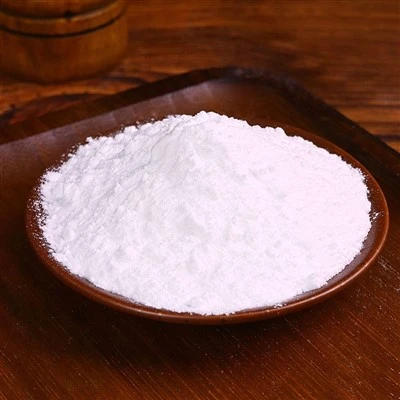
Let’s break this down like we do with our new warehouse interns—no stuffy jargon, just real, on-the-ground facts from someone who’s packed and shipped thousands of these batches. First off, what even makes PDE-5 inhibitors different from, say, a common antibiotic API? Most PDE-5s—think sildenafil, tadalafil, vardenafil, the big three that make up 90% of the PDE-5 API market—have a bunch of sensitive functional groups: amines, piperazine rings, sometimes even nitro groups that break down way faster than you’d expect. For example, sildenafil’s structure has that sulfonamide group that’s super reactive with moisture. Tadalafil? It’s a more stable molecule overall, but it hates fluctuating humidity like I hate when someone tries to negotiate a bulk price at 5 PM on a Friday. Vardenafil is in the middle—stable if stored right, but prone to oxidation if exposed to too much light or air.
Now, the big one everyone asks about: temperature. Do you need a cold room? Short answer: no, not usually. Most PDE-5 inhibitor APIs are classified as “room temperature stable” by global pharmacopeias (like USP and EP), but “room temperature” here isn’t your home’s 72°F (22°C) kitchen. We stick to a tight range of 15°C to 25°C (59°F to 77°F) for long-term storage. Why? Because every time temperature spikes even 5 degrees for a few days, you’re accelerating degradation. Last year, a customer of ours stored a batch of tadalafil in a non-climate-controlled storage unit for two weeks during a warehouse move—temperatures hit 32°C (90°F) at their peak. When they tested the API, the purity dropped 2.1%, which is just under the USP limit for tadalafil, but close enough that they had to reprocess the entire batch, costing them 6 figures and delaying their product launch. That’s the kind of mistake that keeps us up at night.
Wait, but what about short-term storage? If you’re just moving a batch between the lab and the packaging line, or shipping it via courier (the good ones, with temperature-controlled trucks, not those random last-minute local drivers), you’ve got a little wiggle room. PDE-5 APIs can handle temps between 10°C and 30°C for up to 30 days without significant degradation, but only if that’s a temporary blip, not a regular thing. We always warn customers: if your storage space has a history of hitting 30°C for weeks, you’re better off looking for climate-controlled warehousing.
Next up: humidity. This is the silent killer of PDE-5 APIs, way more than temperature for most of the common ones. Because that sulfonamide group on sildenafil? It reacts with water to form impurities that are not only useless but can be toxic in high doses. The USP requires water activity (aw) for PDE-5 APIs to stay below 0.6, which translates to a relative humidity (RH) of no more than 40% at standard room temp. We tested this ourselves a while back: we stored two identical sildenafil samples, one at 35% RH, one at 55% RH. After 6 months, the sample at 55% had 1.8% more of that harmful degradation impurity than the one at 35%. That’s a big deal—regulators (FDA, EMA) will flag impurities over 0.5% for PDE-5 APIs, so you can’t afford to cut corners here.
Humidity control doesn’t mean you need a fancy industrial dehumidifier, though. For small batches (like under 100 kg), desiccants in the packaging work great. We ship all our PDE-5 API batches with food-grade (wait, pharma-grade, obviously) molecular sieves and aluminum-lined inner bags that keep moisture out during shipping and short-term storage. For bulk batches, we recommend climate-controlled warehouses with continuous RH monitoring—not just a hygrometer that someone checks once a week. We keep track of our warehouse RH 24/7, and if it ever creeps over 40%, our alert system goes off instantly. No one wants to get that “your batch might be contaminated” call.
Light is another factor that most people overlook. PDE-5 APIs are light-sensitive, specifically UV light. Think about it: the tablets you take for ED or pulmonary hypertension are always in opaque blister packs, right? That’s because the API inside breaks down when exposed to sunlight or even bright fluorescent light for long periods. For our bulk API storage, we use amber HDPE drums with double-sealed lids that block 99% of UV light. We also keep our warehouse walls painted a flat, non-reflective white and use LED lights that don’t emit UV rays—no exceptions. A customer once tried storing a batch of vardenafil in clear plastic drums in their lab for a month, with the lights on 12 hours a day. When they tested it, purity was down 3.2%—way over the USP limit. They had to toss the entire batch, and they were a new startup, so that was a huge hit for them. Now they follow our storage guidelines to a T.
Air quality and contamination control might seem like more of a “general pharma thing,” but it’s extra important for PDE-5 APIs because they’re potent. Wait, hold on—potent here doesn’t just mean they’re strong in your body. It means even tiny residual amounts of the API can cause issues if they cross-contaminate with other products, but also, exposure to air can lead to oxidation. For example, vardenafil’s indole group oxidizes easily when exposed to oxygen, so we purge our bulk drums with nitrogen before sealing them to cut down on air inside. We also have separate storage areas for different PDE-5 APIs (sildenafil, tadalafil, vardenafil) to prevent cross-contamination, and our warehouse is HEPA-filtered to keep dust and other particulates out. If you’re storing small batches in a lab, keep them in closed containers, not open flasks on the bench—even a little dust can mess with purity.
Let’s talk about batch rotation and monitoring, too. No storage setup is perfect if you’re not checking in on your API regularly. We recommend quarterly purity testing for batches under 1 year old, and semi-annual testing for batches that are between 1 and 3 years old (the typical shelf life for PDE-5 APIs when stored correctly). We print a storage data sheet for every batch we ship, with the recommended temp, RH, light exposure limits, and test schedule—customers love that, because it takes the guesswork out of it. Last year, we had a customer who kept a batch of tadalafil for 2 years because their product launch got delayed. They followed our testing schedule, and when the time came, purity was still 99.8%—right at the USP mark. If they’d stored it without testing, they might have found out it was degraded too late.
Wait, what about common mistakes we see all the time? Let’s list them, because these are avoidable. First: mixing PDE-5 API batches with other chemicals in storage. We had a customer who stored sildenafil next to a batch of metformin, and even though the drums were sealed, the humidity fluctuations caused a tiny cross-contamination that failed their purity test. Second: not training staff on storage protocols. Our interns go through a 2-day training just on PDE-5 API storage, because the pickers loading drums need to know not to leave lids off, not to put batches near the loading dock where sunlight hits, etc. Third: relying on “generic” pharma storage rules. A lot of people think “all APIs need 2-8°C” but that’s for biologic APIs, not small-molecule PDE-5 inhibitors. Using a fridge or cold room for these is a waste of money, and actually can cause issues if there’s condensation when you take them out.
Now, let’s get to the part you care about: if you’re a manufacturer, lab, or formulator working with PDE-5 inhibitor APIs, what does this mean for your business? Cutting corners on storage isn’t just a minor hassle—it can lead to failed regulatory audits, wasted product, delayed launches, and even safety issues for end-users. The FDA and EMA have gotten way stricter on API quality in the last 5 years, so they’re going to check your storage records during inspections. We’ve had customers pass audits without a problem because they followed our guidelines, and we’ve had others get warning letters because their storage logs showed RH spikes over 50% for months.
Here at our company, we don’t just sell PDE-5 inhibitor APIs—we partner with our customers to make sure those APIs stay potent and safe from the moment they leave our warehouse to the moment they’re formulated into your final product. We share our storage data sheets, offer free on-site storage audits for bulk customers, and even have a 24/7 support line for any storage questions that pop up, no matter how trivial. If you’re tired of worrying if your PDE-5 API is being stored right, or if you’re looking for a supplier that stands behind their product with actual expertise, don’t hesitate to reach out to discuss your bulk storage and sourcing needs. We’ve worked with small startups, mid-sized pharma companies, and big-name generic makers, and we tailor our support to whatever you need—no one-size-fits-all nonsense.
At the end of the day, PDE-5 inhibitor APIs are powerful, valuable, and finicky. Getting their storage right isn’t rocket science, but it does require paying attention to the details: tight temperature control, keeping humidity low, blocking UV light, monitoring regularly, and avoiding common mistakes. Skip the shortcuts, and you’ll have a high-quality API that works for you, not against you. If you’re ready to lock in a reliable supply of properly stored PDE-5 inhibitor APIs, or just want more specific guidance for your unique setup, get in touch with our team to start the conversation. We’re here to help.
Food Additives Raw Materials References:
- The United States Pharmacopeia (USP) 43-NF 38: Monographs for Sildenafil, Tadalafil, and Vardenafil
- European Pharmacopoeia (EP) 11.0: General Chapter 5.1.2 for Storage of Small-Molecule APIs
- International Council for Harmonisation (ICH) Q7 Guidelines: Good Manufacturing Practice Guide for Active Pharmaceutical Ingredients
- Journal of Pharmaceutical Sciences, Vol. 108, No. 12: Degradation Kinetics of PDE-5 Inhibitor APIs Under Ambient Storage Conditions
Henan Jinyi Import & Export Co., Ltd.
Address: Block A, Building 3, No.7 Guoji Road, Jinshui District, Zhengzhou City, Henan Province
E-mail: 13838041990@163.com
WebSite: https://www.jyingredients.com/
