If you’re running a fried snacks business (or even just shopping for a machine to scale up your homemade cracker or potato chip game), you’ve probably wondered: “What the heck certifications do I actually need for a fried snacks processing machine?” As a guy who’s been selling these machines for almost 10 years now, I’ve seen way too many small business owners get burned by skipping the right certifications, and way too many folks pick a cheap machine that dies within 6 months because it’s not built to actual safety rules. Let’s break this down like we’re chatting over a coffee, no stuffy jargon, just the real stuff you need to know. Fried Snacks Processing Machine

First off, let’s get one thing straight: certifications aren’t just random hoops vendors make you jump through. They’re the rules that keep your workers from getting hurt, your snacks safe to eat, and your whole operation from getting shut down by a random health inspection. I’ve had a customer a couple years back who bought a $2k no-name fryer from some overseas seller on Facebook, no certifications, and three months later OSHA (that’s the U.S. Occupational Safety and Health Administration, for folks who don’t know) showed up and fined him $15k because his machine had no proper guard on the rotating fry basket. He ended up having to buy a certified machine anyway, plus pay the fine, which was way more than the cost of a legit one from the start. That’s the kind of story I try to tell every buyer so they don’t make the same mistake.
Let’s start with the big one for food equipment: 3-A Sanitary Standards. Yeah, you’ve probably heard of NSF, but 3-A is specific for equipment that touches food. For our machines, any part that comes into contact with fried snacks—like the fry baskets, the conveyor belts that move the snacks through the oil, even the oil filters—has to meet 3-A rules. What does that actually mean? No crevices or cracks where bacteria can hide, all surfaces are smooth enough to wipe clean easily, and they’re made of food-grade stainless steel (not some cheap aluminum that leaches weird stuff into your oil). I once sold a machine to a small tortilla chip brand that was using a non-3-A certified fryer, and their inspector found a small gap between the conveyor and the fryer wall that was trapping old oil. They had to shut down for two weeks to deep clean, so 3-A isn’t just a checkbox—it protects your uptime too.
Next, for folks operating in the U.S. (or exporting to the U.S.), you need NSF/ANSI Standard 2. That’s the National Sanitation Foundation’s rule for commercial food equipment. Unlike 3-A, which is more about design for sanitation, NSF 2 tests the machine’s performance over time. They run it for thousands of hours, check if it can handle the high heat of frying (we’re talking 350°F oil, that’s no joke), make sure the electrical parts are safe near flammable oil and gas (if you use gas-fired fryers). Wait, speaking of electrical safety: if your machine plugs into the wall, it needs UL certification too. Underwriters Laboratories tests electrical equipment to make sure it won’t catch fire or shock someone. I’ve heard of guys buying cheap machines that have exposed wiring right above the fry tank—total fire hazard. UL cert ensures that wiring is sealed properly, no loose connections. For international buyers, that often translates to CE marking if you’re going into the EU, right? CE is mandatory for any equipment sold in the European Economic Area, it covers both safety and health standards for fried snack machines, including things like noise levels (you don’t want a machine so loud your workers have to wear earplugs 8 hours a day) and how the oil is contained so it doesn’t spill and cause slips.
Then there’s OSHA compliance, but wait—OSHA doesn’t “certify” machines directly, but all the certifications I mentioned tie back to OSHA rules. For example, the machine must have emergency stop buttons that are easy to reach, guards on moving parts (like the conveyor drive) so no one’s hand gets caught. I always make sure our machines have those emergency stops in two places: right next to the fry tank, and at the control panel up front. A lot of lower-tier vendors cut corners there, putting only one stop button in a hard-to-reach spot, and that’s a big OSHA red flag. If you’re in Canada, add CSA certification to the list—Canadian Standards Association is their version of UL, same logic, electrical and safety checks tailored for Canadian electrical codes.
Wait, what about specific fried snacks stuff? Like, if you’re making something super greasy, like chicharrones or potato chips, the machine has to handle the constant exposure to hot oil without corroding. Some certifications test for material resistance to oil and grease, which is huge. I had a customer who switched from a cheap machine to ours because his old one had rust spots on the fry basket after a month of use—rust in oil means your snacks get that metallic taste, and health inspectors hate that. Our machines use grade 304 stainless steel, which meets the oil-resistance standards that go hand in hand with 3-A and NSF.
Now, let’s talk about what certifications you don’t really need, just to clear up confusion. A lot of overseas vendors will throw random “certifications” at you that are just for export paperwork, not actual safety or sanitation. Like, don’t get fooled if a machine has a random Asian certification that no one in your country recognizes. If you’re in the U.S., stick to NSF, UL, 3-A; EU, CE; Canada, CSA; Australia, SAA. Any other certification is probably a waste of money and doesn’t mean the machine is safe for your workers or your snacks. I’ve had buyers come to me with a machine they bought from a guy in China that had a “food safety certification” from a random local group, and when we inspected it, it had no safety guards on the conveyor, exposed wiring, and the stainless steel was actually grade 201, which isn’t food-safe (it can leach nickel into oil). They had to dump that machine and buy ours, which was way cheaper in the long run than dealing with fines and bad product.
Another thing: if you plan to use your machine with automated systems, like a packaging line, there are some extra certifications for compatibility. A lot of fried snack businesses scale up by adding automatic seasoning machines or bagging equipment, so your processing machine needs to work with those. Look for ISO 13485? No, wait, ISO 22000 is for food safety management systems, but for the machine itself, ISO 12100 is the international standard for machinery safety, which covers the risk of things like pinch points, heat hazards, and control systems. That’s a good one if you’re exporting to multiple countries, since a lot of nations align their rules with ISO.
Let me also throw in a quick personal story: a few years back, we had a local small business that makes artisanal tortilla chips. They were using a small fryer they bought at a restaurant supply store, no 3-A, and during a health inspection, they got a notice to fix the gaps in the machine that were trapping old cooking oil. They had to shut down for three weeks, which cost them thousands in lost orders. They reached out to us, and we sold them a machine that was all 3-A, NSF, and UL certified, plus we walked them through how to clean it properly, so they haven’t had an issue since. That’s the thing I love about this job—we’re not just selling a machine, we’re making sure your business doesn’t get derailed by avoidable issues.
Wait, what about if you’re a home-based business or a small snack brand just starting out? Do you need all these certifications? Let’s be real: if you’re selling your chips at a farmers market, you might get away with a smaller, lower-cost machine, but even then, basic food safety is non-negotiable. If you’re selling commercially (even online to local customers), you need at least NSF/ANSI 2 and food-grade materials. A lot of new makers think they can skip certifications to save money, but the risk of a lawsuit (if someone gets sick from your snack) or a health inspection shut down is way higher than the cost of a certified machine. I’ve seen a small pickle chip brand get sued for $200k because a batch of their chips had bacteria that came from a non-certified fryer. They never recovered, so I always preach that certifications are an investment, not a cost.
Let me wrap this up with a quick breakdown so you don’t forget:
- For U.S. operations: NSF/ANSI 2, 3-A Sanitary, UL
- For EU/EEA: CE marking (covers safety, hygiene, noise)
- For Canada: CSA (add to your machine’s other certs)
- For international exports: ISO 12100 for machinery safety, plus region-specific certs
- Skip random unrecognized certifications—they’re useless.
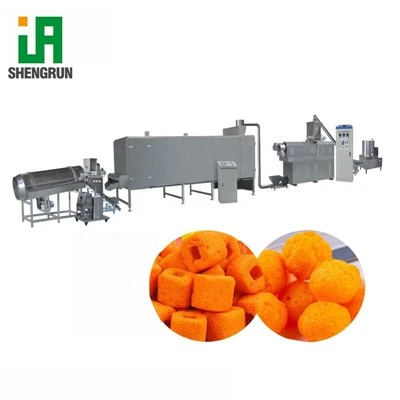
Now, if you’re in the market for a fried snacks processing machine, or you have a machine already and want to make sure it’s up to snuff, feel free to reach out to chat. I don’t do hard sell—just tell me what you’re making (chips, chicharrones, fried crackers, whatever), how many units you want to produce, and I can walk you through exactly which certifications you need, no fluff, no hidden fees. Don’t end up like those guys I mentioned who got fined or lost money because they cut corners on certifications—let’s make this easy for you.
Fish Feed Production Line References
National Sanitation Foundation. (2022). Standard 2: Food Equipment.
Occupational Safety and Health Administration. (2023). Food Machinery Safety Guidelines.
Underwriters Laboratories. (2021). UL 795: Commercial Cooking and Food Service Equipment.
3-A Sanitary Standards Inc. (2022). Standard for Equipment in Food Processing.
European Commission. (2023). CE Marking Requirements for Machinery.
Jinan Shengrun Machinery Co., Ltd.
We are one of the most professional fried snacks processing machine manufacturers and suppliers in China, featured by quality products and good price. Please rest assured to buy durable fried snacks processing machine for sale here from our factory. Contact us for more details.
Address: 1817 Rongce Center, No.3179 Qilu Avenue, Xingfu Street, Huaiyin District, Jinan City, Shandong Province
E-mail: sales@foodgm.cn
WebSite: https://www.food-gm.com/
