Hey everyone, Jake here from your go-to high pressure fittings elbow supplier – and today we’re answering one of the most common questions I get hit up on the job: Can high pressure elbows actually work in steam systems? Let’s cut through the jargon, drop the fancy lab coats, and get real about this stuff, because let’s be honest, steam systems are already a headache enough without wrong fittings messing them up. High Pressure Fittings Elbow

First off, let’s set the scene. Steam systems aren’t just a pipe full of hot gas – it’s a mix of saturated steam, superheated steam, condensate (that’s the liquid water that forms when steam cools), and sometimes even a little water hammer if you’re running it too hard. A lot of folks think “high pressure” is just a number stamped on a fitting, but steam adds unique stresses regular piping doesn’t. I’ve seen guys grab a random elbow off the shelf, stick it in their steam line, and then wonder why they’re dealing with leaks or worse, a rupture. So no, not every high pressure elbow works for steam – but the right ones? They’re total game changers.
Let’s break down why steam is a jerk to fittings, especially elbows. Elbows are the weakest link in any pipe run, right? They turn flow, so they get way more stress from pressure spikes, thermal expansion, and that water hammer I mentioned. In steam systems, that stress is amplified. Saturated steam can have pressure anywhere from 15 PSI (low pressure residential) up to 1500 PSI+ (industrial process steam), and superheated steam? That’s not just hot – it’s often 500°F to 1200°F. Regular high pressure elbows might be rated for 2000 PSI, but at 1000°F their rating drops off a cliff. I once had a plant manager come to me after he used a standard carbon steel elbow for 800°F superheated steam – the elbow softened, bulged, and leaked so bad he had to shut down his entire production line for 3 days. Ouch. That’s the kind of mistake we’re here to avoid.
Now, the good stuff: when high pressure elbows are the right pick for steam. First, you need to match the elbow’s material and rating to your specific steam type and pressure/temp. Let’s run through the most common materials we supply, because that’s where most folks mess up. Carbon steel elbows are solid for low to mid-pressure saturated steam (like 15 to 300 PSI at temps under 500°F) – they’re cheap, durable, and handle the condensation that comes with that steam no problem. But if you’re on superheated steam above 500°F? You need alloy steel elbows – think chrome-moly (1 1/4 Cr 1/2 Mo) or even stainless steel. Those hold their strength at high temps, resist corrosion from the steam and any small amounts of impurities, and don’t warp or crack like regular carbon steel. We also make seamless high pressure elbows, by the way – seamless is non-negotiable for steam. Welded elbows have a seam that’s a weak point; under steam pressure and thermal cycling, that seam can split. I’ve seen welded elbows fail 10x faster than seamless ones in steam lines.
Next, rating is key. Don’t just look for “high pressure” – check the ASME B16.34 rating, that’s the industry standard for pressure fittings. For steam, you want to make sure the elbow’s temperature-pressure rating (the T-P rating) matches your system. That 2000 PSI elbow you see? That’s at room temp. At 600°F, that same elbow might only be rated for 1500 PSI. So if your steam is at 700°F and 1200 PSI, that 2000 PSI room temp elbow is already over its limit. We always tell clients: send us your system specs (pressure, steam type, max temp, line size) and we’ll pull the exact elbow that checks the T-P box. No guesswork, no shut downs.
Wait, but what about low-pressure steam systems, like the ones in schools or small factories? Can you use high pressure elbows there? Absolutely – in fact, it’s often a smart call. Low-pressure steam still has thermal expansion, and condensate can cause water hammer that beats on elbows over time. A higher-rated elbow (say, ASME Class 300 or 600) will last way longer than a standard Class 150 elbow, even if you don’t need the extra pressure. We’ve got a school district near here that switched to our Class 300 high pressure elbows for their heating steam lines 5 years ago – no leaks, no replacements, whereas before they were swapping out elbows every other year. It’s a small extra cost upfront that saves a ton on maintenance and downtime.
Now, let’s talk mistakes to avoid, because I see these all the time. First, don’t use galvanized elbows for steam. Galvanizing is that zinc coating on cheap fittings – it flaks off at steam temps, gets into your system, and causes scale that clogs valves and pipes. I once had a food processing plant call us because their pasteurization line was clogged with zinc flakes – turns out their contractor used galvanized elbows for the 200 PSI steam line. Major headache. Second, don’t skip the elbow radius. For steam systems, you want long-radius (LR) elbows, not short-radius (SR). LR elbows have a smoother bend, so less pressure drop, less turbulence, and less stress on the fitting. SR elbows might be cheaper, but they cause more water hammer and are more prone to failure in steam. We get asked for SR elbows sometimes, but we always tell clients to go LR for steam – it’s not up for debate. Third, don’t ignore condensate. Steam systems make condensate, and that liquid can puddle in elbows if they’re pitched wrong. Make sure your high pressure elbows are installed correctly, with drains at low points, to get rid of condensate. Even the best elbow will fail if it’s sitting in water all the time.
Let’s chat about real-world applications to make this concrete. We supply a lot of chemical plants that use superheated steam for reactor heating – those guys run at 1000 PSI and 900°F, so we spec them alloy steel, Class 1500 seamless high pressure elbows. Those elbows last 10+ years, whereas if they used a standard fitting, they’d be replacing them every 1-2 years. We also do residential and commercial HVAC steam systems – small, low-pressure, but still with thermal cycling. Our Class 300 carbon steel elbows are perfect there, they hold up to the repeated heating and cooling way better than cheap generic elbows. Even power plants – we supply them with high pressure elbows for their main steam lines, the ones that carry steam to the turbines at 1800 PSI and 1100°F. Those are chrome-moly elbows, and they’re non-negotiable for that kind of operation.
Wait, some people will say “but I can get a cheaper elbow that says it’s high pressure, why pay for yours?” Let’s be real – a lot of cheap elbows out there cut corners. They’re welded instead of seamless, they use low-grade steel that doesn’t meet ASME specs, they skip the proper heat treatment. We test every single one of our high pressure elbows: hydrostatic pressure testing to 1.5x the rated pressure, ultrasonic testing to check for defects, and material testing to make sure the steel matches the specs. No cutting corners, no fake ratings. That’s why our clients trust us – when they say “my steam line has to run 24/7”, we don’t give them a product that’s gonna fail mid-shift.
So to circle back to the original question: Can high pressure elbows be used in steam systems? The answer is a resounding yes – but only if you pick the right ones. It’s not just about the pressure rating – it’s about material, seamless construction, temperature-pressure rating, elbow radius, and correct installation. Use the wrong elbow, and you’re setting yourself up for leaks, downtime, even safety issues. Use the right one, and your steam line will run smoother, last longer, and cost way less in the long run.
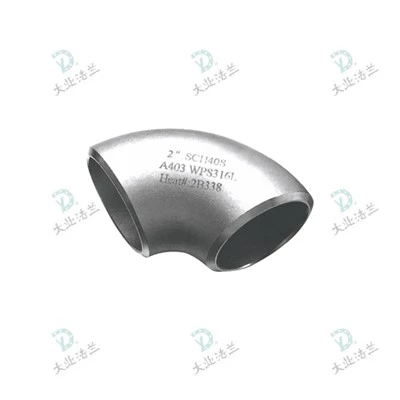
Look, I’ve been in the fittings game for 12 years, and I’ve seen every mistake possible with steam system elbows. The guys who come to me after a failure are usually the ones who tried to save a buck on a random elbow. The ones who call before they spec a new line or replace old fittings? They’re the ones who stay in business. If you’re working on a steam system – whether it’s a small shop heating line, a chemical plant’s process steam, or a power plant’s main lines – and you’re not sure what elbow you need, don’t guess. Hit me up to talk through your specs. We can walk through your pressure, steam type, temperature, line size, and hook you up with the exact high pressure elbow that’ll work for you. No sales fluff, no jargon, just straight up advice from someone who’s been there and seen what works.
Pipe Fitting Tee References
ASME B16.34, Valves, Fittings, and Flanges, and Piping for Pressure, 2023
Mallinson, R., Steam System Design and Troubleshooting, 2nd Edition, Industrial Press, 2018
Smith, T., Materials Selection for High-Pressure Steam Piping Components, Journal of Pressure Vessel Technology, 2021, Vol. 143, No. 3
Zhejiang Daye Flange Co., Ltd.
Zhejiang Daye Flange Co., Ltd. is one of the most experienced high pressure fittings elbow manufacturers and suppliers in China. With a professional production team, we offer a wide range of flanges with superior quality and competitive price. Welcome to buy CE approved high pressure fittings elbow in stock here and get pricelist from our factory. We also accept customized orders.
Address: Headquarter: 8, Gangqiang Road, Yongxing Street, Longwan District, Wenzhou City, Zhejiang Province, China
E-mail: sales@dayeflange.com
WebSite: https://www.daye-flange.com/
