If you’ve ever worked in a lab, semiconductor fab, or a surface science research facility, odds are you’ve heard people throw around terms like “high vacuum” and “ultra-high vacuum” like they’re interchangeable. But after 12 years selling custom vacuum systems for a living—including walking clients through everything we build in our shop in Cleveland, Ohio—let me tell you: that’s a dangerous mistake. I’ve seen a biotech client waste $40k on a high vacuum system that couldn’t preserve their protein samples long-term, and a solar panel manufacturer shut down a production line for 18 hours because their ultra-high vacuum (UHV) pump wasn’t sized right for a test run. These aren’t just arbitrary labels—they’re specific, science-backed categories, and picking the wrong one can sink a project. Vacuum System

Let’s start with basics: what “vacuum” even means, at the core. It’s just space with pressure lower than Earth’s atmosphere at sea level. Atmospheric pressure is 1013 millibars, or 760 torr (old-school mercury unit, still used in most vacuum tech) for reference. The lower the pressure, the higher the vacuum level, because there are fewer gas molecules bouncing around. The two big players I talk about every day—high vacuum (HV) and ultra-high vacuum (UHV)—sit at the extreme end of that scale, way higher than, say, the rough vacuum you use to suck air out of a wine bottle. Rough vacuum tops out around 1 torr, high vacuum starts way lower, and UHV is even more rarefied.
First, let’s nail down the official pressure ranges, because that’s where the lines get drawn. No, I didn’t make these up—they’re standardized by the American Vacuum Society, the group that writes the rulebook for this stuff. High vacuum is generally defined as pressures between 10^-3 torr and 10^-9 torr. UHV? That’s anything below 10^-9 torr, down to as low as 10^-12 torr for the most demanding applications. Let’s put that in perspective to make it real. At 10^-3 torr, there are about 2.7 billion gas molecules per cubic centimeter left in the chamber. At 10^-9 torr? That drops to just 2.7 million molecules per cc. And at 10^-12 torr, you’re talking 2,700 molecules per cc—less than the number of people in a small high school gym, but in a chamber the size of a desk. That’s how empty UHV is.
Now, how do you actually get to these pressures? That’s where the systems differ a lot, and it’s the first thing I walk through with a client. For high vacuum, you typically use two stages: first a roughing pump (usually a rotary vane pump or a dry scroll pump) to get the chamber down to ~10^-3 torr, then a high vacuum pump to pull it lower. The most common HV pumps are turbomolecular pumps (turbo pumps for short) or oil diffusion pumps. Turbos work by spinning a bladed rotor at 60,000+ rpm, slamming gas molecules toward the exhaust, like a very high-powered fan for vacuum. Diffusion pumps use heated oil vapor to drag molecules out—they’re super affordable for small chambers, though the oil backstreaming (oil molecules sneaking into the chamber) is a small risk, which is why many labs opt for oil-free turbos these days.
UHV systems? They’re a whole different ballgame. You can’t just slap a turbo pump on and call it good. UHV requires three or more pump stages, plus careful chamber design to avoid contamination. First, you still start with a rough pump, but then you’ll add a cryopump, an ion pump, and sometimes a titanium sublimation pump. Cryopumps cool a surface to 10 Kelvin (-263°C), freezing almost every gas molecule that hits it—super effective, but they need periodic thawing (a “regeneration”) when they fill up. Ion pumps use electric and magnetic fields to ionize gas molecules, then stick them to a metal surface like a magnet—no moving parts, no oil, which is critical for UHV. And titanium sublimation pumps heat a titanium filament to deposit a fresh titanium film on the chamber walls, which grabs reactive gases like nitrogen and oxygen.
But it’s not just the pumps—chamber materials matter too. HV chambers can be made of plain stainless steel, even aluminum for low-stakes applications. UHV chambers? They have to be “baked out” at 150–200°C for days to get rid of water vapor and gas molecules trapped in the metal walls (that’s called outgassing, and it’s the biggest enemy of UHV). Even small amounts of outgassing from a steel weld can raise the pressure so high you’ll never reach 10^-9 torr. UHV chambers are also usually made of high-grade 304 or 316 stainless steel, machined with precision welds, and sealed with copper gaskets instead of rubber o-rings—rubber outgasses too much for UHV, and even a tiny pinhole in a gasket or weld can ruin your vacuum level.
Now, the part that actually makes choosing between HV and UHV matter: when do you need which one? I get this question every week, and the answer almost always comes down to the application. Let’s start with high vacuum. HV is for processes where you just need to get rid of most air, but the remaining molecules don’t mess with what you’re doing. For example:
- Physical vapor deposition (PVD) for coating tools or small parts: You heat a metal target, and atoms fly out to coat your part. At HV pressure, the metal atoms don’t bounce off enough air molecules to spread unevenly, so you get a consistent coating. We built a custom HV system last year for a company that makes drill bits—they needed to coat the tips with titanium nitride, and a UHV system would’ve been overkill and doubled their costs.
- Mass spectrometry: Most regular mass spec work runs at HV, because you need molecules to travel in straight lines through the detector without bouncing around.
- Freeze drying food or pharmaceuticals: When you’re sublimating ice from frozen samples, HV keeps the pressure low enough so the ice turns straight to vapor without melting, but you don’t need the ultra-empty space for that.
- Leak testing large industrial parts: When you test a natural gas pipeline component for tiny holes, HV lets you pressurize the part with tracer gas and measure how much leaks out—no need for UHV.
UHV is for the jobs where even a single stray gas molecule can ruin your work. These are the high-stakes, cutting-edge projects, and UHV is non-negotiable here. Common UHV use cases:
- Surface science research: If a physicist is studying the atomic structure of a new material, they need every surface atom to be exposed, no contaminants from air sticking to it. At 10^-9 torr, a surface only gets one layer of gas molecules every few hours—at atmospheric pressure, that same surface would get a full layer every nanosecond. You can’t study a clean surface if it’s covered in air molecules before you even turn on your laser, so UHV is a must.
- Semiconductor manufacturing: Modern 3nm chips are made in UHV environments. Even a single oxygen molecule landing on a silicon wafer would ruin the ultra-thin transistor layers, so every step of deposition and etching happens in UHV chambers. We’ve supplied UHV systems to a few startup chip labs over the years, and they’ll tell you: cutting a corner on UHV pressure means bad yields, period.
- Nanotechnology experiments: If you’re manipulating individual atoms with a scanning tunneling microscope (STM) or atomic force microscope (AFM), you need the tip and sample to stay perfectly clean. Stray gas molecules would stick to the tip, messing up the image, so UHV is the only way to get atomic-resolution results.
- Space simulation: When NASA or a defense company tests satellite components, they need to replicate the ultra-high vacuum of low Earth orbit, which is around 10^-12 torr. A HV system can’t get that empty, so UHV is the only option here.
I can’t stress enough how many times I’ve talked people into the right system by walking them through their actual needs, not just the specs. A few months ago, a startup in Boston reached out saying they needed a “vacuum system for their research” and insisted they needed UHV. When I asked what they were doing, they told me they were testing a new coating for bike frames that would be cheaper than the current PVD process. That’s HV work, easy. A UHV system would’ve cost them 30% more, taken 2 extra weeks to build, and required a tech to bake it out for 3 days before they could use it—total overkill. I walked them through their options, they went with a custom HV system, got their prototype running on time, and saved enough money to fund another round of tests. That’s the kind of call that matters.
Another common point of confusion: is there a gap between HV and UHV, or do they blend together? Yeah, there’s a “transition region” around 10^-7 to 10^-9 torr where you’ll sometimes see people refer to “high-vacuum UHV” or “medium UHV,” but that’s just a gray area, not a formal category. The American Vacuum Society sticks to the hard lines: below 10^-9 is UHV, above is HV. Don’t let a salesperson confuse you into paying for UHV when you only need HV, or vice versa.
What about cost? That’s the big differentiator for most clients. A custom HV system for a small lab chamber (like 1 cubic foot) will run you anywhere from $5k to $20k, depending on pumps and features. A UHV system for the same size chamber? That jumps to $50k to $150k, because of the specialized pumps, gaskets, and bakeout systems. For a 10 cubic foot chamber, HV is $20k to $50k, UHV is $150k to $500k. That’s not chump change, so getting it right isn’t just about performance—it’s about budget too.
And don’t forget maintenance. HV systems are low-maintenance: turbo pumps last 5–10 years, oil diffusion pumps need oil changes once a year, no daily upkeep. UHV systems need regular pump regeneration, bakeouts every few months, and strict cleaning protocols to avoid contamination. I had a client once who bought a used UHV system and didn’t know it needed baked out every time they opened the chamber—they’d run a test, open the chamber to swap samples, then turn it back on, and never got below 10^-7 torr. It took a few calls to figure out they were skipping the bakeout, and once we walked them through the process, their pressure dropped right into UHV range.
At the end of the day, the line between HV and UHV isn’t just a numbers game—it’s about what you’re willing to accept. If stray gas molecules won’t ruin your work, go with HV. If you need a surface that’s clean enough to study atoms, or a semiconductor wafer that works as designed, UHV is non-negotiable. That’s what I tell every client that walks in our door: forget the jargon, tell me what you’re making, and I’ll build the system that fits your needs, not a one-size-fits-all box.
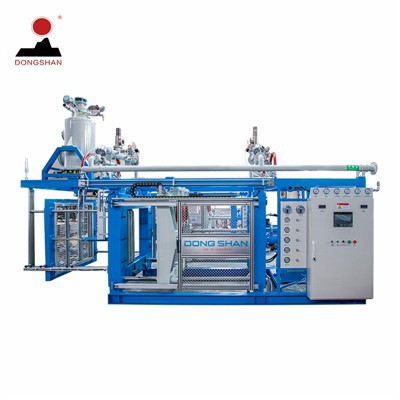
If you’re working on a project and aren’t sure which vacuum level is right, don’t guess. Reach out, and we can walk through your requirements, timeline, and budget to build a custom system that works for you. No confusing sales pitches, no hidden fees, just honest advice from someone who’s been building vacuum systems for over a decade.
Vacuum System References:
- National Institute of Standards and Technology. Vacuum Technology Basics. NIST Special Publication 960-14, 2018.
- American Vacuum Society. Standard Definitions of Vacuum Ranges and Terms. AVS Technical Digest, 2021.
- Roth, A. Vacuum Technology, 3rd ed. Elsevier, 2008.
- Harrison, D. J. Surface Science Ultra-High Vacuum Requirements. Journal of Vacuum Science & Technology A, Vol. 12, No. 3, 1994, pp. 1351-1357.
- Semiconductor Research Corporation. UHV Requirements for Advanced Lithography and Etching Processes. SRC Technical Report, 2020.
Hangzhou Fuyang Dongshan Plastic Machinery Co., Ltd.
Hangzhou Fuyang Dongshan Plastic Machinery Co., Ltd. is one of the most professional vacuum system manufacturers and suppliers in China, featured by quality products and low price. Please feel free to wholesale advanced vacuum system made in China here and get quotation from our factory. Customized orders are welcome.
Address: 101 Guanting, Baiqian Villige, Luzhu Town, Fuyang District, Hangzhou City, Zhejiang Province, China
E-mail: xu@dong-shan.cn
WebSite: https://www.epseppmachinery.com/
