As a supplier of weldable lifting lugs, I’ve witnessed firsthand the crucial role pre – heating plays in the welding process. In this blog, I’ll delve into the various aspects of pre – heating and its significance in the welding of weldable lifting lugs. Weldable Lifting Lugs
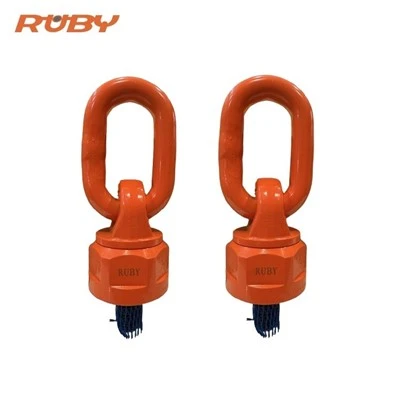
Understanding Weldable Lifting Lugs
Weldable lifting lugs are essential components in many industries, including construction, manufacturing, and shipping. These lugs are designed to provide a secure attachment point for lifting heavy loads. They are typically welded onto structures, such as beams, plates, or containers. The quality of the weld is of utmost importance as it directly affects the safety and performance of the lifting lug.
The Basics of Pre – heating
Pre – heating is the process of heating the base metal to a specific temperature before welding. This temperature is maintained throughout the welding process and sometimes during the post – weld cooling phase. The primary purpose of pre – heating is to reduce the cooling rate of the weld and the heat – affected zone (HAZ).
Reducing the Risk of Cracking
One of the most significant benefits of pre – heating in the welding of weldable lifting lugs is the reduction of cracking risk. When the base metal cools too quickly after welding, it can lead to the formation of brittle microstructures in the HAZ. These brittle structures are prone to cracking, especially under stress. Pre – heating slows down the cooling rate, allowing the metal to transform into a more ductile microstructure.
For example, in high – strength steels used for lifting lugs, the rapid cooling after welding can result in the formation of martensite, a hard and brittle phase. By pre – heating the steel, we can avoid the formation of martensite and instead obtain a more acceptable microstructure, such as ferrite – pearlite. This reduces the likelihood of cold cracking, which can be catastrophic in a lifting application.
Improving Weld Quality
Pre – heating also improves the overall quality of the weld. When the base metal is pre – heated, the weld pool is more fluid, which allows for better fusion between the filler metal and the base metal. This results in a stronger and more homogeneous weld.
In addition, pre – heating helps to remove moisture from the base metal surface. Moisture can cause hydrogen to be introduced into the weld, which can lead to hydrogen – induced cracking. By pre – heating, we can drive off the moisture and reduce the hydrogen content in the weld, thereby improving its quality.
Controlling Residual Stress
Residual stress is another important factor in the welding of weldable lifting lugs. During the welding process, the rapid heating and cooling cause thermal expansion and contraction, which can result in residual stress in the weld and the HAZ. High residual stress can lead to distortion and cracking in the long term.
Pre – heating helps to reduce the temperature gradient between the weld and the surrounding base metal. This, in turn, reduces the magnitude of the residual stress. By controlling the residual stress, we can ensure the dimensional stability of the lifting lug and improve its fatigue resistance.
Factors Affecting Pre – heating Temperature
Several factors need to be considered when determining the pre – heating temperature for weldable lifting lugs. These include the type of base metal, the thickness of the base metal, the welding process, and the ambient temperature.
For different types of base metals, such as carbon steels, alloy steels, and stainless steels, the pre – heating requirements vary. Generally, high – strength steels require higher pre – heating temperatures than low – carbon steels. The thickness of the base metal also plays a crucial role. Thicker metals require higher pre – heating temperatures to ensure uniform heating throughout the cross – section.
The welding process used also affects the pre – heating temperature. For example, processes with high heat input, such as submerged arc welding, may require lower pre – heating temperatures compared to processes with low heat input, such as gas tungsten arc welding.
The ambient temperature is another factor. In cold environments, the base metal cools more quickly, so higher pre – heating temperatures may be necessary to achieve the desired cooling rate.
Pre – heating Methods
There are several methods for pre – heating weldable lifting lugs. The most common methods include torch heating, induction heating, and resistance heating.
Torch heating is a simple and cost – effective method. It involves using a gas torch to heat the base metal. However, it can be difficult to achieve uniform heating with this method, especially for large or complex – shaped lifting lugs.
Induction heating is a more advanced method. It uses an electromagnetic field to generate heat in the base metal. This method can provide rapid and uniform heating, making it suitable for high – volume production.
Resistance heating involves passing an electric current through the base metal to generate heat. This method is precise and can be easily controlled, but it requires specialized equipment.
Post – weld Heat Treatment
In addition to pre – heating, post – weld heat treatment (PWHT) is often used in conjunction with pre – heating to further improve the properties of the weld. PWHT can relieve residual stress, improve the microstructure, and enhance the toughness of the weld.
For weldable lifting lugs, PWHT typically involves heating the welded part to a specific temperature and holding it for a certain period of time, followed by slow cooling. The specific parameters of PWHT depend on the type of base metal and the welding process used.
Importance in Safety and Compliance
The proper pre – heating of weldable lifting lugs is not only important for the quality and performance of the lugs but also for safety and compliance. In many industries, there are strict regulations and standards regarding the welding of lifting equipment. These regulations often specify the pre – heating requirements to ensure the safety of the lifting operations.
By following the appropriate pre – heating procedures, we can ensure that our weldable lifting lugs meet the relevant safety standards and regulations. This gives our customers peace of mind knowing that the lifting lugs they purchase are reliable and safe to use.
Our Expertise as a Supplier
As a supplier of weldable lifting lugs, we have extensive experience in the welding process, including pre – heating. Our team of experts is well – versed in the different types of base metals, welding processes, and pre – heating methods. We use state – of – the – art equipment to ensure accurate and uniform pre – heating.
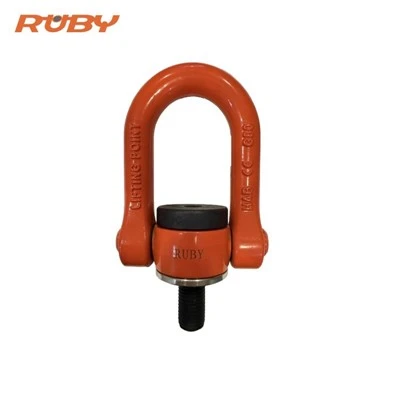
We also conduct rigorous quality control checks to ensure that our weldable lifting lugs meet the highest standards. Our commitment to quality and safety is what sets us apart from other suppliers in the market.
Contact Us for Your Lifting Lug Needs
Lifting Components If you’re in the market for high – quality weldable lifting lugs, we’d love to hear from you. Whether you need a small quantity for a specific project or a large volume for continuous production, we can provide you with the right solution. Our team is ready to discuss your requirements, answer your questions, and provide you with a competitive quote.
References
- AWS D1.1/D1.1M:2020, Structural Welding Code – Steel
- ASME Boiler and Pressure Vessel Code, Section IX, Welding and Brazing Qualifications
- Welding Handbook, Volume 1: Welding Science and Technology, American Welding Society
Hangzhou Ruby Imp. & Exp. Co., Ltd.
As one of the most experienced weldable lifting lugs manufacturers and suppliers in China, we offer a wide range of products with superior quality. We warmly welcome you to wholesale custom made weldable lifting lugs at competitive price from our factory.
Address: Taoyuan Industrial Park, Puyang Town, Xiaoshan, Hangzhou, Zhejiang, China.
E-mail: Sales5@z2lifting.com
WebSite: https://www.rubylifting.com/
