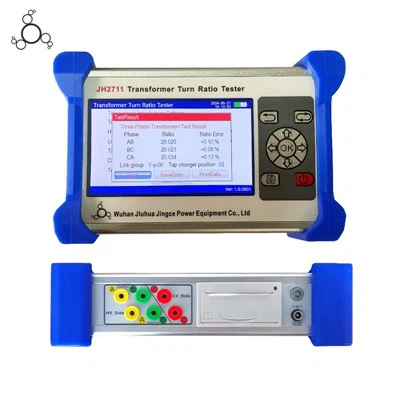
In the realm of electrical systems, secondary circuit testing equipment plays a pivotal role in maintaining the safety, reliability, and efficiency of various power – related infrastructures. When it comes to dynamic conditions, ensuring the accuracy of test results becomes even more challenging yet crucial. As a supplier of secondary circuit testing equipment, I am well – versed in the mechanisms and technologies that enable our products to deliver precise outcomes under such demanding circumstances. Secondary Circuit Testing Equipment
Understanding Dynamic Conditions in Secondary Circuits
Dynamic conditions in secondary circuits refer to situations where electrical parameters such as current, voltage, and frequency are constantly changing. These changes can be caused by a variety of factors, including load variations, system faults, and the integration of renewable energy sources. For example, in a power grid with a large number of solar panels, the power output from these panels fluctuates depending on the sunlight intensity. This can lead to rapid changes in the current and voltage in the secondary circuits connected to them.
Another aspect of dynamic conditions is the presence of transient events. Short – circuit faults, lightning strikes, or sudden switching operations can generate high – frequency transients in the secondary circuits. These transients have a very short duration but can cause significant disturbances to the normal operation of the electrical system and the testing process.
Key Features of Our Secondary Circuit Testing Equipment for Dynamic Accuracy
High – Speed Sampling
One of the fundamental features of our testing equipment is its high – speed sampling capability. To accurately capture the rapidly changing electrical signals in dynamic conditions, our devices are equipped with high – performance analog – to – digital converters (ADCs) that can sample the input signals at extremely high frequencies. For instance, our latest model can sample up to 100,000 samples per second. This high – speed sampling ensures that even the shortest transient events are not missed, and the waveform of the electrical signals is accurately reconstructed. By having a detailed and accurate representation of the signal, we can perform more precise analysis and obtain reliable test results.
Adaptive Filtering
In dynamic conditions, electrical signals are often contaminated with noise and interference. Our secondary circuit testing equipment uses adaptive filtering techniques to remove these unwanted components. Adaptive filters can automatically adjust their filtering parameters based on the characteristics of the input signal. For example, if the signal has a high – frequency noise component, the filter will adjust its cut – off frequency to attenuate the noise while preserving the useful signal. This adaptive nature allows our equipment to work effectively in different dynamic environments, where the noise characteristics may vary widely.
Real – Time Calibration
To maintain the accuracy of test results over time, our testing equipment is designed with real – time calibration functionality. During the testing process, the equipment continuously compares the measured values with a known reference. If there is any deviation, the equipment will automatically adjust its internal parameters to correct the measurement. This real – time calibration compensates for factors such as temperature variations, component aging, and electrical interference, which can all affect the accuracy of the measurement.
Advanced Algorithms and Technologies
Waveform Analysis Algorithms
Our secondary circuit testing equipment employs advanced waveform analysis algorithms to extract useful information from the sampled electrical signals. These algorithms can analyze the shape, frequency, amplitude, and phase of the waveforms. For example, in the case of a fault in the secondary circuit, the waveform of the current or voltage may exhibit specific characteristics. Our algorithms can detect these fault – related features and provide detailed diagnostic information. By accurately analyzing the waveforms, we can determine the type and location of the fault, which is essential for maintaining the reliability of the electrical system.
Synchronization Technologies
In a complex electrical network, multiple secondary circuits may need to be tested simultaneously. To ensure the accuracy of the test results, our equipment uses synchronization technologies to ensure that the measurements from different circuits are taken at the same time. This is crucial because the electrical parameters in different parts of the network can change rapidly and independently. By synchronizing the measurements, we can obtain a more comprehensive and accurate picture of the overall electrical system.
Case Studies: Demonstrating Accuracy in Dynamic Conditions
Case 1: Renewable Energy Integration
We recently provided our secondary circuit testing equipment to a solar power plant. The power plant was experiencing intermittent power fluctuations due to changes in sunlight and the connection and disconnection of solar panels. Our testing equipment was used to monitor the secondary circuits of the inverters in the power plant. By using high – speed sampling and advanced waveform analysis algorithms, our equipment was able to accurately capture the rapid changes in the current and voltage. This allowed the plant operators to identify the root cause of the power fluctuations and make necessary adjustments to the control system of the inverters. As a result, the power output of the solar power plant became more stable and efficient.
Case 2: Fault Detection in a Distribution Grid
In a large – scale distribution grid, there was a sudden short – circuit fault. Our secondary circuit testing equipment was quickly deployed to the affected area. Thanks to its high – speed sampling and real – time calibration features, the equipment was able to accurately measure the transient current and voltage waveforms during the fault. The waveform analysis algorithms then identified the type and location of the fault within minutes. This rapid and accurate fault detection enabled the grid operators to take immediate action to isolate the fault and restore power to the affected areas.
Importance of Accuracy in Dynamic Conditions
Accurate test results in dynamic conditions are of utmost importance for several reasons. Firstly, it ensures the safety of the electrical system. By accurately detecting faults and abnormal conditions in the secondary circuits, potential hazards such as electrical fires and equipment damage can be avoided. Secondly, accuracy is essential for the reliable operation of the electrical system. Precise measurements and analysis allow for timely maintenance and adjustments, which can prevent power outages and improve the overall efficiency of the system. Finally, in the context of modern power systems that are increasingly complex and interconnected, accurate test results are necessary for effective system planning and optimization.
Conclusion

As a supplier of secondary circuit testing equipment, we are committed to providing high – quality products that can ensure the accuracy of test results in dynamic conditions. Our advanced technologies, such as high – speed sampling, adaptive filtering, real – time calibration, and sophisticated algorithms, enable our equipment to meet the challenges posed by rapidly changing electrical environments. Through real – world case studies, we have demonstrated the effectiveness of our products in maintaining the safety, reliability, and efficiency of electrical systems.
Cable Fault Tester If you are in need of reliable secondary circuit testing equipment, we are eager to engage in further discussions with you. Our team of experts is well – equipped to understand your specific requirements and provide customized solutions. We invite you to reach out to us to explore how our products can contribute to the success of your electrical projects.
References
- Blackburn, J. L. (1998). Protective Relaying: Principles and Applications. Marcel Dekker.
- Dorf, R. C., & Bishop, R. H. (2016). Modern Control Systems. Pearson.
- Kothari, D. P., & Nagrath, I. J. (2011). Modern Power System Analysis. McGraw – Hill Education.
Wuhan Jiuhua Jingce Power Equipment Co., Ltd.
As one of the most experienced secondary circuit testing equipment manufacturers in China, we offer a wide range of products with superior quality. Please feel free to wholesale bulk durable secondary circuit testing equipment from our factory. For price consultation, contact us.
Address: 601,Unit 1,Building D4-02,Optics Valley Center,303 OpticsValley Avenue,Wuhan
E-mail: market@wuhanjhjc.com
WebSite: https://www.powertransformertester.com/
