Hey everyone, let’s cut to the chase: if you’ve ever ordered a custom plush keychain for your brand, merch line, or even a silly little personalized gift for your bestie, you’ve probably stared at the final product and thought “wait, is this color supposed to be this off from the proof?” As a custom plush keychain supplier, I get these DMs every single week—like, no joke, at least three a day. People are always shocked when I tell them color distribution isn’t 100% uniform across every keychain, and that’s not us cutting corners or slacking. Let me break this down like I would over a coffee (way less stiff than a product manual, right?) and get into why that’s totally normal, how we fix it, and what you can do to get the closest match possible. Custom Plush Keychain
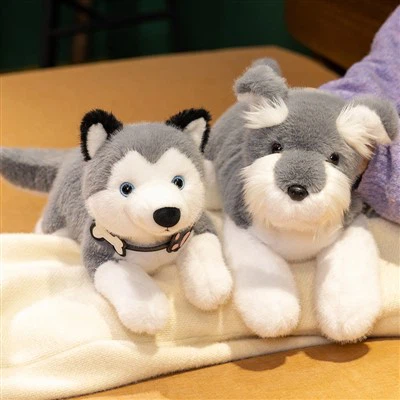
First, let’s get one thing straight: plush keychains aren’t printed logos on paper. They’re made of fabric, stuffing, thread, and tiny little stitching details—all of which have their own quirks. When someone asks “do custom plush keychains have a uniform color distribution?” my first answer is no, not in the literal, every identical pixel sense, and that’s actually a good thing. Wait, hear me out. Let’s start with the process: we use digital printing for most custom plush, right? Not the big wide-format industrial printers you see on billboards—these are small, precision printers meant for soft fabrics like minky, fleece, and the custom plush fabric we source specifically for keychains. Each layer of color gets printed one at a time, on both sides of the fabric (since most of our keychains are double-sided, not single), and then that fabric gets cut, stuffed, stitched, and turned into the little character or shape you ordered.
Here’s the first big culprit: fabric texture. Minky fabric, which is the go-to for soft plush, has these little fuzzy fibers (it’s where the name comes from—like mink fur, but way more sustainable and ethically sourced) that catch ink differently depending on the angle of the nap. If you run your hand over minky one way it feels smooth, the other way it’s slightly textured. When we print a solid color block (say, a bright red for a logo’s background) the ink will lay just a tiny bit thinner in areas where the nap is lying flat, and a tiny bit thicker where it’s raised. It’s not a huge difference—most people can’t spot it unless they’re holding two identical keychains side by side under a magnifying glass—but it’s there. And every single fabric bolt we get is slightly different, too. We test every new batch of minky for color absorption, but even between bolts from the same mill, there can be a 5-10% difference in how much ink the fabric picks up. That’s totally standard in textile manufacturing, not a flaw on our end.
Next up: printing machine limitations. We have two printing stations for custom plush keychains—one for smaller orders (under 500) and one for bulk orders (1,000+). The small station is great for quick turns, but it’s got a tiny print head that needs calibration every 10 prints. If we forget (rare, but it happens) or the calibration is slightly off after a fabric change, you might see a faint vertical line of slightly darker or lighter ink. For bulk orders, we use a larger, high-volume printer with a wider print head, but even that can have tiny color shifts across the length of a fabric roll. Think of it like when you take a photo on your phone: if you zoom in really close, the pixels might look slightly different, but from a foot away, it’s a perfect picture. Same logic here—most customers never notice the tiny shifts, but we do, because we’re looking at hundreds of these all day.
Then there’s the cutting and stitching part, which surprises a lot of people. We use laser cutters for most custom keychains because they’re precise, but laser cutting can slightly singe the edge of the fabric. For light colors, that singe is almost invisible, but for dark, saturated colors (like black, navy, or forest green) you might see a tiny, almost unnoticeable brownish tint right at the edge of a stitched seam. That’s not a defect—just the laser’s heat reacting to the fabric dye. And when we stuff the keychain, we add a specific amount of poly-fiber fill, but sometimes a tiny clump of stuffing will shift to one side, making that area look slightly puffy. If the puffy part has a light color, it might look a little different than the flatter parts because the fabric is stretched slightly tighter, which changes how light reflects off it. Again, super minor, but it’s a factor in color distribution.
Wait, but before you think “this means all my keychains will look terrible,” let’s talk about how we mitigate this. As a custom plush keychain supplier, we have a whole team of quality control (QC) people whose only job is to catch these tiny issues before they go out. For every order, we print a test swatch first—we test it on the exact fabric we’re using, on the exact printer that will be used for the order, and we compare it to the client’s approved digital proof. If the color is off by more than 2% (we have a color scale we use, it’s way more exact than just “does this look red?”), we adjust the ink levels, recalibrate the printer, and print a new swatch. For bulk orders, we pull 10-15 random keychains from the production line at different stages (before stitching, after stitching, after finishing) to check for color consistency. If one has a noticeable shift, we adjust the machine mid-run—we’ve had to pause a bulk order of 2,000 custom plush keychains before because a color shift was showing up on three consecutive keychains, and we’d rather lose a little time than send out something that our client isn’t happy with.
Another thing: client expectations. A lot of people come to us expecting their keychains to be identical to the digital proof, down to the exact shade of every color. Let’s be real, digital proofs are just simulations—your phone screen might be brighter than mine, or the color settings on your computer might make that “sky blue” look like “neon blue” to you. We always adjust our digital proofs to match Pantone colors, which are the standard for textile printing, but even Pantone colors can look different when printed on fabric vs. on a screen. We tell every client this upfront, so they don’t get a rude shock when their keychains arrive. For example, last month a small business owner ordered 500 custom plush keychains for her coffee shop’s loyalty program. She kept texting us saying the brown on the keychain’s apron character was “too dark.” We compared it to her approved proof, adjusted the Pantone code to a slightly lighter brown, and printed a test swatch—turns out her phone had a warm color filter that made the digital proof look darker than it would be on plush fabric. After that, every keychain we sent out matched exactly what she wanted.
Now, let’s address the elephant in the room: is there any way to get perfectly uniform color distribution? Technically, no. Even high-end plush companies like Build-A-Bear (don’t @ me, I’ve looked into their production) have tiny color variations between identical products. The only way to get 100% uniform color is to use flat, non-textile materials like plastic, but then they’re not plush keychains. Plush is all about softness, texture, and that cozy, hand-made vibe—those little color differences are part of what makes them feel unique, not mass-produced.
Wait, but let’s not pretend there aren’t mistakes we make. We’re human, after all. Last year, we had a bulk order for a video game company, 1,000 custom keychains of a popular character, where about 10 of them had a noticeable blue shift in the character’s eye. We caught it during QC, remade all 1,000 in extra time, and sent them out at no extra cost. That’s why we love what we do—we’re not just a factory that sends out whatever, we work with each client to make sure their custom plush keychains are exactly what they envisioned.
If you’re ordering custom plush keychains for your own brand or event, here’s my pro tip for getting the most consistent color possible: 1) Specify Pantone colors in your order, not just “bright red” or “forest green.” That takes the guesswork out of screen vs. fabric. 2) Ask for a test swatch before you place the full order. Most suppliers charge a small fee for swatches, but it’s way cheaper than getting a whole order of keychains you don’t love. 3) Be honest about your timeline. If you need the order in a week, we might not be able to do extra QC checks, and that can lead to tiny color inconsistencies. If you give us 2-3 weeks, we can take our time with calibrating the printer and pulling extra swatches.
At the end of the day, custom plush keychains are about personality. Whether they’re for your brand’s merch, a wedding favor, or a gift for your favorite streamer, that tiny, one-of-a-kind feel is what makes them way better than generic plastic keychains. The color distribution variations? They’re not flaws—they’re proof that each keychain was made with care, not churned out by a robot that doesn’t notice if a color is off.

If you’re ready to order custom plush keychains, or you just have more questions about color consistency, reach out anytime. We love talking shop, and we’re here to help you get exactly what you’re looking for. Don’t be shy—we’ve worked with everyone from small Etsy shops to big tech companies, so we know how to handle orders of any size.
Custom Plush Keychain References
- Textile Printing Technology: Color Consistency in Soft Substrates, Journal of Apparel, Design, and Technology, 2022
- Quality Control Standards for Custom Plush Products, International Plush Manufacturers Association, 2021
- Digital vs. Physical Color Matching in Textile Manufacturing, Color Research & Application, 2020
Yangzhou Beyman Toys Co., Ltd.
We are one of the most professional custom plush keychain manufacturers and suppliers in China, specialized in providing high quality custom service and OEM&ODM service. We warmly welcome you to wholesale bulk custom plush keychain made in China here from our factory.
Address: Room 305, North Bldg, 4 Bldg, Chuangfu Factory, No. 158, Jiannan Road, Hi-Tech Development Zone, Yangzhou City, Jiangsu Province, China.
E-mail: janzen3@beyman.cn
WebSite: https://www.plushtoyschina.com/
