Hey folks, let’s cut to the chase—if you’ve ever walked a plastic recycling floor, you’ve probably glanced at that big, quiet tank hanging near the pelletizer and gone, “That’s just a storage bin, right?” Nope, not even close. As a plastic pelletizing equipment supplier who’s walked dozens of production floors and fixed my share of wonky lines, I’m here to tell you that that “silo” by your pelletizer is way more than a place to stash plastic scrap. It’s the unsung middleman that keeps your whole line from grinding to a halt. Let’s break this down, plain and simple—no jargon overload, promise. Plastic Pelletizing Equipment
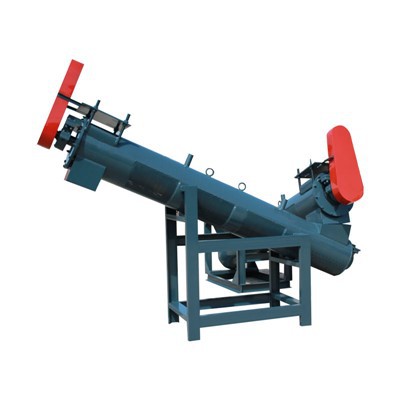
First, let’s get on the same page about what we’re talking about here. When you run a pelletizing line, you’re not just dumping random plastic into the grinder. You’ve got raw scrap—whether that’s post-industrial offcuts from a thermoforming line, post-consumer washed PET bottles, even regrind from your own production floor—and you need to turn it into consistent pellets. But here’s the thing: scrap doesn’t come in steady batches. One day you might have 1,000 lbs of clean HDPE, the next you’ve got a mix of PE, PP, and a little bit of something you swear’s garbage. The silo is the buffer that smooths all that out before it hits the pelletizer.
Wait, let’s test that with a real example. Last quarter, I was on a line in Ohio that was spitting out garbage pellets for three days straight. Their problem? They were feeding the pelletizer straight from a 50 lb tote bin, so when the tote ran out, they’d scramble to grab the next one—sometimes grabbing a batch of unwashed PVC that had mixed in with the PE. That PVC messes with your extruder temp (it melts at a lower temp than HDPE, so it gummed up the screw) and even makes the pellets brittle. We swapped their tiny tote for a 10,000 lb silo with a blender hopper built right in, and suddenly their scrap was mixed evenly before feeding. They fixed their waste rate by 18% in a month. That’s not a number I pulled out of thin air—that’s what happens when the silo does its job right.
So what does the silo actually do, beyond hold stuff? Let’s list the big three roles that make or break your line:
First, it’s the stability backbone. Any pelletizing line has a sweet spot for feed rate, melt temp, and pellet size. If your feed rate jumps around—say you dump 500 lbs of scrap in one minute, then nothing for five—your extruder can’t keep up. It’ll either overheat and burn the plastic, or underfeed and cause the screw to grind empty, which wears it out way faster. The silo acts as a surge buffer: it holds enough scrap to keep the feed system (like a vibratory feeder or screw feeder) running at a constant rate, even if your upstream process (grinder, washer, sorter) is spitting out material at a different pace. That’s huge for uptime. I’ve seen lines go from 12 hours of downtime a week to 2 hours just by adding a properly sized silo.
Second, it’s the quality control gatekeeper. Here’s where most people miss the mark. Silos aren’t just big buckets—they can be set up to sort and blend scrap so it’s consistent before it hits the pelletizer. Let’s say you make garden edging from HDPE and PP. If your scrap has varying ratios, your pellets will have inconsistent strength—some will be too bendy, some too brittle. A silo with internal blending systems (like a rotating bin or aeration pads) mixes different batches evenly so every pellet coming out is the same. Also, it keeps moisture out! Wait, right—plastic pellets hate moisture. If your scrap is wet (like washed PET bottles), moisture will make the pellets have bubbles or be weak. A lot of silos have drying systems built in now—we retrofitted a line in Texas that was losing 10% of their PET batches to bubbles just by adding a heated silo section. Suddenly that waste was gone.
Third, it protects your equipment and your bottom line. I already mentioned screw wear, but let’s go deeper. If you feed inconsistent material into your extruder, the die plate (the thing that pushes melted plastic into strands before cutting) can get clogged. Clogged die plates mean you have to shut down the line, take the die off, clean it— that’s 2-4 hours of downtime every time, plus you waste whatever plastic is in the line. A silo keeps the feed uniform, so the die runs smooth. Also, if you have different types of plastic, a silo lets you switch grades without cross-contamination. No more mixing PVC into PE because you forgot to clean the tote—just empty the old silo, run a quick purge batch through, and you’re on to the next material. That cuts down on purge waste, which is pure profit you’re not throwing away.
Wait, but I should be honest here—silo size matters a lot. I see guys buy silos that are too small because they think “bigger is better,” but no. If your upstream process only makes 2,000 lbs of scrap a day, a 20,000 lb silo is overkill—you’ll have material sitting in there too long, which can get moldy or absorb too much moisture. But if you have a big operation, a too-small silo means you’re still feeding in batches and causing line stops. Last year, a guy from Michigan called me panicking because his line was down, and it turned out his silo was only 3,000 lbs for a line that needed 15,000 lbs a day. We sized him up to 12,000 lbs, and he’s been running steady ever since. So sizing depends on two things: how much scrap your upstream process pumps out, and how consistent that scrap is. If your scrap is super consistent (like post-industrial, sorted perfectly), you can go a bit smaller. If it’s mixed post-consumer, you need a larger silo to blend it.
Also, don’t sleep on the accessories that make a silo work. A lot of cheap silos come with just a lid and a drain, but the good ones have level sensors that tell your upstream process when the silo is full so it doesn’t overflow, and empty so it knows when to start making more. They have vibration pads to keep scrap from sticking to the sides (that’s a huge pain—plastic regrind sticks like glue, and if it builds up, it blocks the feeder). And if you’re running hygroscopic plastics like PET or nylon, you need a heated silo with dew point controls to keep moisture levels below 50 ppm. Skipping those accessories is like buying a sports car and never changing the oil—you’re gonna have a bad time.
Let’s wrap this up with a real win story to drive it home. Last spring, I worked with a mid-sized recycling company in Georgia that was focused on post-consumer HDPE milk jugs. They had two lines, both feeding straight from wash lines, and were losing roughly 12% of their pellets because of inconsistent feed and moisture. We installed two 10,000 lb silos with blending and drying systems, matched to each line’s feed rate. Within 6 weeks, their waste dropped to 3%, their line uptime went from 82% to 96%, and they could actually sell their pellets for 2 cents more a pound because the quality was so consistent. That’s $120,000 a year in extra revenue just from adding silos—no new grinders, no new pelletizers, just a better middleman.
Now, I know some of you are thinking, “I already have a bin, why do I need a silo?” If your line is small, 500 lbs an hour or less, maybe a good tote with a blender works. But if you’re producing more than that, if you’re dealing with mixed scrap, if you’re tired of line stops and bad pellets, the silo is non-negotiable. It’s not a fancy upgrade—it’s the foundation that makes your whole pelletizing line run like it’s supposed to.
At the end of the day, plastic pelletizing isn’t just about grinding plastic and cutting it into bits—it’s about consistency. Your customers want the same pellet every single time, no bubbles, no weird mixes, no breaks. The silo is what makes that happen. It’s the quiet workhorse that doesn’t get the glory, but if you remove it, your whole line falls apart.
Plastic Drying Equipment If you’re dealing with inconsistent scrap, line stops, or pellet quality issues and think a silo might be the fix, hit me up. I don’t do one-size-fits-all— I’ll walk your floor, look at your scrap, your line rate, and size the right silo for your operation, no pressure, no sales pitch that doesn’t make sense. We’re here to keep your line running, not just sell you a tank.
References
- Plastic Recycling Equipment Manufacturers Association. (2022). Key Components of Continuous Pelletizing Lines. PREMA Technical Bulletin Series.
- Zhang, L., et al. (2021). “Effect of Feed Buffer Systems on Pellet Quality in Mechanical Recycling of Mixed Plastic Wastes.” Journal of Applied Polymer Recycling, 8(2), 112-127.
- American Society of Plastic Engineers. (2020). Silo Design and Operation for Plastic Recycling Processes. SPE Recycling Division Guidelines.
Laizhou Yuening Machinery Co., Ltd.
As one of the most reliable plastic pelletizing equipment manufacturers in China, we warmly welcome you to buy cheap plastic pelletizing equipment made in China here from our factory. All customized machines are with high quality and low price. For pricelist, contact us now.
Address: Yuanjia Village, Luwang, Shahe Town, Laizhou City, Yantai City, Shandong Province
E-mail: yueningjixie@163.com
WebSite: https://www.ynplasticmachinery.com/
