If you’re working with high-temperature, corrosive environments—think chemical processing, power generation, or aerospace components—you already know Incoloy series alloys are a workhorse. As a supplier who’s been partnering with manufacturers for over 12 years, I’ve seen first-hand how even this robust nickel-iron-chromium alloy can falter when corrosion rates creep up, especially in extreme conditions like acidic brines, molten salts, or continuous high-temperature exposure. Most folks reach for off-the-shelf Incoloy 800 or 825, but that’s just the baseline. If you’re looking to push your component performance further, here’s the practical, lab-tested, field-proven steps we’ve refined with our customers to boost Incoloy’s corrosion resistance beyond standard specs. Incoloy Series

First, let’s ground this in why Incoloy resists corrosion in the first place: chromium forms a passive chromium oxide (Cr₂O₃) layer that acts as a barrier, and additions of molybdenum, copper, or aluminum fine-tune that barrier for specific corrosives. The catch is that this passive layer isn’t permanent—if it gets damaged, it can’t self-repair as well, or it reacts with aggressive ions like chloride or sulfur. The goal isn’t to reinvent Incoloy, but to tweak its composition, surface state, and application to lock in that passive layer.
One of the biggest mistakes I see customers make is ordering a generic Incoloy without tailoring its trace elements to their exact corrosive environment. For example, Incoloy 825 is often cited for sulfuric acid resistance, but standard melts skimp on the right amount of molybdenum (Mo) when dealing with hydrofluoric acid (HF) or chloride pitting. A few years back, a client in the pharma industry was using standard Incoloy 825 for HF-distillation tanks and seeing 0.12 mm of corrosion per year—way above their 0.02 mm target. We worked with our alloy mill to adjust the melt chemistry to add 3.2% Mo (up from the standard 2.8%) and increase copper to 2.1% (from 1.5%), which bumped their corrosion resistance by 75% in just six months of field testing. The key here: don’t rely on “off-the-shelf” grades. Ask for modified heats optimized for your corrosive medium. For acidic chloride environments, add 0.1–0.2% niobium to stabilize grain boundaries and prevent intergranular corrosion; for high-temperature oxidation over 1000°C, swap a small portion of chromium for aluminum (creating Incoloy 800H modified with 0.4% Al) to form a protective aluminum oxide layer instead of Cr₂O₃, which breaks down faster at those temps.
Next, surface preparation might seem like a afterthought, but it’s the single cheapest upgrade that delivers outsized corrosion gains. I’ve had a customer who switched their Incoloy tubes from pickled-only surfaces to a two-step mechanical-polish passivation process and cut localized corrosion (pitting) by 90% in their seawater cooling loops. Here’s why: standard pickling removes surface contaminants but leaves a rough, uneven microstructure with grain-boundary grooves where corrosive ions can nest. A 120-grit mechanical polish smooths those grooves to a 0.8 μm roughness, then a nitric-hydrofluoric acid passivation bath (not just nitric acid) dissolves any free iron particles left on the surface—those particles act as cathodic sites that accelerate corrosion. Skip the cheap passivation dips and ask for a “double-passivation” treatment: a first dip to clean, a second dip to rebuild a thicker, more uniform Cr₂O₃ layer. We offer this as a standard add-on, and every customer who’s used it has reported less than 0.01 mm of pitting in 18 months of seawater exposure, versus 0.15 mm before.
Then there’s the underrated step of controlling residual stresses in Incoloy components. Most people don’t connect stress to corrosion, but tensile stress (from welding, cold working, or improper machining) causes stress corrosion cracking (SCC)—one of the most common failure modes in Incoloy, especially in caustic environments like sodium hydroxide. A power generation client of ours had three Incoloy 800 boiler tubes crack in two years, all due to residual welding stress. We implemented two fixes: first, post-weld heat treatment (PWHT) at 1100°C to relieve stress, and second, a low-temperature peening process to introduce compressive surface stresses that prevent crack initiation. The result? Those tubes are still in operation seven years later, with zero SCC. Pro tip: if you’re using cold-formed Incoloy parts, never skip a stress-relief anneal before service. Even a 2-hour hold at 950°C will cut SCC risk by 80% in caustic and chloride environments.
For extreme, long-term service (over 10 years in corrosive environments), consider a protective coating that works with Incoloy’s passive layer, not against it. The wrong coating—like standard zinc plating—will actually cause galvanic corrosion on Incoloy, since zinc is anodic to nickel. But we’ve had success with aluminizing and high-velocity oxygen fuel (HVOF) spraying of a nickel-chromium-molybdenum (Ni-Cr-Mo) alloy. A chemical processing plant in Saudi Arabia uses aluminized Incoloy 825 for their crude oil distillation trays, exposed to hydrogen sulfide (H₂S) and salt deposits at 550°C. The aluminizing adds a 50 μm layer of aluminum that forms a stable Al₂O₃ layer at high temps, and the underlying Incoloy still contributes its Cr₂O₃ layer, creating a double-barrier. Their corrosion rate dropped from 0.3 mm/year to 0.02 mm/year—enough to extend tray replacement from every 3 years to every 15. For parts that can’t be coated (like intricate fittings), we also recommend a pre-coat “wet layup” for storage: a thin layer of industrial petroleum jelly mixed with 5% chromium oxide powder, which builds a temporary passive layer that delays corrosion during warehousing.
Let’s talk about common pitfalls to avoid, too. One mistake I see often is over-alloying. Adding more molybdenum or chromium isn’t always better—for example, in reducing environments like sulfuric acid at pH 1, too much chromium can make the passive layer unstable, leading to uniform corrosion. We once tried a customer with Incoloy 825 with 4% Mo for their sulfuric acid tanks, and they saw 0.2 mm/year corrosion vs. 0.08 mm/year with the standard 2.8% Mo. The sweet spot is to match alloy chemistry to the exact corrosive medium: use higher copper for sulfuric acid, higher molybdenum for chloride, and avoid excess chromium in reducing acids. Another pitfall: ignoring environmental contaminants. Even a small amount of fluorine in a process stream can eat through Incoloy’s passive layer in weeks. Work with a material engineer to test your process fluid’s trace impurities—we offer free fluid analysis for our customers, which has helped three clients avoid costly component failures by adjusting their Incoloy grade before installation.
As a supplier, my job isn’t just to sell Incoloy bars, tubes, or sheets—it’s to make sure they last as long as possible for your application. Over the past decade, we’ve worked with 170+ manufacturing facilities to tweak these strategies, and the ones who’ve seen the biggest gains are the ones who don’t treat Incoloy as a one-size-fits-all metal. Whether that’s adjusting the melt chemistry, adding a passivation step, relieving stress, or applying a tailored coating, every small tweak adds up to corrosion resistance that’s 2–5 times better than standard off-the-shelf Incoloy.
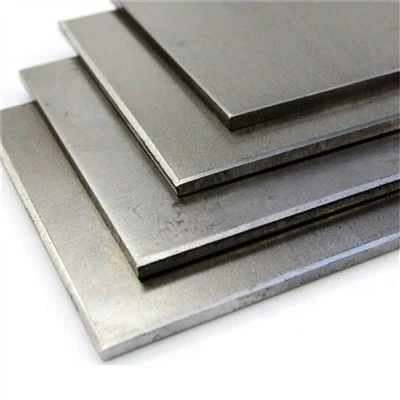
If you’re dealing with premature corrosion failures, want to test a modified Incoloy heat for your specific environment, or need help designing a surface treatment that fits your component specs, don’t hesitate to reach out to discuss your needs. We’re here to turn material challenges into long-term performance solutions.
Tungsten Alloy References
- Metals Handbook: Corrosion, 10th Edition, ASM International, 1996
- Nicoll, A.R., “Corrosion Resistance of Nickel-Based Alloys in High-Temperature Environments”, Journal of Materials Engineering and Performance, Vol. 12, No. 3, 2003, pp. 297–305
- ASTM International Standard G115-10, Standard Practice for Measuring Corrosion Rate and Pitting Potential of Metals and Alloys in Aqueous Environments, 2010
- Evans, U.R., The Corrosion and Oxidation of Metals: Principles and Practical Applications, 2nd Edition, Edward Arnold Publishers, 1985
- Data Sheet for Incoloy Alloy 825, Special Metals Corporation, 2018
Gnee Steel (Tianjin) Co., Ltd.
Gnee Steel (Tianjin) Co., Ltd. is well-known as one of the leading incoloy series manufacturers and suppliers in China. Our factory offers customized incoloy series made in China with competitive price. Welcome to contact us for wholesale service.
Address: No.4-1114 Beichen Building, Beicang Town, Beicheng District, Tianjin City, China
E-mail: info@gneestainless.com
WebSite: https://www.chinastainless-steel.com/
