If you’ve ever stood next to a truck mounted crane at a job site—maybe a construction zone lifting steel beams, a warehouse loading oversized equipment, or a utility company repairing power lines—you know how much reliability matters. As a supplier who’s spent the last 12 years walking job sites side-by-side with crane operators, maintenance techs, and small fleet owners, I’ve seen one small mistake cause more downtime than almost anything else: skipping a simple oil level check. Not just engine oil, either—crane mounted trucks have half a dozen critical oil reservoirs, and missing even one can lead to expensive, avoidable breakdowns that set projects back days or weeks. Truck Mounted Crane

Today I’m walking you through exactly how to check oil levels in your truck mounted crane, step-by-step, based on the maintenance protocols we train all our customers on when they pick up their new crane from our yard. No fancy jargon, no confusing industry-specific acronyms that sound like a secret code. Just practical, real-world steps that keep your crane running when you need it most.
First, a quick reality check: truck mounted cranes aren’t like your personal pickup truck. Your everyday car has one dipstick, one oil pan, and that’s it. A truck mounted crane? You’ve got the engine (the part that powers the truck to get to the job site), the crane’s hydraulic system (the heart of the lifting machinery), the gearbox (for smooth boom extension and rotation), the power take-off (PTO, which connects the engine to the crane when you’re lifting), and even the winch if you have a secondary lifting setup. Each of these has its own oil reservoir, and each requires a different check. Skipping even one could lead to issues: low hydraulic oil means slow, unsteady lifts; low PTO oil causes grinding noises mid-operation; low engine oil seizes the entire truck engine, leaving your crane stranded on the side of the road. That’s why our service team emphasizes a full oil check before every shift, not just weekly.
Let’s start with the most important one for the truck itself: engine oil. This is the same oil you check in any vehicle, but there’s a crane-specific twist that many new operators miss. Here’s the step-by-step process:
First, park the crane on flat, level ground. This is non-negotiable. If the truck is tilted forward, back, or to the side, the oil will pool unevenly in the pan, and your dipstick reading will be wrong. We always tell customers to set the emergency brake, chock the wheels (front and back, especially if you’re on a slight incline), and wait at least five minutes after turning off the engine. Why five minutes? The oil needs to drain back down into the oil pan, not stay in the engine’s upper components. If you check it right after turning off the engine, you’ll get a falsely low reading—and that’s when you end up adding too much oil later, which causes its own set of problems like increased pressure and leaks.
Next, open the hood (or the engine compartment, which for some heavy-duty cranes is a large side panel—check your operator’s manual for the exact location). Locate the yellow dipstick with “engine oil” marked on it. Pull it out, wipe it completely clean with a lint-free rag (we keep a pack of these in every new crane we sell, along with a funnel and spare oil filters), then push it all the way back in until it clicks. Pull it out again. Now look at the end of the dipstick: there are two notches, or “safe” marks, one lower and one upper. The oil level should be exactly between those two marks. If it’s below the lower notch, you need to add engine oil—make sure you use the exact viscosity and type recommended in your operator’s manual (we include a sticker in the cab with this info for quick reference). If it’s above the upper notch, that means you overfilled it, and you’ll need to drain a bit to avoid damage.
Moving on to the next critical system: hydraulic oil. This is the oil that makes the boom extend, rotate, lift heavy loads, and engage the winch. It’s the lifeline of the crane’s lifting function, and checking its level is a little different than engine oil, because the hydraulic system is pressurized when the crane is running. You never check hydraulic oil while the crane is operating, obviously, but you also need to cycle the hydraulics briefly to make sure all the oil is flowing through the lines before checking—another step new operators miss.
Here’s how to do it right: First, keep the crane on flat ground, and set the emergency brake. Now, start the engine, engage the PTO (that’s the switch that connects the engine to the crane’s hydraulic pump), then cycle the boom through a full short extension and retraction, and rotate the crane 180 degrees from side to side. That moves all the hydraulic oil out of the lines and into the reservoir, so your reading is accurate. Turn off the engine, wait five minutes again for the oil to settle.
Now locate the hydraulic oil reservoir—this is usually a large, translucent tank mounted on the frame of the crane, near the boom’s base. It will have level marks printed right on the side of the tank, so you don’t even need a dipstick. The marks will say something like “MIN” and “MAX,” or maybe “COLD” and “HOT” depending on whether the oil is at operating temperature. A quick note: if you just cycled the hydraulics, the oil is at operating temperature, so use the “HOT” mark. If you checked it before starting work in the morning, use the “COLD” mark. The level should never drop below MIN, and never go above MAX—overfilling hydraulic oil causes foaming, which leads to unsteady lifts and even pump damage, while underfilling means air gets into the lines, causing slow or jerky operation. For example, last year we had a customer out on a residential lift job where the operator skipped cycling the hydraulics before checking hydraulic oil, got a falsely high reading, didn’t add any oil. Halfway through lifting a 2,000-pound AC unit, the boom started stuttering because air was in the lines. They had to call a service truck, which cost them 6 hours of downtime and a big late fee to the homeowner. That’s exactly why we emphasize this step.
Next up: Power Take-Off (PTO) oil. This is the oil that lubricates the gears connecting the engine to the hydraulic pump. It’s a small, often overlooked reservoir, but low PTO oil can cause grinding, slipping, or even total failure when you’re trying to lift a load. Checking PTO oil is straightforward, but it’s easy to mix up with other small reservoirs.
First, make sure the engine is off, the PTO is disengaged (critical—you don’t want the crane to accidentally engage while you’re working), and the crane is on flat ground. Locate the PTO reservoir—this is usually a small metal or plastic tank mounted near the transmission, not too far from the hydraulic reservoir. It will have its own dipstick, typically marked with “PTO” or “Power Take-Off.” Pull the dipstick, wipe it clean, reinsert fully, then pull again. The level should be between the two notches on the dipstick, just like engine oil. If it’s low, add PTO-specific oil—don’t substitute hydraulic oil or engine oil here, because PTO gear oil has different additives to handle the high torque of the connection. Our operators often tell us they forget about this one, but we’ve seen a PTO fail just two weeks after delivery because the owner skipped this check.
Then there’s the crane’s gearbox oil. If you have a longer boom, or a boom that rotates more than 360 degrees, the gearbox at the base of the boom needs lubrication. This oil is thicker, like gear oil, and it’s not checked as often as engine or hydraulic oil—usually once every 100 operating hours, rather than pre-shift—but it’s still part of a full oil check before starting a big job. The gearbox reservoir is usually a sealed unit with a level plug, not a dipstick. To check it, you’ll need a wrench: park the crane on level ground, turn off the engine, remove the level plug (the smaller of the two plugs on the gear housing). If oil drips out slowly when you remove the plug, the level is correct. If no oil comes out, you need to add gear oil through the fill plug (the larger one on the gear housing) until it starts to drip out of the level plug, then replace both plugs. This step is important because a gearbox failure means you can’t rotate or extend your boom at all, turning a $100,000 crane into a very expensive paperweight.
Wait, what about winch oil? A lot of our customers ask about this, especially if they have a secondary winch for heavy lifting. The winch has its own small gear reservoir, checked the same way as the PTO or boom gearbox—remove the level plug, check for oil flow, top up if needed. It’s part of the 100-hour check, though you can do a quick visual for leaks before each shift.
Now, a few do’s and don’ts that we go over with every customer when they take delivery: Do keep a dedicated oil kit in your crane cab. We include this with every new unit: it has the correct viscosity oil for engine, hydraulic, and PTO, a funnel, lint-free rags, and a plastic bottle to catch any excess oil when you top up. Don’t use generic oil or substitute types—each system is engineered for specific additives, and using the wrong oil can void your warranty. We’ve had customers try to use engine oil in the hydraulic system, and within a month their hydraulic pump was shot, which cost them $8,000 in repairs. Don’t check oil on an uneven surface, ever. Even a slight tilt, like if one side of the crane is on a soft mud spot, can throw off the reading.
Also, pay attention to oil quality, not just level. If you pull the dipstick and the oil looks milky, that means there’s water in it—common if the crane is stored outside in cold weather, or if there’s a leak in the cooling system into the oil pan. If hydraulic oil looks dark and gritty, that means it’s contaminated with metal shavings from wear, and you need to change it before operating. We always tell our customers to do a quick visual check of the oil while they’re checking the level—this can catch bigger problems before they turn into breakdowns.
Let me wrap this up with a personal story, because that’s how I learned how important this is. Early on in my crane supply career, I sold a 30-ton truck mounted crane to a small construction company in Ohio. The owner, a guy named Joe, was a hard worker, but he was used to running his own pickup truck, so he thought checking oil was just pulling a dipstick and wiping it. A week later, he called me at 2 a.m., panicking—his crane had seized the engine on the way to a job, because he didn’t wait five minutes after turning off the engine to check the oil, so he thought the level was fine, but it was actually dangerously low. The truck was a total loss, and he couldn’t finish the job, costing him his contract. We ended up working out a payment plan for a new engine, but that experience stuck with me. It’s not rocket science, but it’s details like waiting five minutes, cycling the hydraulics, using the right oil, that keep your crane running.
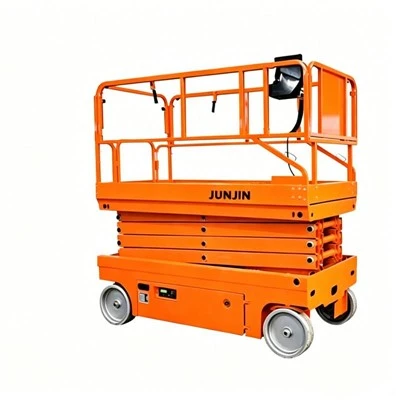
If you’re in the market for a new truck mounted crane, or you’re looking to replace your current unit, we work with operators across the country to match them with the right crane for their specific jobs—whether you’re lifting HVAC units for residential work, moving construction materials, or doing utility line work. We also offer free on-site maintenance training for all our customers, because we know that a well-maintained crane is the most reliable one on the job. If you have questions about checking oil levels, or you want to learn more about our cranes, reach out to our team to discuss your needs. You can trust that we’ll give you honest, practical advice—no sales pressure, just what you need to keep your crane working when you need it.
Agricultural and Forestry Work Platform References:
- National Commission on Industrial Crane Safety. "Pre-Operation Inspection Protocols for Truck Mounted Cranes." Crane Maintenance Journal, vol. 18, no. 3, 2021, pp. 45-52.
- Truck Mounted Crane Manufacturers Association. Operator’s Manual Standard: Lubrication and Fluid Checks, 7th ed., TMCA Publications, 2022.
- Occupational Safety and Health Administration (OSHA). "Pre-Operation Inspections for Mobile Cranes." OSHA Safety Bulletin, U.S. Department of Labor, 2020.
- Heavy Equipment Maintenance Association. Fluid Level and Quality Checks for Hydraulic Truck Cranes, HEMA Technical Report No. 12, 2021.
Yantai Quanrui International Trading Co., Ltd.
As one of the most reliable truck mounted crane manufacturers and suppliers in China, we’re featured by high quality customized products. Please rest assured to buy discount truck mounted crane made in China here from our factory. Contact us for pricelist and quotation.
Address: No. 278, Sanya Road, Gaotuan Town, Fushan District, Yantai City, Shandong Province, China
E-mail: Info@quanjin1588.com
WebSite: https://www.qr1588.com/
