If you’ve ever bitten into a flaky, perfectly proportioned meat pie, a sweet fruit pie with a just-right crumble topping, or a savory vegetable pie that holds its shape through transport and display, you’ve experienced the end result of a well-run pie bakery production line. As a supplier of bakery production lines, I get asked this question all the time from small artisanal bakeries looking to scale, mid-sized operations wanting to standardize quality, and even bakery startups aiming to skip the trial and error of building a line from scratch. It’s not just a bunch of machines lined up in a room—this is a integrated, calibrated system designed to turn raw ingredients into consistent, food-safe, ready-to-bake (or ready-to-sell) pies, without sacrificing the flavor that makes pies beloved. Bakery Production Lines
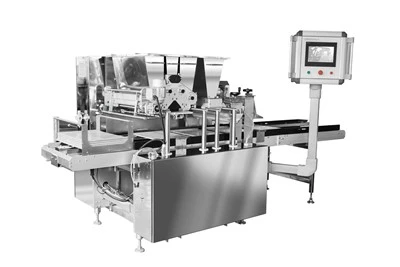
Let’s break down what that system actually entails, step by step, because every stage of the line serves a purpose, and skipping or rushing one leads to costly waste or uneven products. First, let’s start with the pre-production prep, because even before the machines turn on, the line’s layout is tailored to a bakery’s output goals. A line for 50 small hand-held pies an hour looks way different from one that cranks out 10,000 large party pies daily, so that layout is the first custom piece we design for every client. But once that’s sorted, the production sequence follows a logical flow that moves ingredients gently, maintains food safety, and keeps waste low.
The first core stage is ingredient preparation and portioning. Pies rely on consistent dough and filling—if a filling lumps or a dough sheet is uneven, every pie after that will be off. For many operations, this starts with automated dough mixing: not just a regular stand mixer, but a heavy-duty, calibrated dough mixer that measures flour, fat, water, salt, and any leavening (for puff pastry or shortcrust) with precision. Too little fat and the dough is tough; too much and it melts during baking, leaving a greasy mess. Modern mixers for pie lines also have controlled kneading times—over-kneading develops too much gluten, making the crust chewy instead of flaky. After mixing, the dough often rests in a temperature-controlled proofer section of the line, where it’s held at 18–21°C (65–70°F) for 30 to 60 minutes to relax the gluten, a step that prevents shrinkage later when the crust is shaped.
Next is filling portioning, which is where a lot of artisanal bakeries run into trouble when scaling. Hand-scooping filling leads to some pies bursting with too much fruit, some with barely a spoonful, and inconsistent bake times. A good production line uses volumetric or gravimetric fillers—volumetric is faster for softer fillings like apple or cherry, while gravimetric uses weight sensors to ensure every portion is exactly the same, which is critical for regulatory labeling (especially if your bakery lists “5 oz of apple filling” on packaging). The filler also has to handle different filling types: chunky fruit, creamy custard, or dense meat filling without getting clogged, which is why we specify different nozzles or augers for each application. For example, a meat pie filling needs a larger auger to move dense, diced beef and gravy without gumming up, while a fruit filling can use a smaller nozzle to distribute berries evenly.
Then comes the shaping and crust assembly, the part most people associate with a pie line. This is where the dough is rolled out, cut into circles or shapes, and lined into pie tins (or formed into hand-held pie shells) before being filled. Automated rolling sheeting systems do away with hand-rolling’s inconsistencies: they pull dough through a series of roller sets that adjust thickness automatically, so every sheet is the same thinness—usually 3–5mm for a flaky crust. For hand-held pies, the line might use a crimper and sealer that folds the top crust over the bottom, pressing the edges shut and crimping for that classic look, while also cutting excess dough for reuse (reducing waste by up to 15% compared to hand-shaping). For large 9-inch pies, the line has a crust-lining station that drops the dough into tin, presses it to fit the edges, and trims excess before filling—no more lumpy crust edges or dough hanging over the tin.
One of the most important, and often overlooked, stages in a pie production line is the docking and venting. Docking is the tiny holes poked into the bottom crust to release steam while baking—without it, the crust puffs up like a balloon, then deflates into a soggy mess when steam escapes. A good automated line uses a dough docker that rolls over the bottom crust just before filling, poking hundreds of uniform holes without damaging the crust. Venting is for top crusts: for double-crust pies, the top has vent holes to release steam too, which can be done with a simple rotary cutter or a more intricate design if the bakery wants a decorative vent pattern (like a heart or a star) for holidays. These small steps make the difference between a crisp, well-formed crust and a soggy, uneven one.
After assembly, the pies move to the baking stage, which is integrated into the line as a continuous conveyor oven—way more efficient than a deck oven for large batches. Conveyor ovens for pies are zoned: the first zone is a lower temperature to set the crust slowly, so it doesn’t burn before the filling is cooked through, the middle zone cranks up to set the filling’s structure, and the final zone browns the crust for that golden finish. Temperature control here is non-negotiable: a pie line’s oven will have sensors that adjust every few seconds, so if a batch of pies moves too fast, the temperature rises, and if it moves too slow, the temperature drops. For example, a fruit pie needs 12–15 minutes at 180°C (350°F) to cook the filling’s thickener (like cornstarch or tapioca) without turning it runny, while a meat pie might need 18 minutes at the same temperature to ensure the beef is fully cooked, a critical food safety step.
Once baked, the pies go through cooling, which is another make-or-break stage. Hot pies are fragile—if you move them right out of the oven, the filling might slosh, or the crust might crack. Automated cooling tunnels on a production line use controlled airflow (cool but not cold air, to prevent condensation) and a set cooling time, usually 45–60 minutes, until the core temperature drops below 21°C (70°F) for ready-to-sell pies, or 4°C (40°F) for frozen pies. For bakeries that sell fresh pies, this cooling tunnel also prevents sogginess from trapped moisture, so the crust stays crisp even after a few hours on display. For frozen pie lines, there’s an additional blast-freeze section that drops the pie temperature to -18°C (0°F) in 2 hours or less, locking in flavor and texture for long shelf life.
Finally, the packaging stage, which ties everything together. Modern pie lines can wrap individual hand-held pies in sealed plastic clamshells, label them with ingredients and expiration dates, or box large party pies for wholesale. Packaging equipment is integrated with the rest of the line, so a baker doesn’t have to move pies manually to a separate packaging station—this cuts labor costs and reduces the risk of cross-contamination. For example, a line for grocery store pies will use high-speed labelers that print lot numbers and nutritional information directly on the packaging, ensuring compliance with food labeling regulations in every region.
Now, let’s talk about why this system is different from just buying random machines off a catalog. A lot of new bakery owners think “a pie line is a mixer, a filler, and an oven,” but that’s a recipe for disaster. If your dough mixer is too small, you can’t handle peak demand during Thanksgiving. If your filler doesn’t match your crust speed, pies pile up between stations, leading to downtime. If your oven’s conveyor is too wide, you’re wasting energy heating empty space. That’s why when we work with a bakery, we don’t just sell machines—we design a line around their specific needs. A small-town bakery that sells 100 meat pies a day for local events needs a compact line that fits in a 200 sq ft space, while a regional bakery supplying 50 grocery stores across the state needs a high-capacity line that runs 12 hours a day, 6 days a week.
We also account for food safety, which is non-negotiable in bakery production. All equipment in a pie line is made with food-grade stainless steel, which is easy to clean and resists rust. The line’s design has easy access to every component for deep cleaning—no hard-to-reach nooks where old dough or filling can mold. We also integrate sanitization stations into the line, so workers can wipe down surfaces between batch changes without stopping production for hours. For example, if a bakery switches from apple pies to pumpkin pies, the line has a quick-clean cycle that takes 15 minutes instead of a full teardown, minimizing downtime.
Another thing we emphasize is flexibility. Bakers don’t just make one type of pie—they might make apple in the fall, berry in the summer, savory pot pies year-round, and holiday-themed pies with decorative crusts. A good pie production line is adaptable: changeable filling nozzles, adjustable dough roller thickness, and interchangeable crust cutters mean you can switch between pie types in minutes, not hours. One of our clients, a bakery in Ohio, used their line to switch from cherry pies to turkey pot pies overnight for Thanksgiving, because the line’s filler had a removable nozzle that worked for both chunky fruit and dense meat filling. That flexibility is what lets bakeries respond to seasonal demand without investing in a whole new line.
I’ve been working with bakery production lines for over a decade, and I’ve seen the difference a well-designed line makes. A friend of mine started a small pie shop in 2018, hand-making all their pies, and they were overwhelmed during their first holiday season when demand tripled—they ran out of pies, had inconsistent quality, and lost a lot of regular customers. They reached out to us, and we helped them put together a compact line that fit their existing kitchen space, let them scale to 500 pies a day while keeping their signature flaky crust and home-style filling. Now they supply three local cafes and have a waiting list for their pies every weekend. That’s the impact a properly engineered pie line can have, not just on production numbers, but on a bakery’s ability to keep their customers happy.
If you’re a bakery owner thinking about scaling, or a startup looking to avoid the growing pains that come with manual production, a pie bakery production line isn’t just an expense—it’s an investment. It cuts labor costs by up to 40% (fewer workers needed to move pies between stations), reduces waste by up to 20% (from consistent portioning and dough reuse), and ensures every pie that leaves your kitchen is the same quality, every time. No more worrying about a batch of pies being too underfilled or burnt, no more working 12-hour days during peak season, no more turning away orders because you can’t keep up.
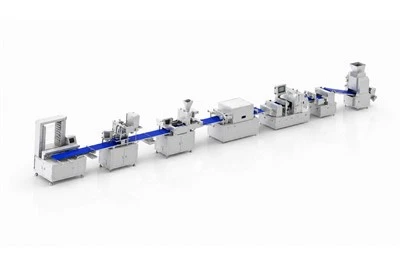
If you’re ready to learn how a pie bakery production line can work for your bakery’s unique needs, don’t hesitate to reach out for a personalized consultation. We’ll walk through your current production, your goal for output, and the types of pies you make, and design a line that fits your space, budget, and long-term plans. Whether you’re a small artisanal shop looking to grow or a mid-sized operation wanting to streamline, we’re here to help you build a system that turns your pie passion into a sustainable, scalable business.
Cookie Machine References
- Food and Agriculture Organization (FAO). (2020). Bakery Production Guidelines for Small and Medium-Scale Enterprises.
- American Bakers Association. (2022. Automated Production Lines for Artisanal Bakeries: Best Practices.
- International Society of Beverage and Food Technologists (ISBT). (2021). Food Safety Standards for Continuous Bakery Production Systems.
- Pie Association of North America. (2023). Manufacturing Specifications for Commercial Pie Production Lines.
Shanghai Longyu Electro-Mechanic Technology Co., Ltd.
Shanghai Longyu Electro-Mechanic Technology Co., Ltd. is one of the most professional bakery production lines manufacturers and suppliers in China, featured by quality products and good service. Please feel free to wholesale advanced bakery production lines made in China here from our factory. Also, custom service is available.
Address: No.66, Guangfulin East Road, Zhongshan Subdistrict, Songjiang District, Shanghai, China
E-mail: sales4@longyu-sh.com
WebSite: https://www.longyu-sh.com/
