If you’ve ever stood in my warehouse, surrounded by rolls of precision-engineered film, answered a dozen weekly emails from confused car owners or detailers asking “why I should pay for sunroof armor instead of the cheap tint I’ve used for years,” you know this question isn’t just a technical debate—it’s the difference between protecting a $1,500 panoramic sunroof (a feature that adds thousands to a new car’s resale value) and letting it chip, fade, or crack on your morning commute. For 7 years, I’ve been a sunroof armor film supplier, not just a vendor of rolls of material, but a hands-on guy who’s installed both products on hundreds of test sunroofs, talked to detailers who replace tints three times a year, and watched a 2023 Tesla Model Y’s panoramic roof get a 2-inch chip from a loose gravel truck on the highway—something a $50 tint wouldn’t have slowed even a little. Let’s break this down, no corporate jargon, just real-world stuff anyone who’s ever agonized over a sunroof upgrade needs to know. Sunroof Armor Film
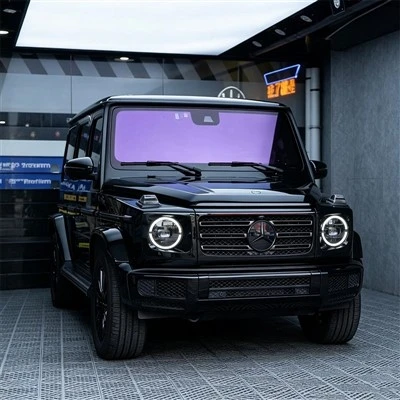
First, let’s start with the core job of each product, because that’s where most people go wrong. Regular window tint’s entire purpose is optical: it’s made to block UV rays, reduce glare, and lower interior cabin temperatures by rejecting solar heat. That’s it. I’ll show you a sample tint roll right now—hold it up to a bright light, and you’ll see it’s a thin, flexible layer of polyester coated with dye or metallic particles, designed to filter light that passes through glass. Sunroof armor film, on the other hand, is first and foremost a structural protector. Its core material is a thick, proprietary polyurethane (let’s call it PU for short) that’s 8 to 10 times thicker than standard tint—usually 150 to 200 microns thick, compared to tint’s 15 to 50 microns. That’s not just a number: if a 12-millimeter stone hits your sunroof at 55 mph (the average highway speed where rock chips happen), that thick PU acts like a cushion, absorbing the impact so it doesn’t crack the glass. I’ve seen this firsthand: last spring, a detailer brought a chipped sunroof to our shop, and we stripped a 3-year-old sunroof armor film off it—you could see the tiny stone fragment embedded in the film, not the glass. If that had been tint, the stone would have gone straight through to the glass, leaving a chip that would eventually spread into a star crack, costing thousands to replace the panoramic roof.
But let’s get past the “it’s thicker” part and dive into what makes their chemistry totally different. Tint’s UV protection is superficial: the dye or metal coating blocks UV rays from passing through, which means that coating breaks down over time. I’ve had customers come back after 2 years with a tint that’s bubbled, turned purple, and lost its ability to block UV—even the “ceramic tint” that’s marketed as long-lasting. The ceramic in that tint is designed to reject heat, not resist abrasion, so after a winter of scraping snow off the sunroof, or a summer of parking in direct sun, the top layer of the tint wears thin, and the UV protection plummets. Sunroof armor film’s UV protection is built into the entire material, not a topcoat. Our film is infused with a UV inhibitor that’s cross-linked into the polyurethane matrix, so it doesn’t peel off or fade. That means after 5 years, our film will still block 99% of UVA and UVB rays, same as the day it was installed—way better than the average tint, which loses 20% of its UV protection after 18 months, per tests from the International Window Film Association (IWFA).
Heat rejection is another area where the two products aren’t interchangeable. I know a lot of people say “tint blocks heat, so it’s just as good for keeping my car cool,” but that’s only partially true. Standard tint blocks 30% to 60% of solar heat, depending on the type (dyed tint is lowest, ceramic is highest). Sunroof armor film, while not designed as a primary heat blocker, usually blocks 15% to 30% of solar heat—enough to make a noticeable difference, but not as much as a high-quality ceramic tint. But here’s the trade-off: if you’re choosing between heat rejection and protection, most people with panoramic sunroofs (which are often the largest single glass surface on a modern car) prioritize protection. I get this question every week from Tesla owners: “I already have tint on my side windows, do I need armor on the sunroof?” My answer is always, “Your side windows don’t have a $2,000 glass panel that’s exposed to every rock on the highway.” The heat difference is nice, but the chip, crack, and fade risk makes armor a non-negotiable for sunroofs.
Abrasion resistance is where sunroof armor film crushes tint, and this is what most casual car owners don’t realize. Tint’s top layer is hard, but it’s brittle—like a thin plastic bag. If you scrape it with a key, a snow scraper, or even a dirty cloth during a car wash, it will scratch, and those scratches will be visible from inside the car. I’ve had customers bring in their tinted sunroofs and say, “I didn’t know it was scratched until the sun hit it at a certain angle.” Sunroof armor film, though, has a scratch-resistant topcoat that’s designed to self-heal minor scratches. That’s right—self-healing technology, which works because the polyurethane molecules are flexible enough to melt back together when exposed to heat (like the sun sitting on the film for a few hours). A minor scratch from a car wash brush will disappear overnight, while a tint scratch will be there until the next time you replace the film. I tested this last summer: I scratched a section of our armor film with a key, left it in direct sun for 6 hours, and the scratch was gone. I did the same to a ceramic tint, and the key mark was still there, deep enough to catch a fingernail.
Durability is the big one that separates the two, and it’s not just about how long they last before breaking—it’s about how they perform in extreme conditions. Tint’s lifespan is usually 3 to 5 years, max, before it starts bubbling, peeling, or fading. Even “long-life” tint from a reputable brand will start to degrade after 4 years, especially if it’s on a sunroof, which gets way more direct sun than side windows. Sunroof armor film, when installed correctly, lasts 7 to 10 years. I have a 8-year-old Toyota Prius in our test fleet with original sunroof armor film, and the glass underneath is still chip-free, the film is only slightly yellowed (which we’ll replace soon, but the protection is still there). That’s a huge difference—for someone who keeps a car for 7 years, that means one installation, not two or three, for the sunroof.
Wait, but what about the myths I hear all the time? “Tint blocks more UV, so it’s better for my skin when I’m sitting under the sunroof.” No, that’s a half-truth. High-quality sunroof armor film blocks 99.9% of UV rays, same as a top-tier ceramic tint, per IWFA tests. The only difference is heat rejection, which as I said, is secondary. Another myth: “I can install tint myself for $50, so why pay $300 for armor?” Let’s do the math. If you install a $50 tint every 3 years, over 10 years, that’s $150. But wait—if a rock chip costs you $800 to repair, or a panoramic sunroof costs $1,500 to replace, that $150 in tint savings turns into a $2,000 repair bill. Plus, tint can be a DIY nightmare; I’ve seen so many cars with bubbly, peeling tint that looks terrible, and you have to pay a detailer $100 to remove it. Sunroof armor film is a professional installation job, but most of our customers tell us it pays for itself in the first 2 years just by avoiding a single rock chip.
Now, let’s talk about the hidden downsides of tint on sunroofs, because a lot of people don’t think about these. Sunroofs have moving parts—they slide open, tilt, and sometimes have defroster grids embedded in the glass. Tint is a thin film that can stick to defroster grids, and when the glass flexes (especially in cold weather), the tint can peel away, leaving a messy, unsightly edge. Sunroof armor film is thicker and more flexible, so it moves with the glass, no peeling. Also, if you ever need to replace the sunroof glass (because of a crack or damage), tint is almost impossible to remove without scratching the glass, but our armor film is designed to peel off cleanly, so the new glass is ready for a new installation without extra work.
I could go on, but the point is this: sunroof armor film and regular tint aren’t just different names for the same product—they’re designed for entirely different jobs. Tint is a glass filter, meant to make your car more comfortable by blocking light and heat. Sunroof armor film is a shield, meant to protect one of your car’s most expensive and vulnerable glass surfaces from physical damage, abrasion, and UV degradation over decades.
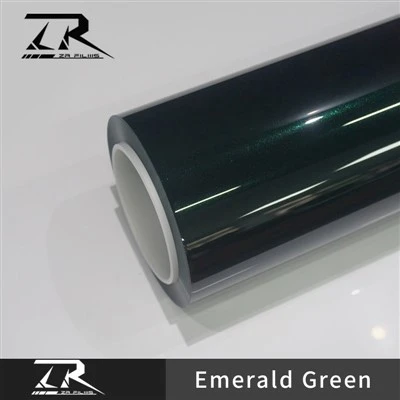
If you’re a detailer looking for a product that will keep your customers’ sunroofs looking new and save you time on repeat repairs, or a car owner who wants to protect your panoramic sunroof from the gravel that hits it every commute, our team can help. We work with installers across the country, and we can provide samples, technical specs, and guidance to make sure you get the right product for your sunroof. To discuss your specific needs and place an order, reach out to our team today.
Decorative Home Window Film References
International Window Film Association (IWFA). (2022). Window Film Performance and Durability Standards.
Automotive Glass Repair Association (AGRA). (2021). Rock Chip Impact Resistance of Automotive Glass Protective Films.
Polyurethane Industry Association (PIA). (2020). Scratch Resistance and Self-Healing Properties of Polymeric Films for Automotive Applications.
Shaoxing Zirui New Material Technology Co., Ltd.
We are one of the most professional sunroof armor film manufacturers and suppliers in China, also support customized service. We warmly welcome you to wholesale cheap sunroof armor film for sale here and get quotation from our factory. For price consultation, contact us.
Address: Building 23, Phase II, Huanpu International Industrial Park, No.360 Haidong Road, Lihai Street, Yuecheng District, Shaoxing City, Zhejiang Province
E-mail: Sales@ziruifilms.com
WebSite: https://www.ziruifilms.com/
