Hey there! If you’ve ever been knee-deep in a tiling project—whether you’re renovating a bathroom, sprucing up a kitchen backsplash, or even finishing a commercial space—you’ve probably stumbled on the phrase “plastic tile trim profile” and thought, “Wait, what’s that even for, and do I really need it?” As someone who’s spent the last few years working in the tile trim game, I’m here to break this down like I would to a contractor knocking on my door, not a stuffy textbook. Let’s get into it. Tile Trim
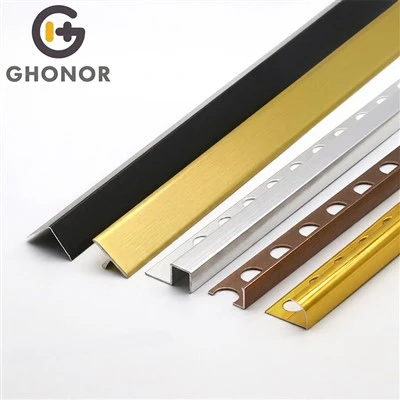
First off, let’s skip the jargon. A plastic tile trim profile is basically that slim, long strip of plastic (usually PVC, but sometimes other durable plastics like uPVC) that acts as a finished edge for your tiles. Think of it as the bookend that ties your tiled surfaces together, but way more functional than just a pretty border. I know a lot of DIYers even some seasoned tilers kinda gloss over this part—like, “Oh, I’ll just cut the tiles straight and call it a day”—but trust me, that’s where mistakes happen. Straight tile edges are sharp, they can chip over time, and the raw edges don’t play nice with adjacent surfaces like drywall, countertops, or even other tile types. That’s where the trim comes in.
Let’s get specific about what makes plastic different from metal trim, because that’s the big choice people struggle with. Metal trims (aluminum, stainless steel) are super popular, but they can be pricey, they scratch easily, and they don’t hold up well in high-moisture areas if they’re not sealed right. Plastic? It’s cheap, it’s flexible (so it’s easier to cut and bend around corners—huge for curved walls or staircases), it resists moisture like a champ, and it doesn’t dent or scratch if you bump a cart or a ladder against it. Yeah, it’s not as sleek as polished metal, but for most residential projects, it’s more than enough. And don’t let anyone tell you plastic looks cheap anymore—newer designs come in matte finishes, even stone-like textures, that blend right in with ceramic or porcelain tiles.
Now, what does it actually do? Let’s list the roles, ‘cause this isn’t just aesthetics. First, edge protection. Tiles are brittle—drop a can of paint on a tile edge, and boom, a chunk’s gone. The trim covers that raw edge, so it’s blunt, not sharp, and way more resistant to chipping. Second, it creates a seamless transition. If you’re tiling a wall and it meets a countertop, or a floor and a wall, the trim fills that tiny gap between the two surfaces so you don’t have to caulk every nook (though caulk is still needed, but the trim makes it neater). Third, it simplifies installation. Cutting tiles to fit a perfect corner is a pain, especially for DIYers. A plastic trim has a channel that holds the tile in place, so you don’t have to cut the tile exactly straight every time—just cut it a little long, slot it into the trim, and snap off the excess. Saves so much time, I can’t even tell you. Fourth, it hides imperfections. Walls aren’t perfectly straight, right? If you have a wonky wall, the trim will cover the gap between the tile and the wall, so no one notices your not-so-perfect tiling skills. Been there, done that.
Wait, but what kinds are there? Let’s get into the different profiles ‘cause not all plastic tile trims are the same. The most common is the L-shaped profile— that’s the one you see on external corners, right? It’s like an L, one side goes against the wall, the other holds the tile edge. Then there’s the U-shaped profile, which is for internal corners or when you’re joining two tile edges, like a floor and a wall where the tile meets the vertical surface. There’s also the square edge profile, which is flush with the tile, so it looks like the tile just naturally ends there—no overhang. And if you’re working with larger tiles, there’s a wide profile that’s thicker, so it can support bigger tile edges without bending. Oh, and don’t forget stair nosing trims—those are plastic trims that go on the edge of stairs, anti-slip, so you don’t slip when you’re walking up and down. Super important for basements or commercial spaces with a lot of foot traffic.
I get the question: is plastic better than other materials? Like I said earlier, it depends on the project. If you’re doing a high-end commercial space where every detail has to look sleek, metal is better. But for DIY projects, rental properties, bathrooms, kitchens, even laundry rooms? Plastic is the way to go. It’s resistant to mold and mildew—huge for bathrooms, where moisture builds up. Metal can rust if it’s not properly coated, but plastic doesn’t. And it’s way easier to work with—you don’t need special tools to cut it, just a utility knife or a miter saw, same as tile. I’ve had a lot of first-time tilers come to me saying they messed up their trim, and when we switch to plastic, it’s like a lightbulb went off. They didn’t have to re-cut all their tiles, just get a trim and voila, done.
Now, let’s talk about installation basics, ‘cause even if you’re not a pro, you can do this. First, measure the length of the edge you’re covering—always add a couple inches extra, ‘cause it’s easier to cut a little off than to be too short. Then, cut the trim to size. For PVC trim, a sharp utility knife works—score it a few times, then snap it like a PVC pipe. For uPVC, a miter saw is better for clean cuts. Then, clean the edge where you’re applying it—wipe down with rubbing alcohol so the adhesive sticks. Use a strong adhesive, like construction adhesive or silicone caulk (but make sure it’s tile-safe silicone). Apply a bead along the back of the trim, press it firmly onto the edge, and hold it for a minute. Then, slide the tile into the trim’s channel—you might need a little tile adhesive on the back of the tile too, to hold it in place. For external corners, cut the trim at a 45-degree angle, just like you would with a baseboard, so it meets up neatly. Internal corners are a little trickier, but most plastic trims have pre-cut notches for that, so you don’t have to fumble too much.
Wait, common mistakes people make with plastic tile trims. Let’s list those ‘cause I see them every day. First, buying the wrong size. If your tile is 12mm thick, you need a trim that’s designed for 12mm tiles—too big, and the tile will wobble; too small, and it won’t fit. Second, not sealing the trim. Even though plastic is water-resistant, if you leave a gap between the trim and the tile, water can get in and cause mold behind the tile. Always caulk between the trim and the tile, and between the trim and the wall. Third, cutting the trim too short. I can’t tell you how many times a tiler has come back to me saying they measured wrong, and now they have a gap. Fourth, using it for high-traffic areas where metal is better. Plastic is durable, but if you’re in a commercial kitchen with heavy carts going back and forth, a plastic trim might get scuffed up over time. For residential, it’s fine, but for commercial, maybe upgrade.
Now, why does this matter for you? Whether you’re a DIYer looking to finish your bathroom, a contractor working on a multi-unit renovation, or a property manager sprucing up a rental, the right tile trim makes or breaks the whole project. I’ve had customers tell me they spent hours tiling a backsplash, but the raw edges made it look unfinished. They switched to plastic trim, and suddenly it looked like a pro did it. It’s that small detail that makes your tile job go from “okay” to “wow, that’s clean.” And since plastic is affordable, you don’t have to blow your budget on a fancy metal trim to get a great finish.
But wait, let’s clear up a myth: plastic tile trims aren’t just cheap knockoffs. Modern plastic trim is made with UV-stabilized materials, so it won’t fade in sunlight (perfect for outdoor tiling projects, like a patio or pool deck). It’s also impact-resistant, so it can handle kids running around, pets knocking things over, and all the wear and tear of daily life. I even have a customer who uses plastic trim for his pool tiling—no rust, no fading, and it’s held up for 5 years now, way better than the metal trim he used before that started rusting and staining the pool.
Here’s the thing: when you’re tiling, you focus on the tiles, the grout, the pattern—all the big stuff. But the trim is the unsung hero that ties everything together. It protects your edges, hides imperfections, makes installation easier, and gives your project a polished look. So whether you’re working on a small DIY project or a big commercial job, don’t sleep on the plastic tile trim profile. It’s not just a strip of plastic—it’s the difference between a tiling job that falls apart in a year and one that lasts a decade.

If you’re ready to get started, or you have questions about which trim size, type, or quantity you need, hit me up. We can help you pick the right profile for your project, give you tips on installation, and make sure you have everything you need to finish that tiling job right. No jargon, no hassle—just straight answers and quality trim that works.
Aluminium Stair Nosing References:
- Tile Council of North America. (2021). Tile Installation Handbook.
- American National Standards Institute. (2020). Standard Specifications for Ceramic Tile.
- PVC Industry Association. (2022). uPVC Construction Products: Durability and Performance Guidelines.
- National Kitchen and Bath Association. (2021). Small Space Renovation Guide: Tile Finishing Details.
Foshan Golden Honor Building Materials Co., Ltd.
Foshan Golden Honor Building Materials Co., Ltd. is one of the most professional tile trim manufacturers and suppliers in China, specialized in providing high quality customized service. We warmly welcome you to wholesale high-grade tile trim made in China here from our factory.
Address: Nhu Quynh Town, Van Lam District, Hung Yen Province, Vietnam
E-mail: info@ghonortrims.com
WebSite: https://www.ghonortrims.com/
