If you’ve ever lifted a heavy load on a forklift, hoisted steel beams at a construction site, or operated a crane in a warehouse, you’ve interacted with a counterbalance weight without even realizing it. For decades, I’ve worked as a counterbalance supplier, and during that time, I’ve learned that this unassuming component is the unsung hero of material handling, industrial machinery, and even everyday items we take for granted. But what exactly is a counterbalance weight, and why does it matter so much? Let’s break it down, not just as a engineer might explain it, but from the perspective of someone who designs, manufactures, and delivers these critical parts to businesses just like yours. Counterbalance
First, let’s start with the basics. A counterbalance weight is a fixed, precision-engineered mass designed to balance another load, force, or moment in a system. The core principle here is physics—specifically, the law of moments, which states that for a system to be in static equilibrium (no movement or tipping), the sum of clockwise moments must equal the sum of counterclockwise moments. A moment is calculated as mass multiplied by distance from a pivot point, so a counterbalance weight is sized and positioned to offset the torque created by a primary load.
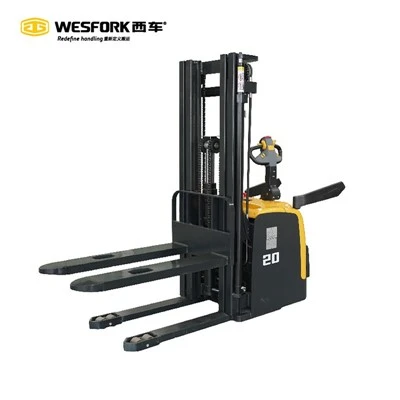
Take a standard counterbalance forklift, for example. If you’ve ever watched one lift a 5,000-pound pallet of goods 10 feet in the air, you might have noticed the heavy metal block sitting at the rear of the machine. That’s the counterbalance weight. Without it, the forklift would tip forward every time you lifted a heavy load. The weight of that rear block is calibrated perfectly: its mass, multiplied by its distance from the forklift’s front axle, equals the torque created by the pallet load, multiplied by its distance from the same axle. Match those two, and the forklift stays stable, even on uneven ground.
This isn’t the only place counterbalance weights show up. Think of a window sash that opens upward: if you’ve ever had to push it hard and then watched it hang mid-air, that’s a counterbalance weight working. A small metal weight runs along a pulley system at the side of the window, creating enough force to balance the weight of the glass sash, so you don’t have to hold it up or risk it slamming shut. Even a seesaw on a playground uses a basic form of counterbalance—two kids of different sizes can balance by adjusting how far they sit from the center pivot, which is essentially rearranging the counterbalance moment.
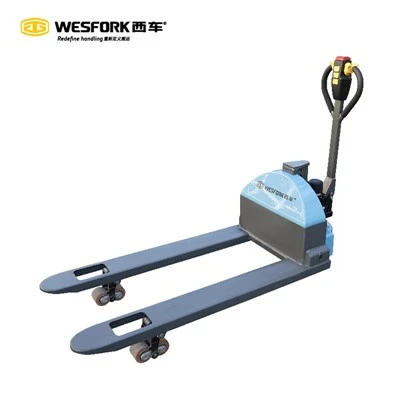
But the counterbalance weights we supply at our shop are far more precise than the ones in a playground. Industrial counterbalance weights aren’t just solid chunks of metal; they’re tailored to the specific needs of each machine they’re paired with. For example, a crane used in a port will have a counterbalance weight designed to handle heavy shipping containers, while a small electric pallet jack in a retail warehouse needs a smaller, lighter weight that fits its compact frame. We don’t use a one-size-fits-all approach here—each weight is calculated, tested, and manufactured to meet exact load requirements, space constraints, and regulatory standards.
Let’s talk about why precision matters. If a counterbalance weight is too small, it can’t offset the torque from the primary load, leading to instability, tipping, or even equipment failure. Too large, and you’re adding unnecessary mass to the machine, which reduces fuel efficiency (for diesel forklifts), increases battery drain (for electric models), and puts extra stress on the machine’s frame and components. That’s why our process starts with a consultation: when a customer reaches out, we first ask for the details of their system—what load they need to balance, the pivot point, the available space for the weight, and any environmental factors (like extreme temperatures or corrosive materials) that might affect the weight’s performance.
For instance, a construction company might need counterbalance weights for mobile cranes that operate in coastal areas, where salt air can cause rust. We offer weights made from high-density steel with a protective powder coating, or even cast iron with a galvanized finish, to prevent corrosion. A food processing plant might need weights for conveyors that handle perishable goods, so we provide materials that are easy to clean and meet food safety standards, with no gaps where bacteria can grow.
Another key point about counterbalance weights: they’re not just for balancing loads. They can also be used to regulate movement in systems where inertia is a factor. In a car’s engine, for example, a harmonic balancer (a type of counterbalance weight) is attached to the crankshaft to offset the rotational imbalances created by the engine’s pistons and connecting rods. Without that balancer, the engine would vibrate violently, leading to premature wear and even damage. We supply counterbalance weights for a wide range of engines and heavy machinery, not just material handling equipment, because that same principle applies across industries.
I’ve seen first-hand what happens when a company cuts corners on counterbalance weights. A few years back, a small warehouse approached us after they bought a cheap, off-the-shelf counterbalance weight for their forklifts. The weight was made from low-quality cast iron that had internal flaws, so it didn’t distribute mass evenly. Within six months, one of their forklifts tipped while lifting a heavy load, damaging the warehouse racking and destroying the pallet of goods. The cost of that accident was far higher than the cost of a precision-made counterbalance weight from the start. That’s why we don’t cut corners—every weight we produce is tested for balance, structural integrity, and load capacity before it leaves our facility.
Now, let’s clear up a common misconception: counterbalance weights are only for heavy-duty industrial use. That’s simply not true. We’ve supplied small counterbalance weights for medical equipment, like the robotic arms used in surgical procedures, where even a tiny imbalance can throw off the arm’s precision. We’ve also worked with art conservators who use counterbalance weights to safely move and restore large museum pieces, like ancient statues or paintings, where stability is critical to protecting irreplaceable works. No matter the size of the application, the core role of a counterbalance weight remains the same: to create equilibrium.
If you’re in the market for a counterbalance weight, whether you’re replacing a worn part on an existing machine or designing a new piece of equipment, there are a few things to keep in mind. First, don’t assume a generic weight will work. Take the time to gather accurate data on your system’s load, pivot points, and space. Second, look for a supplier who understands your industry’s specific needs—food safety, corrosion resistance, or heavy load capacity all require different specifications. Third, prioritize quality: a cheap, poorly made counterbalance weight might seem like a good deal upfront, but the risk of accidents, downtime, and repair costs will far outweigh the savings.
At our company, we don’t just sell counterbalance weights—we partner with our customers to solve their specific balancing challenges. Whether you need a custom weight for a new forklift, a replacement harmonic balancer for an engine, or a small weight for a specialized piece of equipment, we have the expertise to design and manufacture a solution that fits your needs. We work with businesses of all sizes, from small local warehouses to large industrial construction firms, and we’re committed to delivering products that are reliable, precise, and built to last.
If you’re ready to find the right counterbalance weight for your equipment, or you have questions about how counterbalance weights work for your specific application, we encourage you to reach out to our team. We’re here to listen, provide advice, and help you find a solution that improves the safety and efficiency of your operations. Don’t wait until a balance issue leads to downtime or an accident—let’s connect to discuss your needs today.
Reach Truck References:
- Meriam, J. L., & Kraige, L. G. (2016). Engineering Mechanics: Statics. John Wiley & Sons.
- "Counterbalance Forklift Stability Principles." Occupational Safety and Health Administration (OSHA), U.S. Department of Labor.
- Harris, C. M., & Crede, C. E. (2004). Shock and Vibration Handbook. McGraw-Hill Education.
- "Design and Application of Counterbalance Weights for Industrial Machinery." Industrial Maintenance and Plant Operations Journal, 2022.
- "Corrosion Resistance of Cast Iron and Steel for Outdoor Industrial Components." Materials Performance Magazine, 2021.
WESFORK Industries (Zhejiang) Co., Ltd.
As one of the most professional counterbalance manufacturers and suppliers in China, we also support customized service. Please feel free to wholesale high quality counterbalance for sale here from our factory. For price consultation, contact us.
Address: 277#Yinhu Road,Yinhu Street,Fuyang District,Hangzhou City,Zhejiang Privince,China
E-mail: sulin@wesfork.com
WebSite: https://www.wesforkintl.com/
